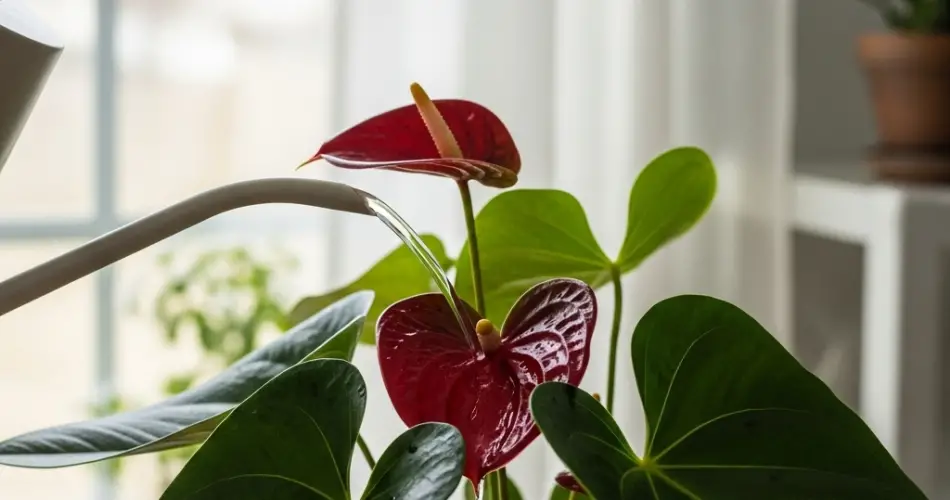
Anthuriums, also known as flamingo flowers or laceleaf plants, are admired for their glossy, heart-shaped leaves and long-lasting, vibrant blooms. Native to tropical rainforests of Central and South America, these plants thrive in warm, humid environments with consistent moisture. When grown indoors, however, striking the right moisture balance becomes a key element of successful care.
Too little water can cause wilting and dry leaves, while too much can lead to root rot and yellowing foliage. Learning how to manage moisture correctly will help your anthurium maintain lush green growth and bloom more reliably. Here’s everything you need to know about proper watering techniques for tropical anthurium plants.
Understanding Anthurium’s Moisture Needs
In their natural habitat, anthuriums grow under the canopy of trees, receiving filtered light and steady humidity. Their roots are adapted to absorb moisture from both the soil and the humid air around them. This dual ability makes them different from many typical houseplants.
When growing anthuriums indoors, the goal is to mimic those rainforest-like conditions—keeping the soil slightly moist but never soggy, and ensuring good airflow around the roots.
How Often Should You Water Anthuriums?
The watering frequency for anthuriums depends on several factors, including light, temperature, pot size, soil type, and season. As a general guideline:
-
In spring and summer (growing season), water once every 5–7 days.
-
In fall and winter, water every 10–14 days or when the top inch of soil is dry.
Avoid watering on a fixed schedule. Instead, check the soil regularly and let it guide your routine. Insert your finger about an inch into the soil. If it feels dry at that depth, it’s time to water. If it still feels damp, wait a few days and test again.
Proper Watering Technique
Giving your anthurium the right amount of water the right way is just as important as knowing when to water.
Here’s the best approach:
-
Water thoroughly: Use room-temperature water and pour slowly until it drains from the bottom of the pot. This ensures the entire root system receives moisture.
-
Empty excess water: Always discard any water left in the saucer or decorative cache pot. Standing water can suffocate roots and invite disease.
-
Avoid wetting the crown: Pour water into the soil, not onto the leaves or the base of the plant. Water pooling in the central rosette can cause rot.
-
Use filtered or distilled water if possible: Anthuriums are sensitive to salts and chemicals commonly found in tap water, such as chlorine and fluoride, which can cause brown leaf tips.
Choosing the Right Soil and Pot
Good drainage is essential for moisture control. Anthuriums don’t like to sit in soggy soil, so your pot and potting mix need to support quick drainage and healthy root aeration.
Ideal potting mix:
-
Use a loose, chunky mix containing orchid bark, perlite, and peat moss or coconut coir.
-
You can also use a commercial mix labeled for orchids or aroid plants, which mimics their natural growing conditions.
Pot selection:
-
Always use a pot with drainage holes.
-
Terracotta pots help wick moisture away, while plastic pots retain it longer—choose based on how quickly your environment dries the soil.
How to Maintain Humidity
Moisture in the air is just as important for anthuriums as moisture in the soil. These plants thrive in humidity levels of 60% or higher. If your home is dry, especially in winter, consider the following:
-
Use a humidifier near the plant.
-
Group plants together to create a microclimate.
-
Place the pot on a humidity tray (a shallow tray filled with pebbles and water) to increase moisture around the plant without soaking the roots.
Avoid misting frequently, as this can increase the risk of fungal issues if leaves stay wet for too long, especially in low airflow environments.
Signs of Moisture Imbalance
Knowing what overwatering and underwatering look like can help you act before the plant suffers lasting damage.
Overwatering symptoms:
-
Yellowing leaves
-
Wilting despite wet soil
-
Blackened or mushy roots
-
Fungal growth on soil surface
Underwatering symptoms:
-
Drooping leaves with crispy tips
-
Dry or curled leaf edges
-
Slow or no flower production
-
Soil pulling away from the pot edges
If you suspect overwatering, allow the soil to dry out and check the roots. Remove any rotting roots and repot if necessary. If the plant is underwatered, give it a deep, slow soak and resume a more consistent watering pattern.
Final Tips for Healthy Anthuriums
-
Keep the plant in bright, indirect light to encourage blooming and efficient water use.
-
Wipe the leaves regularly to remove dust and improve transpiration.
-
Feed monthly during the growing season with a diluted, balanced fertilizer to support lush foliage and flowers.
-
Rotate the pot every couple of weeks to ensure even growth and balanced exposure.
By mastering the balance of soil moisture and air humidity, you can enjoy the striking beauty of your anthurium all year long. With the right moisture practices, your plant will reward you with glossy leaves and vibrant blooms season after season.


