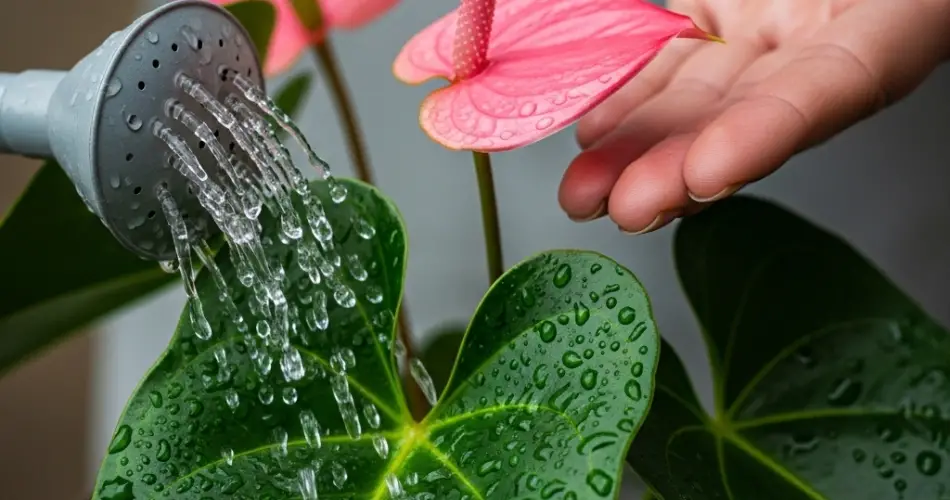
Anthuriums, also known as flamingo flowers or laceleaf, are prized for their long-lasting, colorful blooms and glossy green leaves. These tropical beauties add a splash of exotic charm to any indoor space. While they are relatively easy to grow, the secret to keeping them blooming year-round lies largely in how you water them. Too much or too little moisture can impact their health, flower production, and overall appearance.
Understanding the right watering techniques will help your anthurium thrive, encouraging vibrant spathes and healthy foliage throughout the year.
The Natural Needs of Anthuriums
Anthuriums are native to the rainforests of Central and South America, where they grow in warm, humid conditions with consistent moisture. However, they are epiphytes—plants that grow on trees rather than in soil—which means their roots are adapted to excellent drainage and access to air. They don’t sit in wet, heavy soils in nature, and doing so indoors can lead to problems like root rot.
Mimicking their natural environment is the best way to ensure healthy growth and continuous blooming.
How Often Should You Water Anthuriums?
Anthuriums prefer lightly moist soil but are highly sensitive to overwatering. Let the top 1 to 2 inches (2.5–5 cm) of soil dry out between waterings. The exact frequency will depend on several factors:
-
Climate and Humidity: In warm, humid environments, anthuriums may need watering every 5–7 days. In cooler or drier climates, every 10–14 days may be sufficient.
-
Light Exposure: Plants in bright, indirect light dry out faster and need water more often than those in low-light areas.
-
Season: Anthuriums grow more actively in spring and summer and require more frequent watering during this period. In fall and winter, growth slows, and watering should be reduced.
Always check the soil before watering. Stick your finger into the pot—if the top feels dry but slightly moist deeper down, it’s time to water.
Proper Watering Techniques
-
Water Deeply, But Not Too Often
When you water, do so thoroughly. Pour water slowly and evenly until it begins to drain from the bottom of the pot. This ensures the roots are evenly moistened without being waterlogged. -
Use Room Temperature, Non-Chlorinated Water
Anthuriums are sensitive to chemicals found in tap water, especially chlorine and fluoride. Use filtered, distilled, or rainwater if possible. Always let water sit at room temperature before using to avoid shocking the roots. -
Let Excess Water Drain Completely
Never let anthuriums sit in standing water. After watering, empty the saucer to prevent root rot. -
Mist Carefully (Optional)
While misting is not a replacement for watering, it can help increase humidity. Lightly mist around the plant—not directly onto the flowers—and only in the morning to allow moisture to evaporate.
Signs of Overwatering
Overwatering is the most common problem with anthuriums. If your plant is getting too much water, you may notice:
-
Yellowing leaves, especially the lower ones
-
Wilting despite moist soil
-
Mushy stems or roots
-
Foul smell from the soil
-
Mold or fungal growth on the soil surface
If these symptoms appear, reduce watering immediately. Allow the soil to dry out, and if root rot has occurred, repot the plant in fresh, well-draining soil after trimming away damaged roots.
Signs of Underwatering
Although they’re drought-tolerant to some extent, consistent underwatering will lead to stress and reduced flowering. Watch for:
-
Brown, crispy leaf tips
-
Drooping leaves
-
Dry, compacted soil pulling away from the pot edges
-
Slower or no flower production
If you suspect your anthurium is too dry, give it a thorough watering and reassess your schedule to maintain evenly moist soil going forward.
The Right Pot and Soil Matter
For successful watering, the type of soil and pot used plays a big role. Use a loose, well-draining mix—ideally one made for orchids or aroid plants. You can also create your own blend using equal parts peat moss, perlite, and orchid bark.
Choose a pot with drainage holes to allow excess water to escape. Avoid decorative pots without drainage unless they’re used as outer covers only.
Terracotta pots are helpful because they absorb moisture and allow the soil to dry more quickly, reducing the risk of overwatering.
Adjusting Watering for Year-Round Blooms
Watering correctly is only one piece of the puzzle for continuous blooms. Combine consistent watering with:
-
Stable humidity (above 60%)
-
Temperatures between 65–80°F (18–27°C)
-
Bright, indirect light
-
Monthly feeding with a balanced liquid fertilizer during the growing season
When your watering routine aligns with these conditions, your anthurium will reward you with healthy foliage and long-lasting flowers almost all year long.
Final Thoughts
Mastering the watering needs of anthuriums is essential for encouraging lush growth and regular blooming. The key is to keep the soil evenly moist but never soggy, using filtered water and a well-draining potting mix. Monitor your plant’s environment and adjust as needed throughout the seasons. With the right balance of care, your anthurium will stay vibrant and flower beautifully—month after month.


