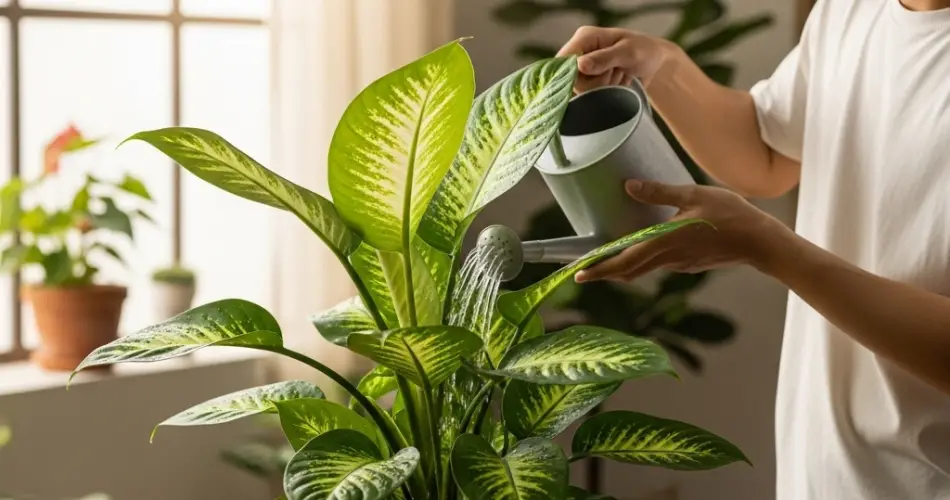
Dumb cane (Dieffenbachia spp.) is a popular houseplant known for its large, variegated leaves and tropical flair. It’s a favorite among indoor gardeners due to its fast growth and striking foliage. However, despite its reputation for being low-maintenance, one aspect of care that requires special attention is watering. Too much or too little moisture can quickly lead to problems like yellowing leaves, root rot, or stunted growth.
To help your dumb cane thrive and grow lush and full, mastering the art of watering—and understanding when your plant actually needs a drink—is essential.
Understanding Dumb Cane’s Moisture Needs
Dumb cane originates from the tropical rainforests of Central and South America, where it grows in warm, humid conditions under filtered light. In its native habitat, the soil is moist but never waterlogged. When grown indoors, replicating these moisture conditions is key to keeping your plant healthy.
Dumb cane prefers soil that remains evenly moist—neither bone dry nor soggy. The goal is to water thoroughly, then allow the top layer of soil to dry slightly before the next watering.
How Often Should You Water Dumb Cane?
There’s no universal watering schedule that applies to all dumb cane plants. How often you water depends on several variables:
-
Season: During the active growing season (spring and summer), you may need to water every 5–7 days. In the cooler, dormant months of fall and winter, watering can be reduced to every 10–14 days.
-
Light Exposure: Plants in bright, indirect light dry out faster than those in shadier locations.
-
Humidity and Temperature: Warm, dry indoor air causes soil to dry more quickly than a humid environment.
-
Pot Size and Type: Plants in smaller pots or porous materials like terracotta require more frequent watering than those in plastic or glazed ceramic pots.
As a general rule, water when the top inch (2.5 cm) of soil feels dry to the touch.
The Right Way to Water Dumb Cane
-
Check Moisture Before You Water
Use your finger to test the soil. If the top inch is dry and the deeper soil feels just slightly moist, it’s time to water. -
Water Evenly and Thoroughly
Pour water slowly and evenly around the base of the plant until it starts to drain from the bottom of the pot. This ensures all roots receive moisture. -
Let the Pot Drain Completely
Always empty the saucer or decorative pot liner after watering. Standing water can lead to root rot. -
Use Room Temperature Water
Cold water can shock the plant, especially if the room is warm. Let tap water sit for a few hours before using it to bring it to room temperature and reduce chlorine content. -
Avoid Watering the Leaves
Water should be directed into the soil, not onto the foliage. Wet leaves can lead to bacterial leaf spots or fungal infections.
Signs of Overwatering
Overwatering is one of the most common problems for dumb cane. If you notice the following signs, adjust your watering routine:
-
Yellowing lower leaves
-
Soft or mushy stems near the soil line
-
Persistent wet or soggy soil
-
Foul odor coming from the soil
-
Wilting, even though the soil feels wet
If overwatering has occurred, let the soil dry out and ensure the pot has proper drainage. In severe cases, repot the plant using fresh, dry, well-draining soil.
Signs of Underwatering
Dumb cane can also suffer if left too dry for too long. Watch for these symptoms:
-
Drooping or curling leaves
-
Crispy brown edges or leaf tips
-
Slower growth or leaf drop
-
Soil pulling away from the sides of the pot
When you see these signs, give the plant a deep watering and reassess how quickly your soil is drying out between waterings.
Choosing the Right Soil and Pot
The correct pot and soil can prevent many watering issues. Dumb cane thrives in a well-draining, nutrient-rich potting mix. A good blend includes peat moss, perlite, and a touch of bark or sand to enhance drainage and air flow to the roots.
Always use a pot with drainage holes to allow excess water to escape. Avoid using overly large containers, as they can hold too much moisture and increase the risk of rot.
Seasonal Adjustments and Extra Tips
-
Humidity: Dumb cane appreciates higher humidity levels. If your home is dry, especially in winter, consider placing a humidifier nearby or using a pebble tray with water under the pot (without letting the pot sit directly in the water).
-
Fertilizer and Watering: During the growing season, fertilize monthly with a balanced liquid fertilizer, and water afterward to prevent salt buildup in the soil.
-
Clean Leaves Gently: Use a damp cloth to wipe the dust off the leaves occasionally, but avoid spraying them heavily with water.
Final Thoughts
Watering dumb cane correctly is all about balance. Keep the soil evenly moist, avoid extremes, and adjust based on your indoor environment. By monitoring soil moisture, using well-draining soil, and letting excess water escape, you’ll prevent root rot and encourage fast, full growth. With the right moisture control, your dumb cane will remain lush, vibrant, and healthy year-round.


