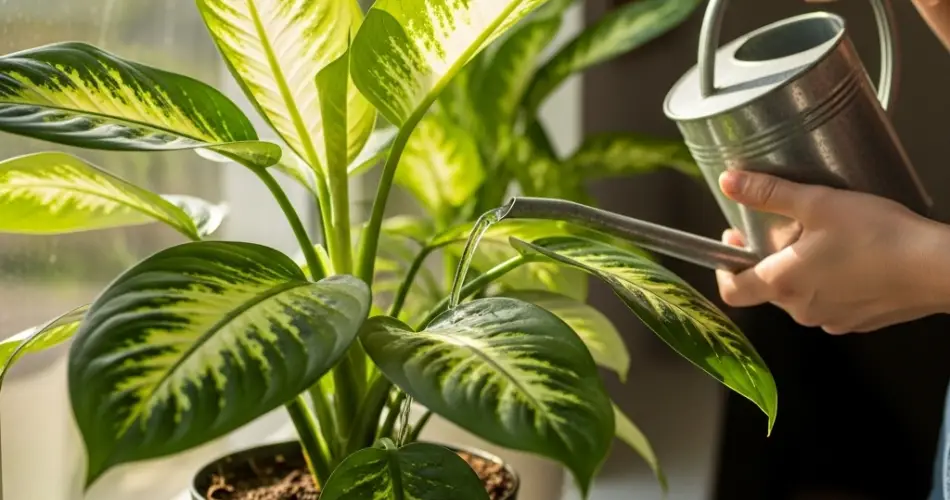
Dieffenbachia, commonly known as dumb cane, is a popular houseplant admired for its large, decorative leaves and ability to thrive in indoor conditions. However, one of the most common problems that can affect this beautiful plant is root rot—a condition that, if left unchecked, can lead to the plant’s decline and eventual death. Root rot in Dieffenbachia is typically caused by overwatering or poor drainage, both of which create a consistently soggy soil environment where harmful fungi thrive. By understanding the plant’s watering needs and making a few key adjustments, you can prevent root rot and help your Dieffenbachia flourish.
Recognizing the Signs of Root Rot
Root rot develops when the roots are deprived of oxygen due to excess moisture. Fungi and bacteria quickly take hold in waterlogged soil, attacking the roots and turning them mushy, black, or brown. Above the soil, early warning signs include yellowing leaves, soft stems, wilting even though the soil feels wet, and a foul odor from the pot. If your Dieffenbachia displays these symptoms, it’s essential to inspect the roots immediately.
To do this, gently remove the plant from its pot and check the root system. Healthy roots should be firm and white or tan. If you notice dark, mushy areas or a smell resembling rotten eggs, root rot has likely set in.
Choosing the Right Pot and Soil
Preventing root rot begins with the basics—selecting the right pot and soil. Always use a container with good drainage holes. Even the most careful watering practices can’t save a plant if the excess water has nowhere to go. Avoid decorative pots that lack drainage, or use them only as outer covers for plastic nursery pots.
As for soil, use a well-draining mix that retains some moisture without staying soggy. A combination of potting soil with perlite, orchid bark, or coarse sand helps improve aeration and drainage. Avoid heavy garden soil or mixes that retain too much water, as they can suffocate the roots.
Understanding Watering Frequency
Watering Dieffenbachia correctly means striking a balance between keeping the soil slightly moist and allowing it to dry out partially between waterings. It’s not about watering on a fixed schedule but checking the soil’s moisture level regularly.
Before watering, stick your finger about one to two inches into the soil. If it feels dry at that depth, it’s time to water. If it’s still damp, wait a few more days. Overwatering often occurs when plants are watered too frequently without checking the soil.
Environmental conditions also play a role. During cooler months or in low light, Dieffenbachia’s water needs decrease. In contrast, during the active growing season (spring and summer), it may need more frequent watering. Always adjust based on the plant’s environment and not just the calendar.
Watering Techniques That Work
When it is time to water, do it thoroughly. Water until it drains freely from the bottom of the pot. This ensures all roots receive moisture and helps flush out accumulated salts that could damage the plant over time.
Avoid letting the pot sit in a saucer full of water. Always empty any excess water from trays or cache pots to prevent the roots from standing in water, which can quickly lead to rot.
If you’re using tap water, let it sit for 24 hours before watering to allow chlorine to dissipate. Alternatively, rainwater or distilled water is ideal, especially if your tap water is high in minerals.
Additional Care Tips to Prevent Root Rot
1. Use the right location: Dieffenbachia prefers bright, indirect light. In low-light conditions, the plant uses less water, increasing the risk of overwatering. Adjust your watering habits accordingly or consider moving the plant to a brighter spot.
2. Maintain proper humidity: While Dieffenbachia enjoys humidity, avoid misting the leaves excessively, as moisture settling on the crown can also lead to fungal problems. Instead, use a pebble tray or humidifier to raise ambient humidity.
3. Repot when necessary: Over time, soil compacts and loses its drainage efficiency. Repotting every 1–2 years with fresh soil helps prevent root rot and gives the plant room to grow. When repotting, inspect the roots and trim any soft, discolored parts with sterilized scissors.
4. Clean your tools and pots: Always sterilize pots, trays, and tools before reusing them to prevent transferring pathogens. A simple rinse with diluted bleach or alcohol works well.
Conclusion
Root rot is a preventable issue that often stems from loving your plant a bit too much—especially when it comes to watering. By giving your Dieffenbachia the right soil, pot, and watering routine, you can avoid the heartbreak of root rot and enjoy the vibrant, lush foliage of this striking houseplant for years to come. Focus on maintaining a healthy balance of moisture and airflow, and your Dieffenbachia will thrive beautifully in your indoor garden.


