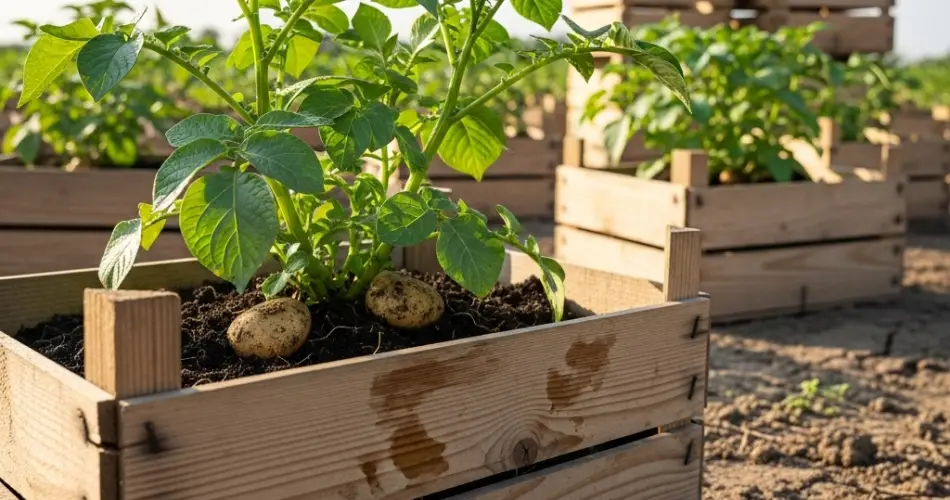
Growing potatoes in layered wooden crates is a space-efficient, practical, and surprisingly productive gardening method that works well in backyards, patios, or any area with limited ground space. This technique allows you to expand your harvest vertically rather than horizontally, making it a perfect option for urban gardeners or anyone seeking a high yield without a traditional garden bed. By adding layers of soil as the plants grow, you can maximize tuber production and make harvesting much easier.
Why Choose Crate Gardening for Potatoes
Wooden crates provide excellent aeration and drainage, which are essential for healthy potato growth. Unlike planting in the ground—where soil may become compacted or too wet—crates allow excess water to drain away, preventing rot. They also make it easier to control soil quality, ensuring the potatoes grow in loose, nutrient-rich conditions. Plus, crate gardening keeps the plants contained and organized, reducing the risk of pest damage.
Selecting the Right Crate
Choose a sturdy wooden crate that can handle the weight of soil and plants. It should be untreated wood to avoid chemicals leaching into the soil. A crate with slatted sides is ideal for ventilation, but if the gaps are too wide, you can line the inside with burlap or landscaping fabric to keep the soil in place. The base should have a few drainage holes to prevent waterlogging.
Preparing the Soil Mix
Potatoes prefer well-draining, fertile soil. A good mix is equal parts garden soil, compost, and coarse sand or perlite. The compost provides nutrients, while the sand improves drainage and prevents clumping. Before planting, loosen the soil so the potato roots can spread easily. Adding a handful of organic fertilizer or bone meal will give the plants a nutrient boost.
Planting Your Potatoes
Start with certified seed potatoes rather than store-bought ones, which may carry diseases. Cut the seed potatoes into pieces, each with at least one “eye” or sprout, and let them dry for a day to prevent rot. Begin with a base layer of about 15 cm (6 inches) of soil in your crate, then place the potato pieces evenly spaced apart. Cover them with another 10 cm (4 inches) of soil.
The Layering Process
As the potato plants grow, they will send up green shoots. When these shoots reach about 15–20 cm (6–8 inches) tall, add another layer of soil to cover the lower stems, leaving the top leaves exposed. This process—called “hilling”—encourages more tubers to form along the buried stems. Continue layering soil as the plants grow, building up the crate until it is full. You can also stack another crate on top to give the plants even more growing space, ensuring a larger harvest.
Watering and Maintenance
Potatoes need consistent moisture but should never sit in soggy soil. Water deeply once or twice a week, depending on weather conditions, and adjust for rainfall. Crates tend to dry out faster than ground beds, so check the moisture level regularly. Avoid overhead watering, which can encourage fungal issues; watering at the base of the plants is best.
Pest and Disease Control
Growing in crates helps reduce problems with pests like wireworms and nematodes, but you should still keep an eye out for common potato pests such as Colorado potato beetles and aphids. Remove any affected leaves promptly. Crop rotation—avoiding planting potatoes in the same crate soil two years in a row—can also help prevent disease buildup.
Harvesting Your Potatoes
When the leaves begin to yellow and die back, it’s time to harvest. One of the best things about layered crates is how easy harvesting can be. You can simply remove the lower boards or tip the crate to release the soil, exposing the potatoes without digging. Gently brush off the soil and allow the tubers to cure in a cool, dry, and dark place for about two weeks before storing.
Benefits Beyond Yield
This method not only produces a generous crop but also keeps your gardening area tidy. Layered potato crates are portable, so you can move them to follow the sun or protect them from bad weather. They also add a rustic, attractive element to a backyard or patio, blending functionality with charm.
With layered potato crates, you can enjoy a plentiful harvest even in a small space, all while keeping maintenance simple and your garden looking neat. This technique turns a basic wooden box into a productive mini-farm right at home.


