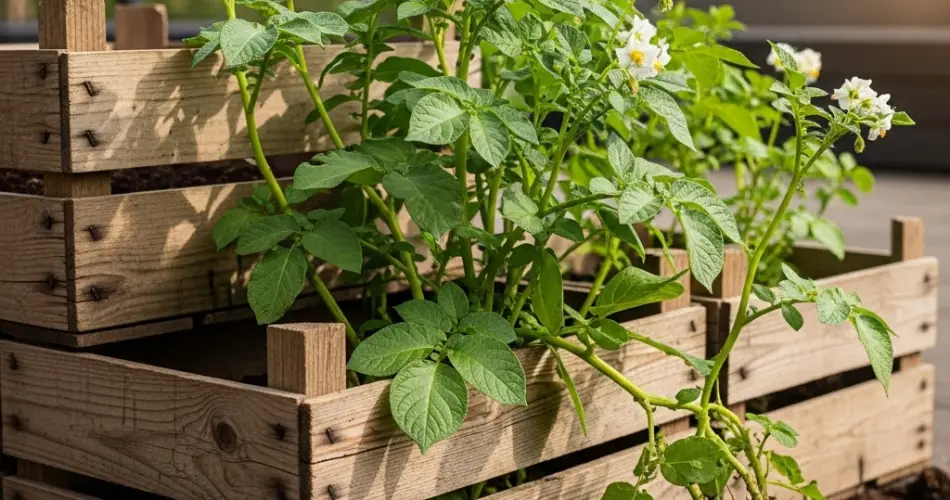
Growing potatoes doesn’t have to involve large garden plots, heavy digging, or perfect soil conditions. With the backyard crate method, you can enjoy a healthy harvest of delicious spuds even in a small space. This approach is practical, low-maintenance, and ideal for urban gardeners or anyone with limited outdoor space. Plus, it gives you complete control over soil quality and drainage, resulting in clean, healthy, and flavorful potatoes.
Why Grow Potatoes in Crates?
Traditional potato growing often requires large mounds of soil, which can be challenging for those with compacted or poor-quality ground. Crates solve this problem by acting as a self-contained planting bed. They allow for excellent drainage, prevent waterlogging, and make it easier to manage soil depth as potatoes grow.
Crate gardening also makes harvesting far simpler—you won’t need to dig deep into the ground. When the season ends, you can simply lift or tip over the crate to collect your crop.
Choosing the Right Crates
Select sturdy, untreated wooden crates that can withstand the weight of soil and growing plants. Potato roots need depth to develop, so a crate at least 14–16 inches deep is ideal.
Good drainage is essential. If your crate doesn’t already have gaps at the bottom, drill several large holes to let excess water escape. To keep the soil in place while allowing drainage, line the inside with breathable landscape fabric or burlap before filling.
Preparing the Soil
Potatoes thrive in loose, nutrient-rich soil. A good mix for crate planting includes:
-
50% quality garden soil
-
30% compost for organic nutrients
-
20% coarse sand or perlite for aeration
This combination prevents compaction and makes it easier for tubers to expand underground. Avoid heavy clay soils, as they can lead to poor root development and increased risk of rot.
Preparing Seed Potatoes
Purchase certified seed potatoes from a reputable source rather than using store-bought ones, which may carry diseases. A few days before planting, cut larger seed potatoes into chunks, each with at least two healthy “eyes” (sprouting points). Let the cut pieces dry for 24–48 hours to reduce the risk of rot.
Planting in Crates
Start by filling your crate with about 6 inches of your prepared soil mix. Place seed potato pieces cut-side down and eyes facing upward, spacing them about 8–10 inches apart. Cover with 3–4 inches of soil.
As the plants grow, continue to “hill” them by adding more soil or mulch around the stems until the crate is nearly full. This encourages more tubers to form along the buried stems.
Watering and Sunlight
Potatoes need consistent moisture, especially in containers where soil can dry out faster. Water deeply whenever the top inch of soil feels dry, aiming for an even level of moisture. Avoid overwatering, which can cause tubers to rot.
Position your crate where it will receive at least 6–8 hours of direct sunlight daily. In very hot climates, providing light afternoon shade can prevent heat stress.
Fertilizing for Healthy Spuds
Potatoes benefit from balanced nutrition but do best with moderate nitrogen and higher levels of phosphorus and potassium. Too much nitrogen will result in lush foliage but fewer tubers.
Incorporate compost into the soil before planting, and supplement with an organic, low-nitrogen fertilizer every 4–6 weeks during the growing season.
Pest and Disease Management
Crate gardening can help reduce soil-borne diseases because you’re starting with fresh soil. Still, be on the lookout for pests like potato beetles or aphids. Hand-pick pests when you see them, and consider using row covers early in the season to keep insects away.
To prevent disease buildup, don’t plant potatoes in the same soil for consecutive years. Rotate with other crops like leafy greens or legumes.
Harvesting Your Potatoes
Potatoes are ready to harvest once the plants have flowered and the foliage starts to yellow and die back. For “new potatoes,” you can gently dig into the crate earlier, about 2–3 weeks after flowering.
To harvest the full crop, simply tip the crate over onto a tarp or ground, and sift through the soil to collect your potatoes. Brush off excess dirt and let them air-dry in a shaded, well-ventilated area before storage.
Storing Your Harvest
Store mature potatoes in a cool, dark, and dry place with good air circulation. Avoid storing them in the refrigerator, as this can alter their flavor. Under the right conditions, they can last for several months.
Extending the Season
In cooler climates, crates can be moved into a greenhouse or covered with frost cloth to extend the growing season. In warm climates, you can plant a second crop later in the year for an extended harvest.
Final Thoughts
Growing potatoes in crates is an easy, space-saving, and efficient method for backyard gardeners. By controlling soil quality, providing consistent care, and using the hilling technique, you can enjoy a plentiful harvest of fresh, homegrown potatoes without the back-breaking labor of traditional gardening. Whether you have a large backyard or just a sunny patio, this method makes it simple to grow your own delicious spuds at home.


