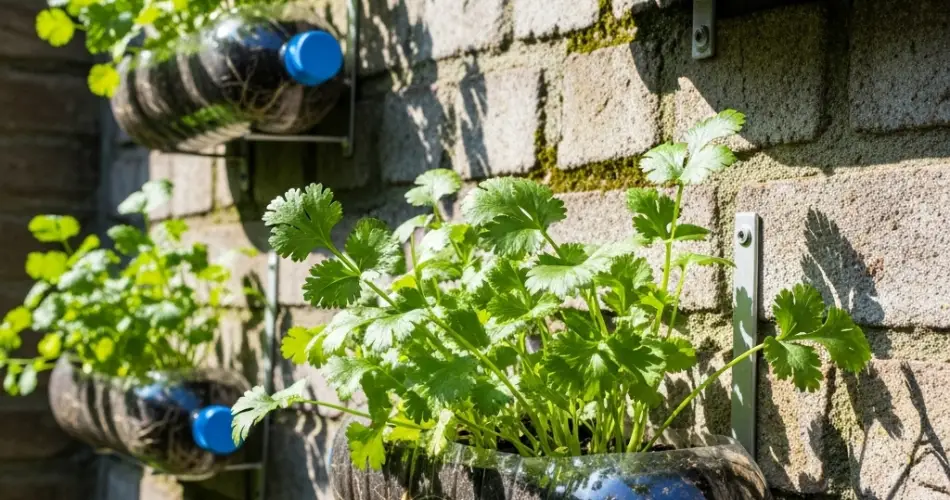
Cilantro is a beloved herb with a fresh, citrusy flavor that complements countless dishes, from salsas and salads to curries and soups. For urban gardeners or anyone with limited space, growing cilantro in wall-mounted bottles is an innovative solution. This method maximizes vertical space, reuses plastic bottles, and provides a sustainable source of fresh herbs. Whether you want to grow cilantro indoors or outdoors, a bottle wall garden can be an attractive and functional addition to your home. Here’s a comprehensive guide with tips for creating and maintaining a thriving cilantro wall garden.
Selecting the Right Bottles
Plastic bottles are lightweight, durable, and easy to adapt for vertical gardening. For cilantro, bottles with a minimum capacity of 1.5 liters are recommended to provide adequate room for root growth. Thoroughly wash the bottles to remove any labels and residue. Cut the bottles horizontally to create open-top planters. Adding small holes to the bottom or sides ensures proper drainage, preventing waterlogging. Using bottles of similar size creates a uniform look, but combining different sizes can add visual interest to your wall garden.
Choosing a Location
Cilantro grows best with full sun to partial shade, requiring at least four to six hours of sunlight per day. Outdoor walls are ideal for maximizing sunlight exposure, but indoor walls near bright windows or under supplemental grow lights can work effectively. Choose a location that is protected from strong winds or extreme temperatures. Proper placement ensures healthy growth and prolongs the life of your cilantro plants.
Constructing the Wall Garden
Install a sturdy frame, wire mesh, or hanging grid to support the bottles. Arrange them in rows or staggered patterns depending on your space and design preference. Position the bottles with their openings facing upward for easy planting, watering, and harvesting. Secure each bottle firmly to prevent tipping or falling. Staggering the bottles slightly can improve airflow, ensuring all plants receive adequate light and ventilation.
Soil and Planting
Cilantro thrives in well-draining, nutrient-rich soil. A light potting mix with added perlite or sand works well for bottle gardens. Fill each bottle with soil, leaving about two centimeters of space at the top. If planting seeds, sprinkle them evenly on the surface and lightly cover them with soil. For seedlings, gently loosen the roots before placing them in the bottle, and fill in around the roots with soil, pressing lightly to stabilize the plant. Proper planting encourages fast establishment and healthy growth.
Watering and Maintenance
Cilantro requires consistent moisture, particularly during germination and early growth stages. Water regularly, keeping the soil evenly moist but not soggy. Overwatering can cause root rot, especially in bottles with limited drainage. Adding a small layer of gravel at the bottom of each bottle improves drainage and helps prevent water accumulation. Indoor gardens benefit from occasional misting and monitoring of sunlight or artificial lighting to maintain plant health.
Fertilization and Growth Tips
Cilantro does not require heavy feeding. A balanced, water-soluble fertilizer applied every four to six weeks supports steady growth. Regular harvesting of outer leaves encourages new shoots and prevents the plant from bolting too quickly. Ensure bottles are spaced to allow adequate airflow and light, which promotes vigorous growth and reduces competition between plants.
Pest and Disease Management
Cilantro is relatively hardy but can be affected by pests such as aphids or whiteflies. A gentle spray of water or organic insecticidal soap can help control infestations. Maintaining good airflow between bottles reduces the risk of fungal problems. Healthy, well-cared-for plants are more resistant to disease and produce better yields in both indoor and outdoor settings.
Harvesting Cilantro
Begin harvesting cilantro once plants reach 10–15 centimeters in height. Cut the outer leaves first, leaving inner growth intact to encourage continuous production. Fresh cilantro can be used immediately in cooking, or it can be frozen or dried for longer storage. Frequent harvesting stimulates new growth and ensures a continuous supply of fresh herbs.
Decorative and Practical Benefits
A bottle wall garden offers both visual appeal and practicality. The greenery brightens walls, adds texture, and creates a natural focal point for any space. Repurposing plastic bottles reduces waste while creating a functional herb-growing system. Having fresh cilantro within reach improves culinary creativity and provides the satisfaction of homegrown produce.
Expanding Your Vertical Herb Collection
Once your cilantro wall is thriving, you can expand your garden with compatible herbs such as parsley, basil, or chives. These herbs grow well in similar conditions, creating a diverse, aromatic vertical garden. Mixing herbs adds visual interest and ensures a year-round supply of fresh flavors. Vertical gardening maximizes space efficiency, making it ideal for balconies, patios, or small indoor areas.
Creating an indoor or outdoor cilantro bottle wall garden is a sustainable, space-saving, and rewarding way to enjoy fresh herbs. With proper soil, sunlight, and care, your cilantro will flourish, providing flavorful leaves while transforming a blank wall into a lush, green feature. This DIY vertical garden combines functionality, beauty, and sustainability, making it perfect for gardeners of all levels.


