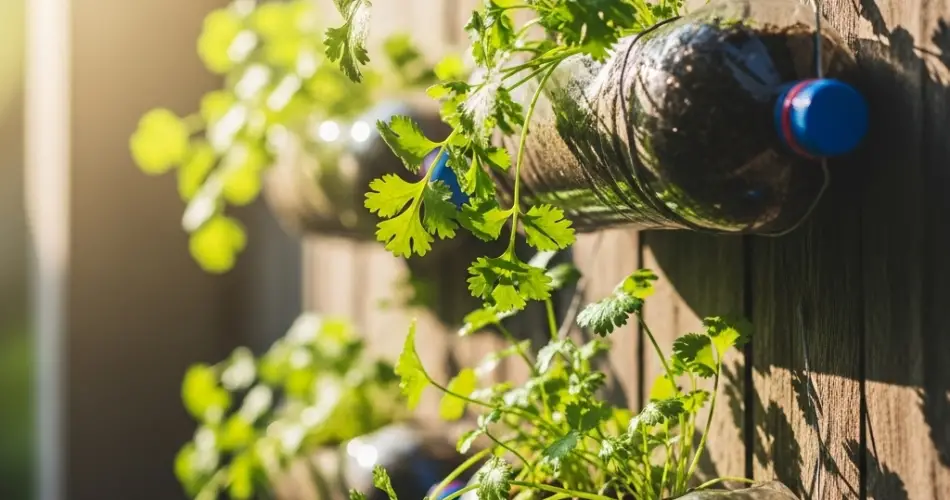
Cilantro, also known as coriander in some regions, is a popular herb renowned for its fresh, citrusy flavor and versatility in dishes ranging from salsas and salads to soups, curries, and sauces. Growing cilantro at home provides a constant supply of flavorful leaves, but urban spaces or small apartments can make traditional gardening challenging. A practical solution is building a vertical bottle garden on a wall, balcony, or kitchen space, allowing you to cultivate cilantro efficiently while repurposing recycled materials.
Why Grow Cilantro in a Wall-Mounted Bottle Garden?
Vertical gardening is ideal for limited spaces. By growing plants upward rather than outward, even small walls or balcony fences can become productive gardening areas. This approach is perfect for city dwellers who want fresh herbs but lack garden beds or expansive outdoor spaces.
Using recycled plastic bottles as containers for your vertical garden combines sustainability with convenience. Bottles are lightweight, durable, and easy to modify for planting. Arranging them vertically creates an attractive, space-saving display while keeping cilantro plants contained and healthy. Cilantro thrives in well-draining soil and prefers moderate sunlight, both conditions easily controlled in a vertical bottle setup.
Materials Needed
To set up a vertical cilantro garden using plastic bottles, gather the following:
-
Clean, empty plastic bottles (1–2 liters work best)
-
A utility knife or scissors
-
Screws, nails, or hooks for mounting
-
High-quality potting soil rich in organic matter
-
Cilantro seeds or seedlings
-
Optional: small stones or gravel for drainage and a spray bottle for watering
Preparing the Bottles
Begin by washing the bottles thoroughly to remove any residue. Cut an opening along the side to create space for soil and seedlings. Horizontal cuts around the middle or vertical slits along one side work well. Smooth the edges to prevent injury while handling the bottles.
Next, add several small drainage holes at the bottom. Proper drainage is crucial, as cilantro roots do not tolerate standing water. Ensure each bottle drains effectively if mounting multiple containers vertically to maintain healthy plants.
Filling and Planting
Place a thin layer of gravel or small stones at the bottom of each bottle to enhance drainage. Fill the bottle with high-quality potting mix suitable for herbs. Cilantro prefers light, well-draining soil that retains enough moisture without becoming soggy.
Plant cilantro seeds about ¼ inch deep or carefully transplant seedlings into the soil. Avoid overcrowding; one or two plants per bottle allows sufficient room for roots to develop and ensures healthy growth. Lightly water the soil after planting to settle it around the roots.
Mounting Your Vertical Cilantro Garden
Attach the bottles to a wall, balcony railing, or wooden frame using screws, nails, or hooks. Tilt the bottles slightly forward so water reaches the roots evenly and prevents runoff. Vertical placement allows for multiple plants in a compact area, and staggering bottles can create a visually appealing display.
For added stability, particularly in outdoor settings, ensure the bottles are securely fastened. Wooden frames or panels can help organize multiple bottles neatly while enhancing the aesthetic appeal of your vertical garden.
Caring for Cilantro
Cilantro grows best in bright, indirect sunlight. Indoor gardens benefit from placement near a south-facing window or supplemental grow lights providing at least six hours of light daily. Outdoors, avoid prolonged exposure to harsh midday sun, which can dry out the soil too quickly.
Water cilantro regularly to maintain slightly moist soil but allow it to drain well. Overwatering can lead to root rot, while insufficient water may stunt growth. A spray bottle is ideal for gently watering small containers without disturbing the soil. Fertilize occasionally with a mild organic fertilizer to maintain soil nutrients, as container gardens tend to deplete nutrients faster than traditional garden beds.
Harvesting Cilantro
Cilantro can be harvested once the plants reach 6–8 inches in height. Pinch leaves from the top to encourage bushier growth and prevent premature flowering, which can reduce leaf flavor. Avoid removing more than one-third of the plant at a time to maintain health. Regular harvesting ensures continuous growth and a steady supply of fresh leaves for cooking.
Benefits of a Vertical Bottle Cilantro Garden
A vertical cilantro garden using recycled bottles offers several advantages:
-
Space-efficient: Ideal for small apartments, kitchens, or balconies.
-
Eco-friendly: Repurposes plastic bottles, reducing environmental waste.
-
Convenient access: Fresh cilantro leaves are always at hand.
-
Visual appeal: Adds greenery and charm to walls, fences, or balcony spaces.
-
Controlled growth: Keeps cilantro contained and manageable, preventing overcrowding.
With a few recycled bottles, quality soil, and consistent care, you can cultivate a thriving cilantro wall garden even in small urban spaces. This approach ensures year-round access to fresh, aromatic leaves while promoting sustainable gardening practices and enhancing the visual appeal of your home. From bottle to plate, a vertical cilantro garden is both practical and environmentally conscious.


