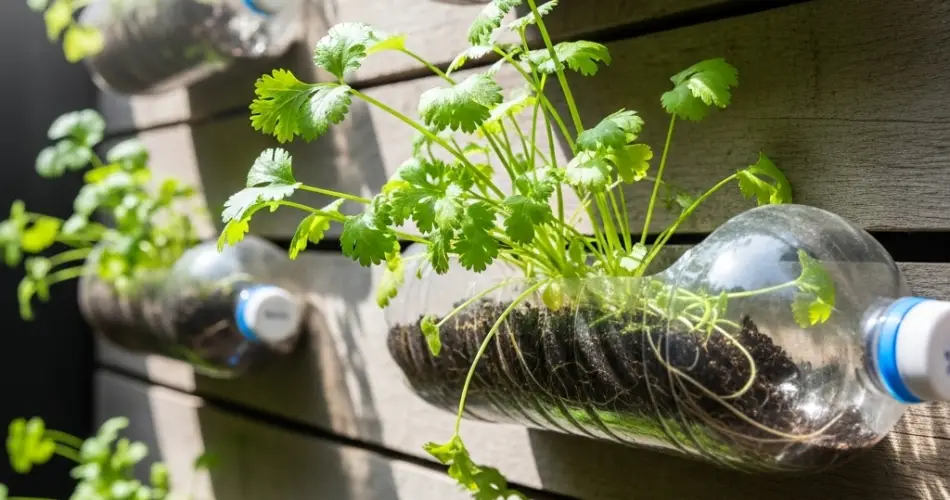
Cilantro, known for its fresh, citrusy flavor, is a staple herb in kitchens worldwide. Its unique aroma and versatility make it a favorite for a wide range of dishes, from salads and salsas to soups and curries. For gardeners with limited space, growing cilantro vertically in wall-mounted bottles offers an innovative, sustainable solution. This method not only maximizes space but also repurposes plastic bottles, creating a practical and eco-friendly herb garden. This guide will walk you through the steps of growing cilantro in wall-mounted bottles, ensuring a steady supply of fresh herbs all year long.
Selecting Bottles for Vertical Gardening
Plastic bottles are lightweight, durable, and easy to modify, making them ideal for vertical herb gardens. Choose bottles with at least 1.5 liters of capacity to accommodate cilantro’s root system. Clean the bottles thoroughly, removing labels and residues. Cut each bottle horizontally to create an open-top planter, which allows easy planting and harvesting. Adding small holes in the bottom or sides of each bottle ensures proper drainage, preventing waterlogging and root rot. Using bottles of similar size helps create a neat and organized wall garden, though mixing bottle sizes can add visual interest.
Choosing the Wall and Preparing the Structure
Cilantro thrives in full sun or partial shade, so select a wall that receives at least four to six hours of sunlight daily. Outdoor walls work best, but indoor walls near bright windows or under grow lights can also be effective. Install a sturdy frame, wire mesh, or hanging grid to secure the bottles to the wall. Arrange the bottles in rows, staggered patterns, or a design that suits your space and aesthetic preferences. Ensure the bottle openings face upward, making planting, watering, and harvesting simple and convenient.
Soil and Planting Cilantro
Cilantro prefers well-draining soil rich in organic matter. A light potting mix with added perlite or sand works well in bottles to prevent waterlogging. Fill each bottle with soil up to about two centimeters from the top. If planting seeds, sprinkle a few evenly on the surface and lightly cover them with soil. For seedlings, gently loosen the roots before placing them in the bottle and fill in around the roots with soil, pressing lightly to stabilize. Proper planting ensures cilantro establishes quickly and grows robustly, even in a compact vertical setup.
Watering and Maintenance
Cilantro requires consistent moisture, especially during germination and early growth. Water the plants regularly, keeping the soil evenly moist but not soggy. Overwatering can lead to root rot, particularly in bottles with limited drainage. Adding a thin layer of gravel or small stones at the bottom of each bottle can help prevent water accumulation. For indoor wall gardens, monitor humidity levels and provide indirect light if natural sunlight is limited. Proper watering and care will ensure healthy, flavorful cilantro leaves.
Fertilization and Growth Tips
Cilantro does not require heavy fertilization. A balanced, water-soluble fertilizer applied every four to six weeks supports strong growth. Regularly harvesting the outer leaves encourages new growth and prevents the plant from bolting prematurely. Maintaining adequate spacing between bottles improves airflow and reduces competition, ensuring each cilantro plant receives sufficient nutrients and light.
Pest and Disease Management
Cilantro is generally hardy, but pests such as aphids and whiteflies can occasionally appear. A gentle spray of water or organic insecticidal soap can effectively control infestations. Adequate airflow, proper watering, and regular maintenance reduce the risk of fungal diseases and promote overall plant health. Healthy cilantro plants are less susceptible to pests and thrive in a vertical garden environment.
Harvesting Cilantro
Cilantro can be harvested once plants reach about 10–15 centimeters in height. Cut the outer leaves first, leaving the inner growth intact to encourage continuous production. Fresh cilantro can be used immediately in cooking, enhancing the flavor of salsas, curries, soups, and salads. Leaves can also be frozen or dried for longer-term storage. Regular harvesting stimulates new growth, ensuring a consistent supply of fresh herbs from your wall-mounted bottle garden.
Decorative and Sustainable Benefits
A wall-mounted cilantro garden offers both practical and aesthetic advantages. The lush greenery brightens walls, adds texture, and creates a natural focal point for indoor or outdoor spaces. Repurposing plastic bottles is an environmentally friendly practice, reducing waste while creating a functional herb-growing system. Having fresh cilantro within reach enhances culinary creativity and brings the satisfaction of homegrown produce to your kitchen.
Expanding Your Vertical Herb Collection
Once your cilantro wall garden is established, consider adding other compatible herbs such as parsley, basil, or chives. These herbs thrive in similar conditions and create a diverse, aromatic vertical garden. Combining multiple herbs not only adds visual interest but also ensures a steady supply of fresh flavors for cooking. Vertical gardening maximizes space efficiency, making it ideal for apartments, balconies, and small urban gardens.
Creating a sustainable cilantro garden using wall-mounted bottles is a practical, eco-friendly, and visually appealing way to grow fresh herbs. With proper light, soil, and care, your cilantro will thrive, providing a continuous supply of fragrant leaves while transforming any wall into a lush, green space. This DIY approach combines functionality, sustainability, and aesthetic appeal, making it perfect for small-space gardeners and herb enthusiasts.


