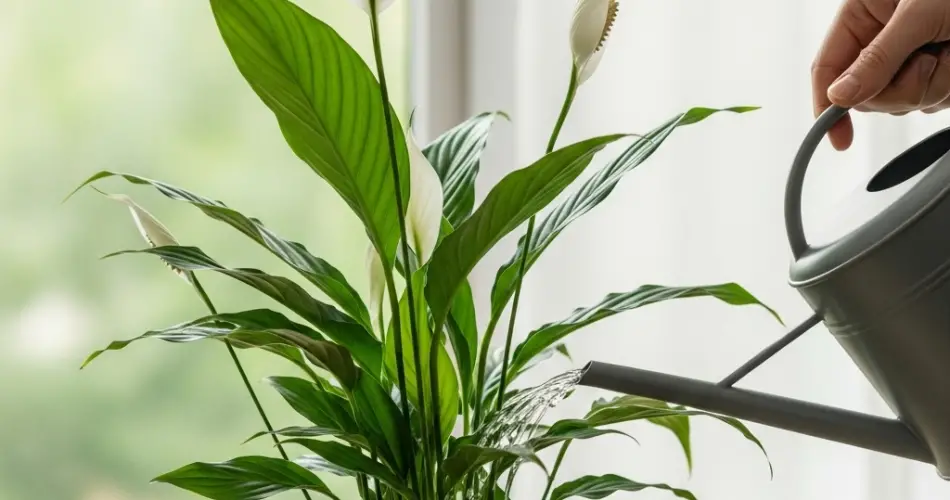
Peace lilies (Spathiphyllum) are popular indoor plants known for their graceful white blooms and lush green leaves. While they are relatively low-maintenance, watering them correctly is essential to keeping them healthy and beautiful. Overwatering is one of the most common mistakes people make with peace lilies, often leading to yellowing leaves, root rot, and other issues. Understanding their water needs and adjusting your routine accordingly will help you care for your plant properly.
Understand the Peace Lily’s Natural Preferences
Peace lilies originate from the tropical rainforests of Central and South America, where they grow under the forest canopy in consistently warm, humid environments. These conditions provide high humidity with well-draining soil that stays moist but not soggy. Replicating this balance indoors is the key to successful watering.
Signs Your Peace Lily Needs Water
Peace lilies are known for giving clear signs when they need water. One of the most distinctive signals is wilting: when the leaves droop dramatically, the plant is telling you it’s thirsty. However, it quickly perks up after a thorough watering. Other signs of dryness include:
-
Slightly curled or crisp leaf edges
-
Dry or compacted soil
-
Lighter weight when lifting the pot
Avoid letting the plant stay in this wilted state for extended periods, as it can eventually weaken the plant.
How Often Should You Water?
There’s no universal schedule that fits all peace lilies. The frequency depends on factors such as room temperature, humidity, light levels, pot size, and the type of soil used. However, a good starting point is to check the soil once a week.
Insert your finger about an inch (2.5 cm) into the soil. If it feels dry at that depth, it’s time to water. If it still feels moist, wait a few more days and check again. With experience, you’ll develop a rhythm that suits your environment.
Best Practices for Watering
-
Water Thoroughly but Infrequently
When you do water, do it thoroughly. Pour water slowly until it drains from the bottom of the pot. This ensures the roots receive enough moisture and helps flush out excess salts from fertilizers. -
Use Room Temperature Water
Cold water can shock the plant’s roots. Let tap water sit for a few hours or overnight to reach room temperature and allow any chlorine to dissipate. -
Empty Drainage Trays
Never let your peace lily sit in standing water. After watering, check the drainage tray and pour out any excess water. Constant wetness at the bottom encourages root rot. -
Improve Humidity if Needed
Peace lilies enjoy higher humidity. If your indoor air is dry, mist the leaves occasionally or place the pot on a tray filled with pebbles and water (without letting the pot touch the water directly).
Signs of Overwatering
Overwatering is more harmful than underwatering for peace lilies. Watch for these warning signs:
-
Yellowing leaves, especially near the base
-
Mushy stems or wilting that doesn’t improve after watering
-
A sour or moldy smell from the soil
-
White mold or algae growing on the soil surface
If you notice these symptoms, let the soil dry out completely before watering again. In some cases, you may need to repot the plant in fresh, dry soil to recover.
Choosing the Right Pot and Soil
Proper drainage starts with the right pot. Choose one with drainage holes at the bottom. If your plant came in a decorative pot without drainage, repot it into a functional container and place the decorative pot around it if you like the aesthetic.
Use a well-draining potting mix. A standard houseplant mix is often sufficient, but you can also mix in perlite or orchid bark to improve aeration and drainage.
Seasonal Watering Tips
In warmer months, peace lilies grow more actively and may need more frequent watering. In contrast, during the cooler months or when your home heating is running, the plant’s growth slows, and water needs decrease. Always adjust based on how quickly the soil dries out rather than sticking to a fixed schedule.
Conclusion
Watering a peace lily correctly means striking the right balance between too much and too little moisture. By observing your plant, feeling the soil, and adjusting for seasonal and environmental changes, you’ll prevent overwatering and help your peace lily thrive year-round. With the right approach, your peace lily will reward you with vibrant green foliage and elegant white blooms.


