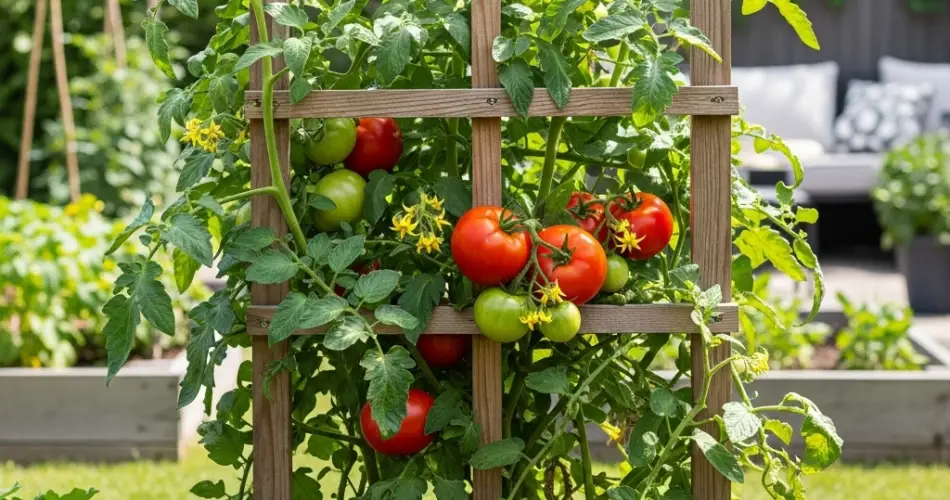
Tomatoes are among the most popular crops for home gardeners, and for good reason—they are versatile, flavorful, and rewarding to grow. But if you have a small garden, you know that tomato plants can quickly take over limited space. Left sprawling on the ground, they become messy, difficult to manage, and more vulnerable to pests and diseases. One of the best solutions is to use a trellis system, and wooden frames are a simple yet highly effective option.
With just a few basic materials and tools, you can build sturdy wooden trellises that keep your tomato plants upright, organized, and productive—even in the smallest garden spaces.
Why Trellis Tomatoes?
Tomato plants are naturally vigorous growers, and without support, they tend to sprawl across the soil. This not only makes harvesting more difficult but also creates conditions that encourage fungal diseases and pests. Trellising solves these problems by:
-
Saving space: Vertical growth maximizes limited garden areas.
-
Improving airflow: Better circulation reduces the chance of disease.
-
Simplifying harvest: Upright plants make tomatoes easier to see and pick.
-
Boosting yields: Supported plants can focus more energy on fruiting instead of sprawling stems.
-
Enhancing garden appearance: Trellised plants look neat and organized.
Choosing the Right Wooden Frame Trellis
There are many ways to trellis tomatoes, but wooden frames are especially practical because they are strong, customizable, and long-lasting. Depending on your garden size and needs, you can choose from a few different styles:
1. A-Frame Trellis
This design consists of two slanted wooden frames joined at the top, creating a sturdy triangular structure. Wire, twine, or netting can be strung between the sides for tomatoes to climb. It’s ideal for small gardens because it provides both height and stability without taking up too much width.
2. Flat Wooden Panel Trellis
A simple rectangular frame with a grid of wires or slats works like a vertical wall for tomatoes to climb. This design is perfect for narrow spaces along fences or walls.
3. Cage-Style Wooden Frame
Instead of flimsy store-bought cages, you can build a strong cube or rectangular box frame from wooden slats. The tomato plants grow inside, and you tie the vines to the frame as they reach upward.
Each option offers durability and plenty of support for heavy tomato vines laden with fruit.
Materials You’ll Need
To build a basic wooden trellis, gather the following materials:
-
Wooden stakes or lumber (cedar or pine works well)
-
Screws or nails
-
Hammer or drill
-
Saw (if cutting your own wood)
-
Twine, garden wire, or netting
-
Outdoor wood sealant (optional for weather protection)
Step-by-Step Guide to Building a Simple Wooden Frame Trellis
Here’s how to make a basic flat wooden panel trellis for your tomato plants:
Step 1: Measure and Cut the Wood
Decide how tall and wide you want your trellis to be. For most tomatoes, a height of 5–6 feet is ideal. Cut four wooden pieces for the frame (two for vertical sides, two for horizontal top and bottom).
Step 2: Assemble the Frame
Lay the pieces on the ground to form a rectangle. Secure them together with screws or nails at each corner.
Step 3: Add Support Wires or Slats
Attach horizontal slats, netting, or strong garden wire across the frame. Space them about 12–18 inches apart to give vines enough grip as they grow.
Step 4: Install the Frame
Push the frame into the soil behind your tomato plants. If the soil is too soft, use stakes driven into the ground and secure the frame to them for extra stability.
Step 5: Train the Plants
As your tomato plants grow, gently tie the vines to the frame with twine or soft ties. Avoid tying too tightly to prevent damage to the stems.
Caring for Trellised Tomatoes
Building the trellis is only the beginning. To ensure healthy plants and abundant harvests, you’ll need to maintain them throughout the season:
-
Prune regularly: Remove suckers (small shoots that grow between the main stem and branches) to keep vines manageable.
-
Tie new growth: Keep securing stems as they climb higher.
-
Water at the base: Prevents leaves from staying wet, reducing disease risk.
-
Fertilize moderately: Use a balanced fertilizer or compost tea to encourage strong fruiting.
-
Inspect often: Check for pests, diseases, or weak spots in the trellis structure.
Small Garden Design Tips
When working with limited space, wooden trellises can also serve as multifunctional garden features:
-
Place trellises along fences or walls to save ground space.
-
Use A-frames in raised beds for efficient vertical gardening.
-
Create a row of panel trellises to divide garden sections while supporting tomatoes.
-
Combine tomato trellises with other climbing plants like beans or cucumbers for a productive vertical garden.
Final Thoughts
Trellising tomatoes with wooden frames is one of the most effective ways to grow this popular crop in small gardens. Not only does it save space and improve plant health, but it also makes harvesting easier and keeps your garden looking tidy. Whether you build a simple flat frame, an A-frame, or a cage-style trellis, wooden structures are affordable, customizable, and durable enough to last for many seasons.
With a little effort and creativity, your tomato plants will thrive on their trellis, rewarding you with an abundant harvest—even in the smallest of garden spaces.


