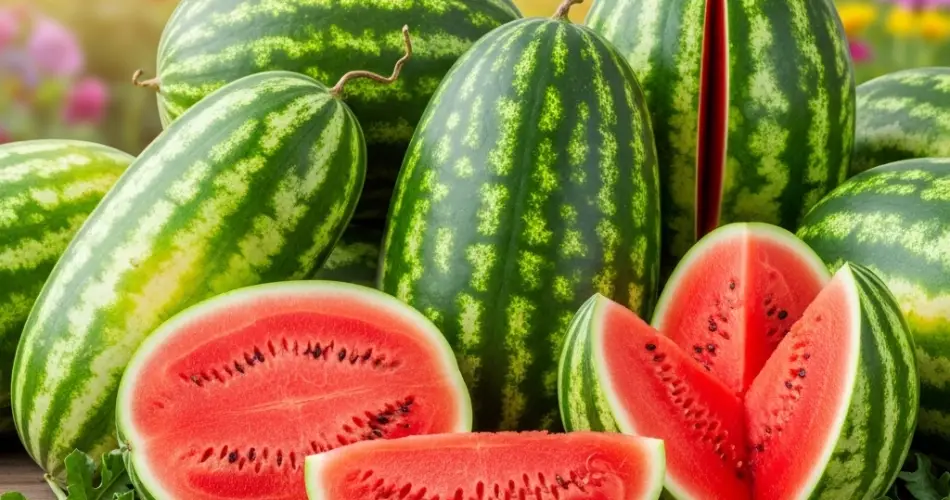
There’s nothing quite like the satisfaction of cutting into a perfectly ripe watermelon—its sweet aroma, vibrant red flesh, and refreshing juiciness make it a true summer favorite. But knowing exactly when to harvest a watermelon can be tricky. Pick it too early, and it’ll be bland and underdeveloped; wait too long, and it may become overripe and mushy.
Unlike some fruits, watermelons don’t continue to ripen after they’re picked. That means recognizing the signs of peak ripeness is essential for enjoying their best flavor. Whether you’re growing them in your garden or picking them at the market, here’s how to confidently determine when a watermelon is ready to enjoy.
1. Check the Ground Spot
The ground spot, or “field spot,” is one of the clearest indicators of a ripe watermelon. This is the area of the fruit that rested on the ground as it grew. As the watermelon matures, this spot changes color.
-
Underripe: The spot will appear white or pale green.
-
Ripe: A creamy yellow or buttery color indicates maturity.
-
Overripe: If the spot is dark orange, the fruit may be past its prime.
A rich, yellowish ground spot generally means the watermelon had enough time on the vine to fully develop its sugars.
2. Examine the Tendril
Watermelons grow on vines, and just above each fruit is a small curly tendril. This tendril can tell you a lot about the fruit’s maturity.
-
Green tendril: The watermelon is still developing.
-
Brown and dried tendril: A good sign that the watermelon is ripe.
While not foolproof, this method is particularly reliable when used alongside other indicators. Don’t harvest solely based on the tendril—check the other signs too.
3. Look at the Overall Color and Texture
A ripe watermelon usually loses its shiny, glossy surface and takes on a duller, matte appearance.
-
Underripe watermelons are often very shiny and dark green.
-
Ripe watermelons have a more muted green with consistent striping or mottling depending on the variety.
Additionally, the skin of a ripe watermelon is tough. Try scratching it with your fingernail—if it resists being scratched easily, it’s a sign that the melon is mature.
4. Knock Test: Listen for a Hollow Sound
This traditional method is still widely used. When you thump or knock on a watermelon, the sound it makes can hint at its ripeness.
-
Ripe: Produces a deep, hollow sound.
-
Underripe: Has a dull, flat tone.
-
Overripe: May sound mushy or overly soft.
With practice, your ears will learn to distinguish the subtle differences in tone. Try comparing several melons side by side to get a feel for it.
5. Feel the Weight
Pick up the watermelon and judge how heavy it feels. A ripe watermelon will feel heavy for its size due to its high water content.
When comparing two melons of the same size, the one that feels heavier is likely riper and juicier. Lightweight melons may not be fully developed.
6. Inspect the Shape
While watermelon varieties differ in shape, a ripe one will generally have a uniform shape—whether it’s round or oblong.
-
Consistent shape: A good sign of even development.
-
Irregular bumps or flat sides: Could indicate uneven ripening or inconsistent growing conditions.
While not a standalone method, shape can be a helpful supporting clue when deciding whether a watermelon is ready to pick or buy.
7. Timing and Maturity Based on Days After Planting
If you’re growing your own watermelons, check the seed packet for the expected days to maturity—usually between 70 and 100 days, depending on the variety.
Track the date when flowers appear, particularly female flowers (those with a tiny bulb behind the blossom), which indicate the beginning of fruit development. From that point, watermelons generally take about 35 to 45 days to ripen.
Keep a gardening journal or calendar to help you monitor the timeline.
8. Know Your Variety
Different watermelon varieties can show ripeness in slightly different ways. For example:
-
Sugar Baby: Smaller and typically ripens faster. It has a deep green rind and may have a subtle yellow field spot.
-
Crimson Sweet: Known for strong striping and a large yellow ground spot when ripe.
-
Yellow and orange-fleshed melons: May require similar methods to gauge ripeness, but some growers note a slightly stronger aroma when fully mature.
Knowing the specific traits of your watermelon variety will help fine-tune your harvesting strategy.
Conclusion
Telling when a watermelon is ripe doesn’t rely on just one method—it’s about combining multiple clues. Look at the ground spot, inspect the tendril, check the overall appearance, and use your senses of hearing and touch to confirm. If you’re growing your own, track the days from planting to ensure you’re harvesting within the ideal window.
By learning these reliable signs, you’ll enjoy the juiciest, sweetest watermelons every time—whether from your garden, farmer’s market, or local grocery store. Happy harvesting!


