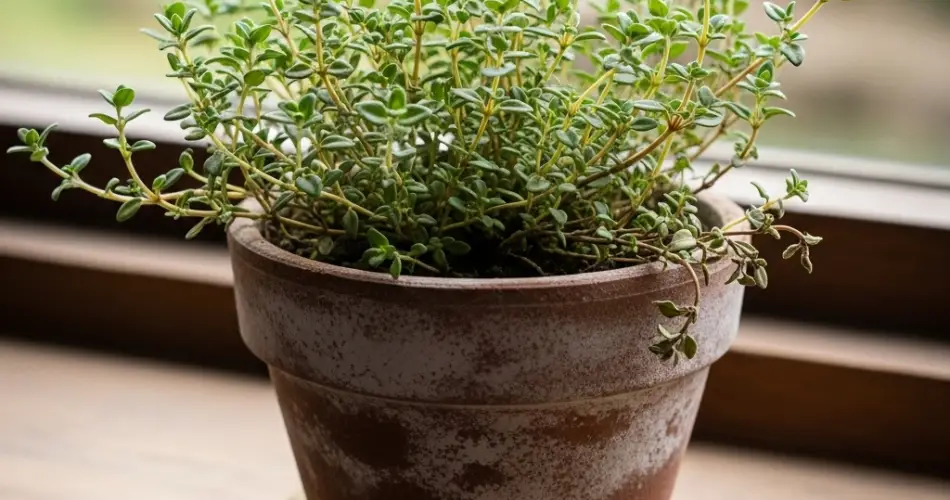
Thyme is one of the most rewarding herbs to grow in containers, prized for its fragrant leaves and culinary versatility. While it thrives in warm, sunny weather, thyme is a perennial plant that can live for several years if properly cared for. However, potted thyme is more vulnerable to cold than thyme planted directly in the ground, as container soil cools faster and roots are more exposed. To keep your thyme healthy and productive year after year, it’s important to give it the right protection during the colder months.
This guide explains how to overwinter thyme in pots, whether you plan to bring it indoors or protect it outdoors, so you can enjoy a steady supply of fresh herbs even after frost arrives.
Understanding Thyme’s Hardiness
Thyme originates from the Mediterranean, where winters are mild and soils are well-drained. Many varieties are hardy in USDA zones 5–9, meaning they can withstand some freezing temperatures when planted in the ground. In containers, however, thyme faces additional stress. Roots in pots are not insulated by surrounding soil, so they freeze more quickly in cold weather. This makes overwintering especially important for potted thyme, even in regions where thyme would normally survive outdoors in garden beds.
Deciding Whether to Bring Thyme Indoors or Leave It Outside
The best approach depends on your local climate.
-
Mild Winters (zones 7–9): You may be able to leave thyme outside with minimal protection, as long as the container is sheltered from extreme wind and heavy snow.
-
Cold Winters (zones 5–6): Thyme will need extra protection if left outdoors or should be brought inside before the first hard frost.
-
Very Harsh Winters (zones 4 and colder): Bringing thyme indoors is usually the safest option, since potted plants often cannot withstand prolonged freezing temperatures.
Preparing Thyme for Winter
Before moving thyme indoors or insulating it outdoors, some preparation will help it transition smoothly:
-
Prune lightly. Cut back long, leggy stems to encourage compact growth. Avoid heavy pruning in late fall, as this can stress the plant when it’s preparing for dormancy.
-
Check for pests. Inspect leaves and stems for insects such as aphids or spider mites. Wash the plant with a gentle spray of water or use insecticidal soap if needed.
-
Adjust watering. As growth slows in fall, thyme needs less water. Reduce frequency but ensure the soil doesn’t stay completely dry for too long.
Overwintering Thyme Indoors
Bringing thyme inside is one of the most reliable methods to protect it from frost. Here’s how to do it successfully:
-
Choose the right spot. Place thyme in the sunniest window you have, ideally south-facing, where it will receive at least 5–6 hours of direct light. If natural sunlight is limited, supplement with a grow light.
-
Control watering. Indoor thyme should be watered sparingly. Allow the top inch of soil to dry out before watering again. Overwatering indoors is a common cause of root rot.
-
Maintain air circulation. Good airflow helps prevent mildew or fungal problems. Avoid crowding thyme with other plants and keep it in a room with moderate humidity.
-
Keep temperatures steady. Thyme prefers cooler indoor conditions in winter, ideally between 50–65°F (10–18°C). Avoid placing pots near heating vents or radiators, which can dry the plant out.
Overwintering Thyme Outdoors
If you choose to keep thyme outside, proper insulation is key:
-
Choose a sheltered location. Place pots against a south-facing wall or under an overhang where they’ll be shielded from wind and excessive snow.
-
Insulate the pot. Wrap containers with burlap, bubble wrap, or horticultural fleece to protect roots from freezing. You can also group pots together and surround them with straw or mulch for added insulation.
-
Raise the container. Place pots on pot feet, bricks, or a wooden pallet to prevent waterlogging from frozen ground or snowmelt.
-
Mulch the soil surface. Add a light layer of straw, pine needles, or shredded leaves over the soil to protect roots from extreme temperature swings.
Restarting Growth in Spring
As temperatures warm up in spring, thyme will begin to wake from dormancy. To encourage fresh growth:
-
Prune back old stems. Cut away any woody or dead sections to stimulate new shoots.
-
Refresh the soil. If the plant looks crowded or tired, consider re-potting with fresh soil mix to give the roots more room.
-
Resume normal care. Increase watering and provide full sun to encourage lush, fragrant leaves for the new growing season.
Benefits of Overwintering Thyme
Taking the time to overwinter thyme in pots has multiple advantages:
-
You save money and effort by keeping an established plant rather than starting new seedlings each spring.
-
Mature thyme plants produce more flavorful leaves than young seedlings.
-
A healthy overwintered thyme plant provides fresh herbs earlier in the season than newly planted ones.
Conclusion
Overwintering thyme in pots ensures your plant remains healthy and productive year after year, even in colder climates. Whether you bring it indoors to a sunny windowsill or insulate it outdoors with mulch and protection, a little preparation goes a long way. With the right care, your thyme will survive the winter months and return strong in spring, ready to flavor your favorite dishes and brighten your container garden once again.


