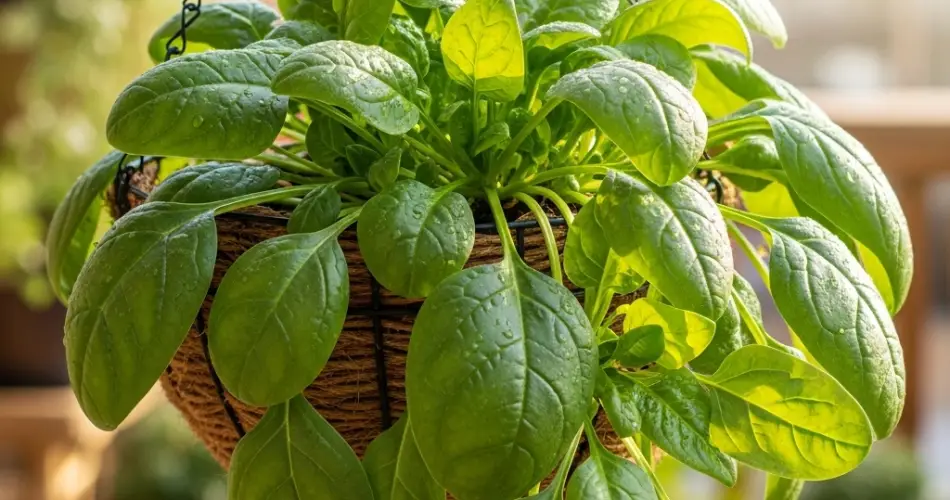
Spinach is a nutritious, fast-growing leafy green that thrives in a variety of growing conditions. For gardeners with limited space, hanging baskets provide a convenient and attractive way to cultivate fresh spinach at home. Hanging baskets offer excellent drainage, portability, and vertical gardening opportunities, making them ideal for patios, balconies, and small yards. This guide explains how to plant, care for, and harvest spinach in hanging baskets, ensuring a steady supply of tender, flavorful leaves.
Choosing the Right Spinach Variety
Not all spinach varieties are ideal for hanging baskets. Compact, slow-bolting varieties perform best in containers and small spaces. Some recommended options include:
-
‘Bloomsdale’ – a classic, crinkled-leaf variety that is hardy and flavorful
-
‘Tyee’ – a smooth-leaf variety with rapid growth
-
‘Baby Leaf’ or Salad Mixes – perfect for continuous harvest and small spaces
Compact or baby-leaf varieties are particularly suitable for cut-and-come-again harvesting, allowing you to enjoy fresh spinach without replanting frequently.
Selecting a Hanging Basket
Choose a hanging basket that is sturdy and deep enough to support soil, water, and the growing plants. A basket with a diameter of 10–12 inches and a depth of at least 6–8 inches is recommended for spinach. Materials such as plastic, resin, or lined wire baskets work well. Ensure proper drainage by using baskets with holes or slats at the bottom. Liners made of coconut coir, burlap, or landscape fabric help retain soil while allowing excess water to escape, preventing waterlogging and root rot.
Preparing the Soil
Spinach thrives in nutrient-rich, well-draining soil. A suitable soil mix for hanging baskets includes:
-
High-quality potting soil
-
Compost or well-rotted organic matter for nutrients
-
Perlite or coarse sand for aeration and drainage
Avoid garden soil, which may compact in a basket and restrict root growth. Spinach prefers slightly acidic to neutral soil with a pH between 6.0 and 7.0. Adding a slow-release fertilizer at planting can provide essential nutrients to support growth.
Planting Spinach in Hanging Baskets
To plant spinach in hanging baskets:
-
Fill the basket with the prepared soil, leaving about 1–2 inches from the top.
-
Sow seeds thinly on the surface or transplant small seedlings.
-
Lightly cover seeds with soil and water gently to settle them.
-
Keep the soil consistently moist until seeds germinate or seedlings establish.
Space plants about 3–4 inches apart for proper airflow and growth. For continuous harvest, consider sowing seeds in successive batches every 2–3 weeks.
Light and Temperature Requirements
Spinach grows best in cool weather and thrives in partial to full sunlight. Place hanging baskets where they will receive at least 4–6 hours of sunlight daily. In hot weather, provide some afternoon shade to prevent bolting, which causes the leaves to become bitter. Ideal growing temperatures range between 50–70°F (10–21°C).
Watering and Maintenance
Consistent moisture is critical for spinach, as shallow roots can dry out quickly in hanging baskets. Water regularly to keep the soil evenly moist but not waterlogged. Mulching with straw or small bark chips can help retain moisture and regulate soil temperature.
Fertilize lightly every 2–3 weeks with a balanced, water-soluble fertilizer to support healthy leaf growth. Avoid excessive nitrogen, which can encourage lush foliage but may make plants more susceptible to pests and diseases.
Harvesting Spinach
Spinach can be harvested at any stage of growth. For cut-and-come-again harvesting, snip outer leaves 1–2 inches above the soil, leaving the inner leaves to continue growing. This method ensures a continuous supply of fresh spinach throughout the season. For full-sized leaves, harvest the entire plant once it reaches maturity. Frequent harvesting encourages new growth and prevents overcrowding.
Benefits of Hanging Basket Spinach
Growing spinach in hanging baskets offers several advantages:
-
Space-efficient, ideal for small gardens, balconies, and patios
-
Better drainage and airflow reduce disease risk
-
Portable, allowing plants to follow sunlight or be sheltered from harsh weather
-
Continuous harvest through successive planting or cut-and-come-again methods
Final Thoughts
Hanging baskets provide a simple, space-efficient way to grow fresh spinach at home. By choosing compact varieties, using nutrient-rich, well-draining soil, and maintaining consistent care, gardeners can enjoy a steady supply of tender, flavorful leaves throughout the growing season. Hanging baskets not only make spinach cultivation accessible for small spaces but also add a decorative element to patios, balconies, and other outdoor areas. With proper planting, watering, and harvesting techniques, spinach grown in hanging baskets can be a productive and rewarding addition to any home garden.


