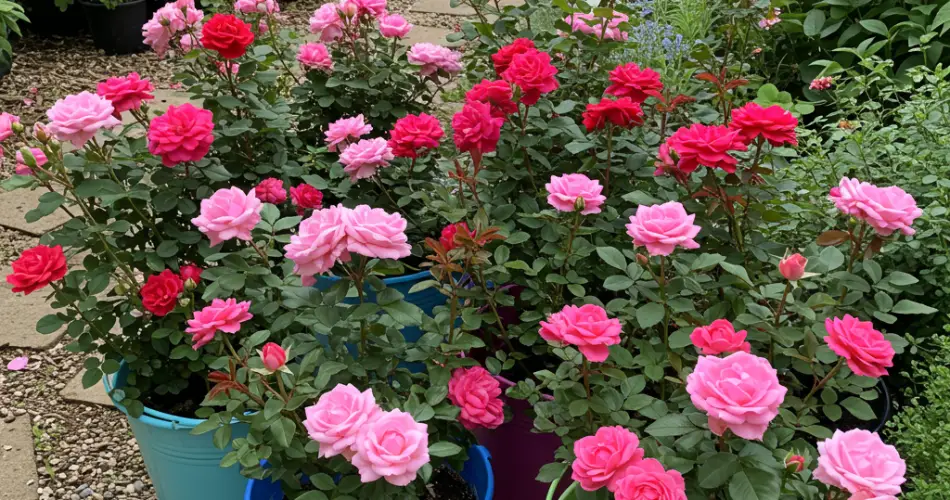
Roses are often seen as luxurious garden plants, but they don’t need sprawling flower beds to bloom beautifully. With the right setup, you can grow stunning roses in buckets and brighten up even the smallest corners of your home—be it a balcony, patio, or doorstep. Container-grown roses not only save space but also give you more control over soil, pests, and placement.
Here’s a step-by-step guide on how to successfully grow roses in buckets and transform a small area into a blooming, fragrant retreat.
1. Choose the Right Rose Variety
Not all roses are suited for container life. When growing roses in buckets, opt for compact or dwarf varieties that adapt well to confined spaces. Here are some ideal types:
-
Miniature Roses – Small but full of color and fragrance.
-
Patio Roses – Bred specifically for pots, with a neat, bushy shape.
-
Floribunda Roses – Produce abundant blooms and are manageable in containers.
-
Climbing Roses (in larger buckets with support) – Great for vertical gardening in corners.
Check the plant tag or seed label to confirm the variety is suitable for containers. Choose healthy, disease-resistant varieties for easier care.
2. Pick a Sturdy Bucket with Good Drainage
A successful rose plant starts with a proper container. Choose a sturdy bucket or large pot, at least 14–18 inches deep and wide, to give the roots ample room. It should have several drainage holes at the bottom to prevent waterlogging.
Plastic buckets are light and affordable, but ceramic or terracotta pots offer better stability and temperature regulation. Ensure the container is placed on a stable surface where it won’t tip over.
3. Use Rich, Well-Draining Soil
Roses are heavy feeders and thrive in nutrient-rich, loamy soil that drains well. Use a high-quality potting mix designed for flowering plants. You can also make your own by mixing:
-
2 parts potting soil
-
1 part compost or well-rotted manure
-
1 part perlite or coarse sand for drainage
Avoid using plain garden soil, which may be too dense for containers and could introduce pests or diseases.
4. Plant the Rose Properly
If planting from a nursery pot, gently remove the rose, tease out the roots slightly, and place it in the center of the bucket. The graft union (swollen area where the rose was grafted) should sit just above the soil line.
Fill in with soil, pressing gently around the base. Water thoroughly to help settle the soil and eliminate air pockets.
If you’re planting bare-root roses, soak the roots in water for a few hours before planting, then follow the same process.
5. Place the Bucket in a Sunny Spot
Roses love the sun—at least 6 hours of direct sunlight daily is essential for healthy growth and abundant blooms. Place your bucket in a bright corner near a wall, fence, or balcony railing that gets good light.
Rotate the pot every few days if sunlight comes from only one direction to encourage even growth.
6. Water Consistently but Avoid Overwatering
Roses need regular, deep watering, especially in hot weather. Check the top inch of soil; if it’s dry, it’s time to water. Container soil dries out faster than ground soil, so monitor moisture closely during summer.
Use a watering can or hose at the base of the plant. Avoid getting water on the leaves, as wet foliage can lead to mildew or fungal issues.
7. Feed Your Roses Well
Container-grown roses depend entirely on you for nutrients. Feed your rose every 2–4 weeks during the growing season with a balanced rose fertilizer or organic options like compost tea or fish emulsion.
Avoid overfeeding, which can lead to excessive leafy growth with fewer flowers. Stop fertilizing in late summer to allow the plant to prepare for dormancy in cooler months.
8. Prune for Shape and Health
Regular pruning keeps your rose plant compact, healthy, and blooming. In early spring, trim back dead or weak stems and shape the plant. Remove faded flowers (deadheading) to encourage new blooms.
If growing a climbing rose, guide and tie the canes to a support structure to help it grow upward in your chosen corner.
9. Watch for Pests and Diseases
Common rose pests include aphids, spider mites, and black spot fungus. Keep an eye on your plant and treat early. You can use insecticidal soap, neem oil, or natural predators like ladybugs to control pests.
Good airflow and clean, dry leaves help prevent disease. Space your buckets well and avoid overcrowding corners.
10. Overwinter with Care
If you live in a region with cold winters, roses in containers are more vulnerable to freezing. Move the bucket to a sheltered spot like a garage or porch, or insulate the container with burlap or straw.
Water sparingly during dormancy, just enough to keep the roots from drying out.
Conclusion
Growing roses in buckets allows you to enjoy these classic flowers even in the smallest spaces. With a sunny corner, a quality pot, and attentive care, you can nurture vibrant blooms that bring beauty, fragrance, and perhaps even a little envy from your neighbors.
By following these tips, you’ll not only create a stunning garden feature but also prove that roses don’t need a grand estate to flourish—just a little love and a well-placed bucket.


