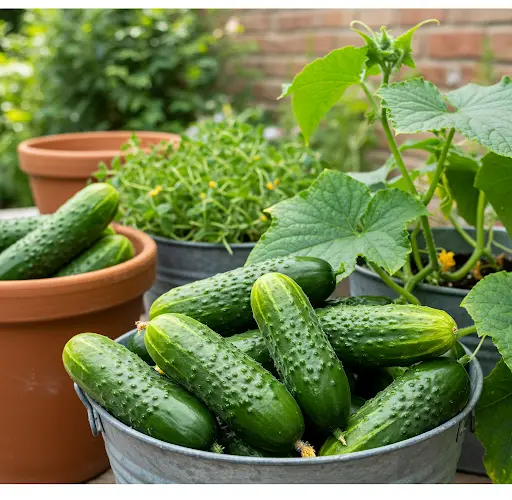
If you’ve ever wanted to make your own homemade pickles, growing pickling cucumbers in containers is a great place to start. Compact, productive, and easy to care for, pickling cucumber varieties are well-suited to pot gardening—even in small spaces like balconies, patios, or decks. With just a few seeds, the right soil, and basic care, you can enjoy a steady supply of crisp, flavorful cucumbers perfect for pickling.
This guide will walk you through every step of growing pickling cucumbers from seed in pots, from planting to harvesting.
Why Choose Pickling Cucumbers?
Pickling cucumbers are specifically bred to be smaller, crunchier, and more uniform in shape than slicing cucumbers. These varieties often produce heavily over a short period, making them ideal for small-batch or large-batch pickle recipes. They also have thinner skin, fewer seeds, and are easy to grow in containers with proper support.
Some popular varieties include:
-
Boston Pickling
-
National Pickling
-
Homemade Pickles
-
Parisian Gherkin
Step 1: Choosing the Right Pot
Cucumbers need room to grow both above and below the soil.
-
Size: Use a container at least 12–16 inches deep and 12–18 inches wide. A 5-gallon pot works well for one cucumber plant.
-
Drainage: Ensure the pot has multiple drainage holes to prevent soggy roots.
-
Material: Fabric grow bags, plastic, or ceramic pots are all suitable, as long as they’re stable and breathable.
Step 2: Preparing the Soil
Cucumbers thrive in loose, fertile, and well-draining soil.
-
Use a high-quality vegetable potting mix with compost or aged manure mixed in.
-
Avoid heavy, compacted soil—it needs to stay loose for proper root development and drainage.
-
pH should ideally be between 6.0 and 7.0.
You can also mix in a handful of worm castings or a slow-release organic fertilizer at the time of planting.
Step 3: Planting Seeds
Cucumber seeds are easy to germinate directly in pots once the weather is warm.
-
Fill your pot with moistened potting mix, leaving an inch at the top.
-
Plant 2–3 seeds about 1 inch deep in the center of the container.
-
Lightly cover with soil and mist with water.
-
Keep the soil moist and warm. Ideal germination temperature is 70–85°F (21–29°C).
-
Seeds typically sprout within 5 to 10 days.
Once the seedlings have a few true leaves, thin them out by snipping the weakest ones at soil level, leaving the strongest plant to grow.
Step 4: Light and Location
Cucumbers are sun-loving plants and need at least 6–8 hours of full sunlight per day. Choose a sunny location such as:
-
A south-facing patio or deck
-
A bright balcony
-
Near a garden fence or trellis
If growing indoors or in a shaded spot, consider using grow lights to supplement natural light.
Step 5: Supporting the Vines
Most pickling cucumber varieties produce vines, although some bush types are available.
-
Use a trellis, tomato cage, or stakes to train the plant upward.
-
Vertical growing saves space and improves air circulation, reducing disease risk.
-
Tie vines gently with soft ties as they grow.
Step 6: Watering and Feeding
Cucumbers need consistent moisture, especially once they begin flowering and fruiting.
-
Water deeply when the top inch of soil feels dry.
-
Avoid overhead watering—water at the base of the plant to prevent leaf diseases.
-
Keep soil consistently moist but not soggy.
-
Mulch with straw or shredded leaves to retain moisture.
Feed every 2–3 weeks with a balanced liquid fertilizer or compost tea. Once flowering starts, switch to a fertilizer with more phosphorus and potassium to support fruit production.
Step 7: Pollination and Flowering
Cucumbers produce both male and female flowers. Bees and other pollinators usually handle pollination, but in small spaces or indoor setups, you may need to hand-pollinate by transferring pollen from a male flower to a female flower using a small brush.
-
Male flowers appear first.
-
Female flowers can be identified by the tiny cucumber-shaped ovary behind the bloom.
Step 8: Harvesting Pickling Cucumbers
Pickling cucumbers are best harvested when they are 2 to 5 inches long, depending on the variety. Harvesting frequently encourages more fruit production.
-
Use scissors or garden snips to avoid damaging the vine.
-
Check plants daily during peak harvest time—cukes grow quickly!
-
Don’t let cucumbers over-ripen or turn yellow on the vine, as this slows down new fruit growth.
Bonus Tips for Success
-
Rotate containers yearly if reusing pots to prevent disease buildup.
-
Clean tools and containers before use to reduce the risk of contamination.
-
Avoid crowding—good airflow helps prevent powdery mildew and other common issues.
-
Use insect netting if pests become a problem, especially early in the season.
Conclusion
Growing pickling cucumbers from seed in pots is a simple, satisfying way to produce your own fresh ingredients for homemade pickles. With just a sunny spot, quality soil, and a little care, you’ll be harvesting crisp, flavorful cucumbers throughout the summer. Once you experience the taste of homegrown pickles, you might never go back to store-bought again.


