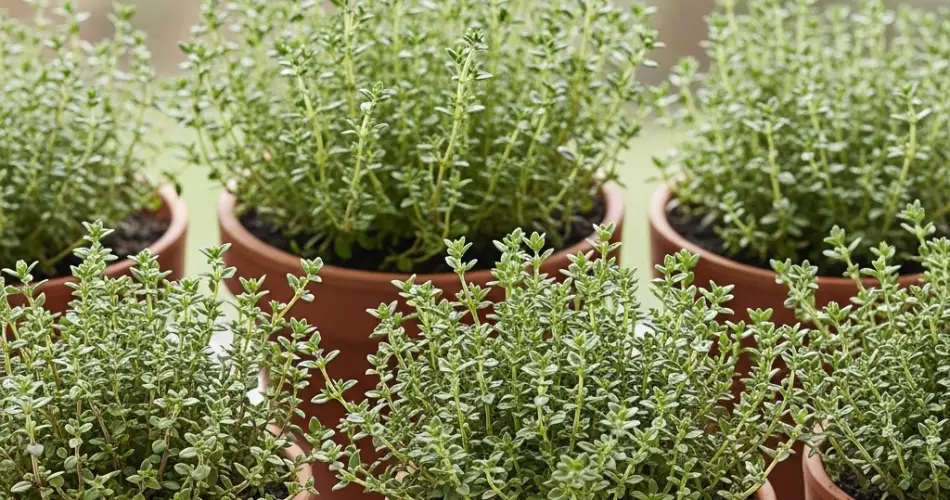
Thyme is a hardy, fragrant herb used in countless savory dishes, from roasted meats and soups to stews and sauces. Its versatility in the kitchen is matched by its ornamental value, especially when grown in pots. Whether you prefer the upright varieties for cooking or the low-growing creeping types as edible décor, thyme thrives in containers with just a little attention and care.
This guide will walk you through growing both creeping and upright thyme in pots so you can enjoy fresh flavor and beauty all year round.
Why Grow Thyme in Pots?
Thyme adapts extremely well to container growing. It prefers dry, well-drained soil and doesn’t mind a bit of neglect, making it a perfect herb for beginners and busy gardeners. Growing thyme in pots allows for better control over soil conditions, avoids invasive spreading, and makes it easier to bring plants indoors during winter.
Creeping thyme adds a decorative, cascading touch to pots and is perfect for hanging planters or the edges of larger containers. Upright thyme, such as English or French thyme, provides a more bushy shape that’s easy to harvest for cooking.
Choosing the Right Varieties
There are many thyme varieties, but they generally fall into two main categories:
-
Upright Thyme: These include culinary varieties like:
-
English Thyme (Thymus vulgaris) – Strong, earthy flavor, ideal for roasting and stews.
-
French Thyme – A slightly milder, refined flavor, excellent in sauces and soups.
-
Lemon Thyme – Offers a citrusy aroma and flavor, great for fish and poultry dishes.
-
-
Creeping Thyme: These are more ornamental but still edible:
-
Elfin Thyme – Tiny leaves and a dense mat-like form.
-
Mother of Thyme – Fast-spreading with a subtle fragrance.
-
Doone Valley Thyme – Variegated leaves with pink flowers, excellent for trailing over pot edges.
-
Both types can be grown in pots, but it’s best to separate them by container to meet their different space needs and for ease of harvest.
Picking the Perfect Pot
Thyme doesn’t need a deep container, but it does require excellent drainage. A pot that’s:
-
6 to 10 inches deep
-
8 to 12 inches in diameter
-
Made of terra cotta or unglazed ceramic for breathability
-
Has drainage holes at the bottom
…is ideal. For creeping thyme, consider shallow, wide pots or even hanging baskets that allow the foliage to spill over the sides. Upright thyme prefers standard or slightly deeper pots for a more upright root system.
Soil and Planting Conditions
Thyme thrives in well-draining, slightly sandy soil. A cactus mix or a blend of:
-
2 parts all-purpose potting mix
-
1 part coarse sand or perlite
…works very well. The goal is to keep the roots from sitting in soggy conditions. Thyme prefers a neutral to slightly alkaline soil pH (6.5 to 7.5), so avoid overly acidic mixes.
You can start thyme from seeds, but it’s slow to germinate. Instead, use cuttings or nursery transplants for faster results. When planting, gently firm the soil around the base and water lightly.
Light and Temperature Needs
Thyme is a sun-loving herb that requires at least 6 to 8 hours of sunlight daily. Place your container in a bright, south-facing window if indoors, or on a sunny balcony or patio outdoors. If growing indoors and light is limited, use a grow light for 12–14 hours a day.
Ideal temperatures range from 60°F to 75°F (15°C to 24°C). Thyme can tolerate cooler temperatures and even light frost, but it should be brought indoors before the first hard freeze if you’re in a colder climate.
Watering and Feeding
Thyme prefers dry soil and is highly drought-tolerant. Let the top inch of soil dry out between waterings. Water deeply but infrequently, allowing excess to drain away. Overwatering is one of the most common issues with thyme, especially in pots.
Thyme doesn’t require heavy feeding. Apply a diluted liquid fertilizer or organic compost tea once every 4–6 weeks during the growing season. Too much nitrogen can reduce the essential oil content, making the plant less flavorful.
Pruning and Harvesting
Regular trimming helps thyme stay bushy and healthy. Start harvesting once the plant reaches 4–6 inches in height. Use scissors to cut stems just above a pair of leaves. Frequent harvesting encourages new growth and prevents the plant from becoming woody or leggy.
If flowers begin to form, pinch them off to keep the plant focused on leaf production. However, the flowers are edible and can be used in teas, salads, or as garnish.
Common Problems and Solutions
-
Leggy or spindly growth: Usually due to insufficient sunlight.
-
Yellowing leaves: Often caused by overwatering or poor drainage.
-
Root rot: A risk in poorly drained containers—always empty saucers after watering.
-
Pests: Rare, but spider mites or aphids may appear. Treat with insecticidal soap or a neem oil spray if needed.
Providing good airflow around the plant and keeping leaves dry during watering helps prevent fungal issues.
Final Thoughts
Growing both creeping and upright thyme in pots is a rewarding and low-maintenance way to enjoy this flavorful herb year-round. Whether you want cascading greenery or compact sprigs for your kitchen, thyme is a versatile addition to any container garden. With bright light, well-drained soil, and occasional trimming, your thyme plant will thrive—adding beauty and savory aroma to your home, one snip at a time.


