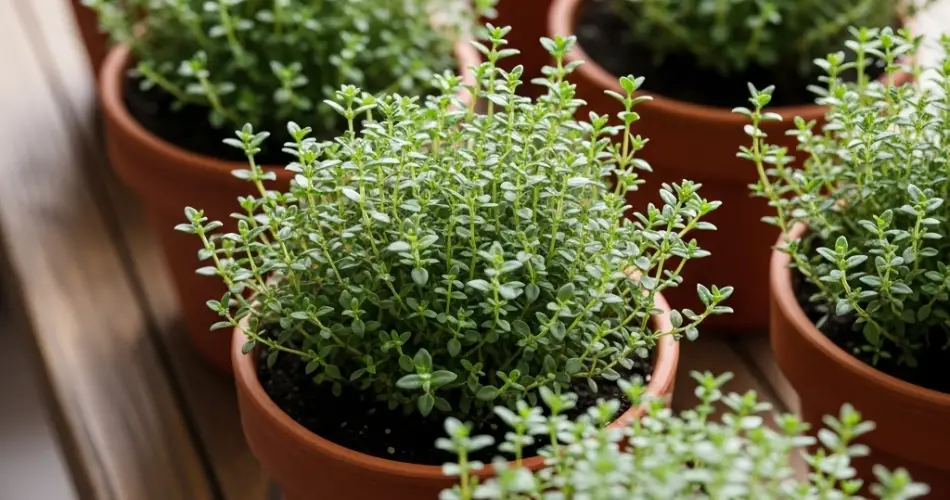
Thyme (Thymus vulgaris) is a fragrant, low-maintenance herb that’s easy to grow and perfect for container gardening. With its small, aromatic leaves and woody stems, thyme brings a warm, earthy flavor to everything from roasted vegetables and meats to soups and sauces. Its compact growth habit makes it ideal for pots, and it thrives indoors or outdoors with minimal effort.
If you’re short on garden space or want fresh herbs right at your fingertips, growing thyme in pots is a smart and satisfying choice. Here’s how to get started and keep your thyme healthy and productive.
Why Grow Thyme in Pots?
Thyme is a Mediterranean herb that prefers dry soil and full sunlight—conditions that are easy to replicate in containers. Growing it in a pot allows you to:
-
Control soil drainage and sunlight
-
Avoid invasive spreading in garden beds
-
Move the plant indoors during cold weather
-
Keep fresh thyme conveniently close to your kitchen
Plus, thyme’s trailing stems and tiny flowers make it an attractive addition to window boxes, patio planters, and herb arrangements.
Best Varieties for Containers
Several thyme varieties thrive in pots. Some of the most popular include:
-
Common Thyme (Thymus vulgaris): Classic variety with strong flavor, ideal for cooking.
-
Lemon Thyme (Thymus x citriodorus): Offers a fresh lemon scent and is great for fish and poultry dishes.
-
Creeping Thyme: A ground-cover type that spills attractively over the sides of pots.
-
English Thyme: Hardy and flavorful, great for cold climates and container growing.
All of these grow well in pots, so you can choose based on taste preference and appearance.
Choosing the Right Container
Thyme doesn’t need deep soil, but it does need excellent drainage. Choose a container that is:
-
6–8 inches deep
-
8–12 inches wide, depending on how many plants you’re growing
-
Equipped with drainage holes
Terracotta or unglazed clay pots are great choices, as they wick away moisture and help prevent overwatering—a key concern for thyme. Add a saucer underneath to protect indoor surfaces.
Soil Requirements
Thyme prefers well-drained, light soil. Avoid rich, heavy potting mixes that retain too much moisture. A gritty, sandy mix mimics the plant’s native habitat and keeps roots healthy.
Create an ideal potting mix by combining:
-
2 parts high-quality potting soil
-
1 part coarse sand or perlite
-
Optional: 1 part cactus mix for added drainage
Thyme grows best in soil with a neutral to slightly alkaline pH (6.5 to 7.5).
Planting Thyme in a Pot
You can grow thyme from seed, stem cuttings, or nursery starter plants. For faster results, use a transplant or cutting, as thyme seeds can be slow to germinate.
To plant:
-
Fill the pot with your soil mix, leaving 1 inch below the rim.
-
Transplant the thyme into the center, firming the soil gently around the base.
-
Water lightly after planting, just enough to settle the soil.
Place the pot in a sunny location where the plant can get at least 6 to 8 hours of sunlight daily.
Light and Temperature
Thyme loves full sun. A south- or west-facing window is ideal if growing indoors. Outdoors, place the pot in a bright, sheltered location. In colder climates, bring thyme indoors before the first frost, or treat it as a seasonal annual.
Thyme thrives in temperatures between 60–80°F (15–27°C) and can tolerate brief droughts. It’s more likely to suffer from overwatering than heat.
Watering and Feeding
Thyme prefers dry conditions. Water only when the top 1–2 inches of soil feel dry. Always allow excess water to drain away to prevent root rot.
This herb doesn’t need much fertilizer. Feed once every 4–6 weeks during the growing season with a diluted liquid fertilizer or a slow-release organic blend. Overfeeding can reduce thyme’s flavor and encourage weak, leggy growth.
Pruning and Harvesting
Prune regularly to keep your thyme bushy and prevent it from becoming woody. Once the plant is 4–6 inches tall, you can begin harvesting.
To harvest:
-
Snip stems just above a pair of leaves
-
Harvest in the morning, when the oils are most concentrated
-
Avoid cutting more than one-third of the plant at a time
Pinch off flower buds if you want the plant to keep focusing on leaf production. However, if you let it flower, the blooms attract pollinators and add visual charm.
Troubleshooting and Maintenance
Thyme is relatively pest- and disease-resistant but may experience problems if overwatered or grown in poor light.
Common issues:
-
Yellowing leaves: Usually a sign of too much moisture.
-
Leggy growth: Indicates the plant isn’t getting enough sunlight.
-
Powdery mildew: Can occur in humid environments; improve air circulation and avoid wetting the leaves.
Re-pot thyme every couple of years or refresh the soil to keep it productive. Divide and replant woody or overcrowded clumps in fresh soil to rejuvenate growth.
Final Thoughts
Thyme is a must-have herb for any container garden. With its low maintenance needs, compact size, and rich flavor, it’s an ideal choice for beginners and experienced gardeners alike. Whether placed on a sunny balcony or nestled in your kitchen windowsill, potted thyme delivers beauty, fragrance, and culinary value throughout the year.


