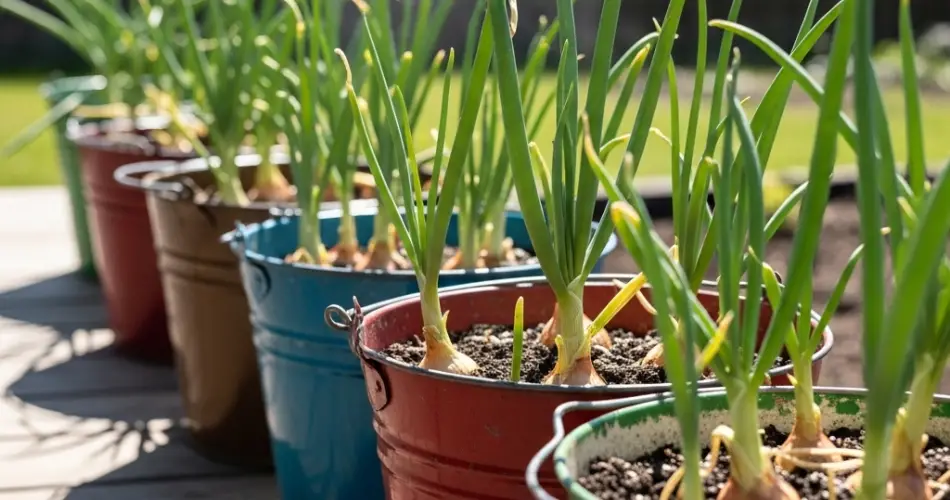
Onions are a versatile and essential vegetable, adding flavor and nutrition to a wide range of dishes. While traditionally grown in garden beds, onions can thrive in containers, making bucket gardening an ideal option for small spaces such as balconies, patios, or compact yards. With the right soil, watering, and care, it is possible to grow large, healthy onion bulbs in buckets, providing a continuous supply for your kitchen.
Why Grow Onions in Buckets?
Container gardening for onions offers several benefits:
-
Space efficiency – Perfect for small spaces or urban gardens where traditional beds are unavailable.
-
Soil control – Buckets allow precise management of soil fertility, drainage, and texture.
-
Mobility – Containers can be moved to capture optimal sunlight or shield plants from harsh weather.
-
Pest and disease management – Growing onions in buckets reduces the risk of soil-borne pests and diseases.
By using buckets, gardeners can cultivate robust, flavorful onions even in limited spaces.
Step 1: Choosing the Right Bucket
The container you choose plays a critical role in onion growth:
-
Size – A 5-gallon (19-liter) or larger bucket works well, allowing space for bulb expansion and root development.
-
Drainage – Drill multiple holes at the bottom to prevent waterlogging and root rot.
-
Material – Plastic, clay, or metal buckets are all suitable, as long as they are sturdy and capable of holding soil and moisture.
A well-chosen container supports healthy root systems and encourages larger bulbs.
Step 2: Preparing the Soil
Onions require fertile, loose, well-draining soil for optimal bulb growth:
-
Soil mix – Combine garden soil, compost, and perlite or coarse sand in equal parts. This ensures moisture retention while preventing waterlogging.
-
Soil pH – Onions prefer slightly acidic to neutral soil, ideally between 6.0 and 7.0 pH.
-
Fertilization – Incorporate a slow-release, balanced fertilizer into the soil before planting to provide essential nutrients for strong bulbs and healthy foliage.
Proper soil preparation is key to producing large, flavorful onions.
Step 3: Selecting Onion Bulbs or Sets
Healthy planting material is crucial for success:
-
Bulbs or sets – Use firm, disease-free onion sets or small bulbs. Avoid soft or damaged specimens.
-
Clove preparation – For sets, ensure the pointed end is facing upward during planting to encourage vertical growth.
Starting with high-quality bulbs ensures stronger plants and larger harvests.
Step 4: Planting Onions
Correct planting depth and spacing are essential:
-
Depth – Plant sets 1–2 inches (2.5–5 cm) deep. Bulbs should be fully covered with soil.
-
Spacing – Space onions 4–6 inches (10–15 cm) apart to allow room for bulb expansion.
-
Succession planting – Stagger plantings every few weeks for continuous harvests.
Proper spacing reduces competition and promotes the development of large, uniform bulbs.
Step 5: Watering
Consistent moisture is essential for onion growth:
-
Initial watering – Water thoroughly after planting to settle the soil around the sets.
-
Ongoing watering – Keep soil evenly moist, particularly during dry spells. Avoid overwatering, which can lead to rot.
-
Technique – Water at the soil level to reduce the risk of fungal diseases on the leaves.
Balanced watering supports strong root systems and helps bulbs reach maximum size.
Step 6: Sunlight and Placement
Onions require full sun for optimal bulb development:
-
Light requirements – Place buckets in a location that receives at least 6–8 hours of direct sunlight daily.
-
Temperature – Onions prefer moderate temperatures, growing best between 55–75°F (13–24°C). Protect young plants from frost or extreme heat.
Adequate sunlight encourages strong foliage and well-formed bulbs.
Step 7: Maintenance
Ongoing care helps maximize yield and bulb quality:
-
Fertilization – Apply a balanced liquid fertilizer every 3–4 weeks to maintain nutrient levels for continuous growth.
-
Mulching – Add a thin layer of organic mulch to conserve moisture, regulate soil temperature, and suppress weeds.
-
Pest monitoring – Inspect leaves and bulbs regularly for onion flies, thrips, or fungal issues. Remove pests promptly to protect plants.
Regular maintenance ensures healthy onions and larger bulbs at harvest.
Step 8: Harvesting
Harvest onions at the right stage to maximize size and flavor:
-
Timing – Onions are ready when tops start to yellow and fall over, usually 90–120 days after planting.
-
Technique – Gently loosen soil and lift bulbs carefully to avoid damage.
-
Curing – Allow harvested bulbs to dry in a shaded, well-ventilated area for 2–3 weeks to enhance flavor and storage life.
Proper harvesting and curing ensure large, flavorful onions that can be stored for months.
Final Thoughts
Bucket gardening makes it possible to grow big, healthy onions even in small spaces. By selecting the right container, preparing fertile soil, planting healthy sets, providing consistent watering and sunlight, and maintaining proper care, gardeners can enjoy a bountiful harvest of flavorful onion bulbs.
Even on a balcony or patio, bucket-grown onions offer fresh, homegrown produce, making this method practical, rewarding, and accessible for gardeners of all levels.


