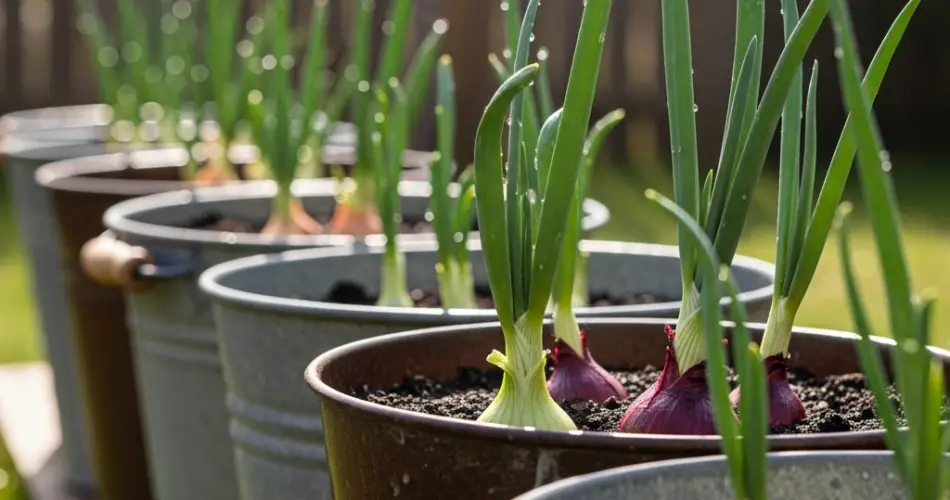
Onions are a staple in kitchens worldwide, adding flavor and nutrition to countless dishes. Growing onions in containers is an excellent solution for urban gardeners or those with limited outdoor space. With proper care, container-grown onions can yield tender, flavorful bulbs without the need for a traditional garden plot. Understanding the essentials of container selection, soil preparation, watering, and harvesting ensures a successful onion harvest.
Choosing the Right Container
Selecting an appropriate container is the first step in successful onion cultivation. Onions require a pot with a depth of at least 8–12 inches to accommodate their root system and allow bulbs to develop properly. Wide containers or window boxes are ideal for planting multiple onions while maintaining sufficient spacing.
Drainage holes are essential to prevent water accumulation, which can lead to bulb rot. Lightweight containers, such as plastic or fiberglass, are easy to move and adjust for sunlight exposure, while terracotta pots retain moisture effectively but may dry out faster in hot weather.
Preparing Soil for Onions
Onions thrive in fertile, well-draining soil. A high-quality potting mix combined with compost or well-rotted organic matter provides the necessary nutrients and retains adequate moisture. Incorporating perlite or coarse sand improves soil aeration, prevents compaction, and supports healthy root growth.
Onions prefer slightly acidic to neutral soil, with a pH between 6.0 and 7.0. Fill containers to about an inch below the rim to leave space for watering and mulching. Mulching with straw or shredded leaves helps maintain consistent moisture, regulates soil temperature, and minimizes weed competition.
Selecting Onion Varieties
Several onion varieties are suitable for container gardening. Short-day onions, such as ‘Texas Early Grano,’ perform well in warmer climates, while long-day onions like ‘Walla Walla’ are ideal for cooler regions. Additionally, green onions or scallions are perfect for small containers and provide a continuous supply of fresh, tender stalks.
Planting Onions in Containers
Onions can be grown from seeds, sets, or transplants. Seeds require an early start indoors, while sets and transplants can be planted directly into containers after the last frost. Plant seeds or sets about 1 inch deep and space them 2–4 inches apart. For transplants, ensure the roots are covered and the soil is lightly firmed around the base.
Proper planting depth and spacing are essential for strong bulbs and healthy growth. Overcrowding can limit airflow, increase disease risk, and reduce overall yield.
Watering and Moisture Management
Consistent moisture is vital for container-grown onions. The soil should remain evenly moist but not waterlogged. Onions have shallow roots, and container soil can dry quickly, especially during hot weather. Water when the top inch of soil feels dry, ensuring excess water drains freely.
Morning watering is ideal, as it allows leaves to dry during the day, reducing the risk of fungal diseases. Mulching helps retain moisture and keeps soil temperatures stable.
Sunlight Requirements
Onions require full sunlight to grow effectively, ideally 6–8 hours per day. Position containers in a location that receives maximum light. In hot climates, partial afternoon shade can protect plants from heat stress and prevent bolting, ensuring strong, flavorful bulbs.
Fertilization and Care
Regular fertilization supports robust growth and healthy bulb development. Use a balanced, water-soluble fertilizer every 2–3 weeks or incorporate compost for a natural nutrient boost. Avoid over-fertilizing with nitrogen, which can encourage leafy growth at the expense of bulb size.
Remove yellowing or damaged leaves to maintain airflow and reduce disease risk. Proper maintenance ensures that container-grown onions remain productive and vibrant throughout the season.
Harvesting Onions
Onions are typically ready to harvest when the tops begin to yellow and fall over. Carefully lift bulbs from the soil using a small hand fork or trowel, and allow them to cure in a dry, ventilated area for a few weeks. Curing helps develop stronger skins and enhances storage life.
Green onions or scallions can be harvested earlier by snipping the outer stalks, allowing the inner stalks to continue growing. This “cut-and-come-again” method provides a continuous supply of fresh onions.
Benefits of Container Onion Gardening
Growing onions in containers offers several advantages. It allows gardeners to control soil, water, and sunlight, reduces exposure to pests and soil-borne diseases, and makes onion cultivation possible even in small urban spaces. With proper care, container-grown onions yield flavorful, nutritious bulbs that enhance home-cooked meals.
By selecting the right container, preparing nutrient-rich soil, providing consistent water and sunlight, and following proper harvesting techniques, gardeners can enjoy a successful onion harvest. Container gardening transforms limited space into a productive garden, delivering fresh, healthy onions year-round.


