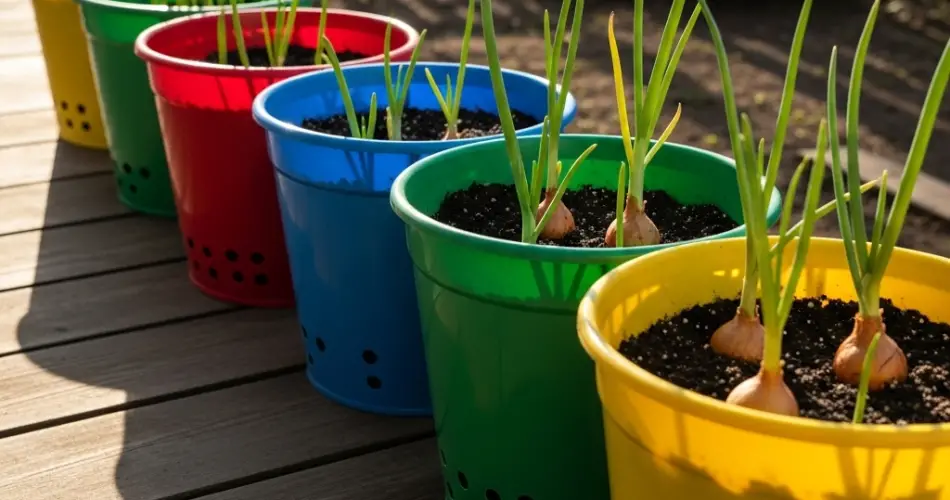
Onions are a kitchen essential, prized for their flavor, versatility, and nutritional benefits. Growing onions at home is not only rewarding but also ensures a steady supply of fresh bulbs. Bucket gardening makes it possible for urban gardeners or those with limited outdoor space to successfully cultivate onions. With proper soil, watering, sunlight, and maintenance, even compact containers can yield large, healthy onions. This guide provides simple yet effective care tips for bucket-grown onions.
Why Use Buckets for Onions?
Container gardening offers several advantages:
-
Space efficiency – Buckets are perfect for small patios, balconies, or urban gardens where traditional beds are unavailable.
-
Soil control – Containers allow gardeners to provide fertile, well-draining soil that meets the specific needs of onions.
-
Mobility – Buckets can be moved to follow sunlight, avoid harsh weather, or adjust temperature conditions.
-
Pest management – Growing onions in buckets reduces exposure to soil-borne pests and diseases.
Bucket gardening provides flexibility and control, helping gardeners grow strong, productive onion plants.
Step 1: Choosing the Right Bucket
The container sets the foundation for successful onion growth:
-
Size – Use a 5–7 gallon (19–26 liters) bucket to give roots adequate space for bulb development.
-
Drainage – Ensure the bucket has multiple holes at the bottom to prevent waterlogging and root rot.
-
Material – Plastic, clay, or metal buckets are suitable as long as they are sturdy and capable of holding soil and moisture.
A well-chosen container promotes healthy root systems and robust bulb formation.
Step 2: Preparing Fertile Soil
Onions require nutrient-rich, loose, and well-draining soil:
-
Soil mix – Combine garden soil, compost, and perlite or coarse sand in equal parts. This provides moisture retention while preventing waterlogging.
-
Soil pH – Onions thrive in slightly acidic to neutral soil, ideally between 6.0 and 7.0.
-
Fertilization – Incorporate a slow-release balanced fertilizer before planting to support both foliage and bulb development.
Healthy soil ensures vigorous growth and larger, more flavorful onions.
Step 3: Planting Onion Sets
Planting techniques affect bulb size and plant health:
-
Selection – Choose firm, disease-free onion sets or small bulbs. Avoid soft, damaged, or shriveled ones.
-
Planting depth – Set onions 1–2 inches (2.5–5 cm) deep, ensuring the pointed end is facing upward.
-
Spacing – Maintain 4–6 inches (10–15 cm) between bulbs to allow room for expansion.
Proper planting reduces competition for nutrients and encourages uniform, large bulbs.
Step 4: Watering Techniques
Onions require consistent moisture without becoming waterlogged:
-
Initial watering – Water thoroughly after planting to settle the soil around the roots.
-
Ongoing care – Keep the soil evenly moist, especially during hot or dry weather. Overwatering can lead to rot.
-
Watering method – Water at the soil level to prevent wet foliage, which can cause fungal issues.
Balanced watering ensures steady leaf growth and encourages large bulb formation.
Step 5: Sunlight and Placement
Sunlight is critical for strong onion growth:
-
Light requirements – Place buckets where onions receive at least 6–8 hours of direct sunlight per day.
-
Temperature – Onions grow best between 55–75°F (13–24°C). Protect young plants from frost or extreme heat.
Adequate sunlight produces healthy foliage and well-formed, flavorful bulbs.
Step 6: Fertilization and Maintenance
Ongoing care helps maintain healthy plants:
-
Feeding – Apply a balanced liquid fertilizer every 3–4 weeks during the growing season to support leaf and bulb development.
-
Mulching – Add organic mulch to conserve soil moisture, regulate temperature, and suppress weeds.
-
Pest monitoring – Check leaves and bulbs regularly for pests such as thrips or onion flies and treat promptly if needed.
Consistent maintenance ensures maximum growth and a productive harvest.
Step 7: Harvesting
Harvest at the right stage for the best size and flavor:
-
Timing – Onions are ready when tops begin to yellow and fall over, typically 90–120 days after planting.
-
Technique – Loosen the soil carefully and lift bulbs to avoid bruising.
-
Curing – Dry harvested onions in a shaded, ventilated area for 2–3 weeks to improve flavor and storage life.
Proper harvesting and curing guarantee large, healthy onions that store well.
Final Thoughts
Bucket gardening makes growing onions accessible for small-space gardeners. By choosing the right container, preparing fertile soil, planting healthy sets, providing consistent watering and sunlight, and performing regular maintenance, gardeners can enjoy large, flavorful onion bulbs from their own home.
Even on a balcony or patio, container-grown onions provide fresh, homegrown produce, making them a practical and rewarding addition to urban gardening.


