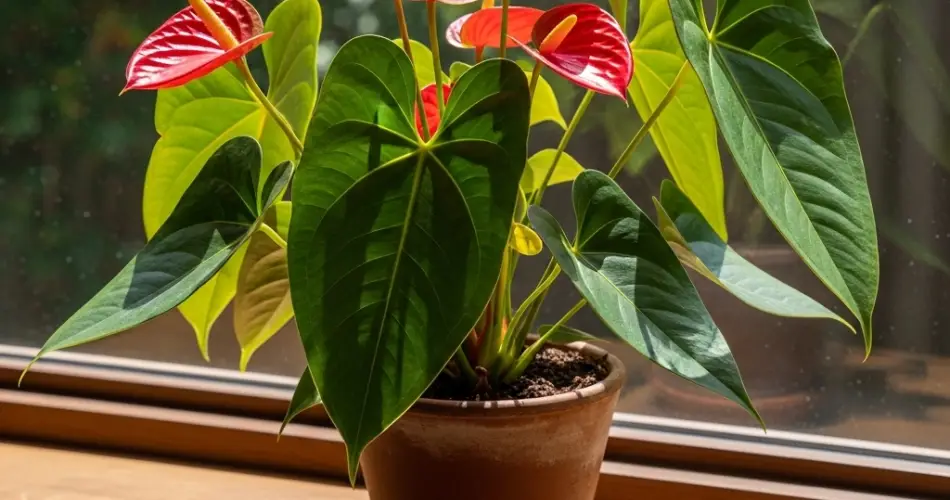
Anthuriums, often admired for their striking heart-shaped flowers and glossy foliage, are a favorite among indoor plant lovers. With proper care, these tropical beauties can bloom throughout the year, offering vibrant color and a touch of elegance to any indoor space. Growing anthurium in pots is a practical choice, especially for those who want to enjoy their long-lasting blooms without the need for a garden.
Here’s a complete guide to growing healthy, flowering anthuriums in containers.
Understanding Anthurium Plants
Native to the tropical rainforests of Central and South America, anthuriums are epiphytic or semi-epiphytic, meaning they naturally grow on trees or in well-drained, organic-rich soils. The most commonly grown species indoors is Anthurium andraeanum, recognized for its bright red, pink, or white spathes (the waxy leaf-like part surrounding the tiny flower spike called a spadix).
Because of their exotic origin, anthuriums thrive best in warm, humid, and lightly shaded environments, which can be replicated indoors with the right setup.
Choosing the Right Pot and Soil
Anthuriums prefer shallow pots with good drainage. Avoid deep containers, which tend to hold excess moisture and may lead to root rot.
Pot selection tips:
-
Use a pot with drainage holes at the bottom.
-
Choose clay or terracotta pots for better air circulation to the roots.
-
Ensure the pot is just slightly larger than the root ball. Overly large pots can slow down flowering.
Ideal potting mix:
Anthuriums need a light, well-aerated growing medium. A mixture of:
-
1 part orchid bark or coco husk
-
1 part perlite
-
1 part peat moss or coconut coir
This blend mimics their natural environment, offering both drainage and moisture retention.
Light Requirements
To encourage year-round blooms, provide anthuriums with bright, indirect light. Too much sun can scorch their leaves, while too little light will prevent flowering.
Best placement:
-
Near an east- or north-facing window.
-
A few feet away from a south-facing window, with sheer curtains for light filtering.
-
Under grow lights if natural light is limited.
Keep in mind that while anthuriums tolerate low light, they won’t produce flowers without sufficient brightness.
Watering and Humidity
Anthuriums like moisture but are highly sensitive to overwatering. Keep the soil lightly moist but never soggy.
Watering tips:
-
Water when the top inch of soil feels dry.
-
In warm months, water once a week; in winter, reduce to every 10–14 days.
-
Avoid letting water sit in saucers or the bottom of decorative pots.
Humidity needs:
As tropical plants, anthuriums enjoy higher humidity levels. Aim for 60–80% humidity for best results.
To increase humidity:
-
Use a humidifier near the plant.
-
Place the pot on a tray filled with water and pebbles.
-
Group plants together to create a micro-humid environment.
Fertilizing for Better Blooms
Feeding anthuriums with the right fertilizer can significantly improve flowering.
Fertilizer recommendations:
-
Use a balanced, water-soluble fertilizer (20-20-20) diluted to half strength.
-
Feed every 6–8 weeks during the growing season (spring through early autumn).
-
Choose a bloom-boosting fertilizer high in phosphorus (like 10-30-20) if flowers are scarce.
Avoid overfeeding, which can lead to salt build-up and damage the roots.
Pruning and Maintenance
Regular maintenance keeps anthuriums healthy and blooming.
Care tips:
-
Remove spent flowers and yellowing leaves to redirect energy to new growth.
-
Wipe leaves with a damp cloth to remove dust and help with photosynthesis.
-
Rotate the pot every couple of weeks for even light exposure and balanced growth.
Repotting and Propagation
Every 2–3 years, repot your anthurium to refresh the soil and accommodate growing roots.
Signs it’s time to repot:
-
Roots are circling the pot or emerging from drainage holes.
-
Soil dries out too quickly.
-
Flower production slows down despite good care.
Propagation:
You can propagate anthuriums by division during repotting. Gently separate the root clumps, making sure each division has a few leaves and healthy roots.
Common Problems and Solutions
-
Brown tips: Often due to low humidity or excessive fertilizer. Increase moisture and flush the soil monthly.
-
Yellow leaves: May signal overwatering or poor drainage. Let the soil dry out slightly before watering again.
-
No blooms: Ensure the plant receives bright indirect light and isn’t in a pot that’s too large.
Final Thoughts
Growing anthuriums in pots allows anyone to enjoy their lush foliage and stunning blooms, even in small indoor spaces. With the right container, light, and care, your potted anthurium can reward you with long-lasting, vibrant flowers throughout the year.
This low-maintenance yet exotic plant not only adds elegance to any room but also thrives with just a little attention to its tropical preferences. Whether you’re a beginner or a seasoned plant parent, anthuriums are a rewarding choice for brightening up your indoor plant collection.


