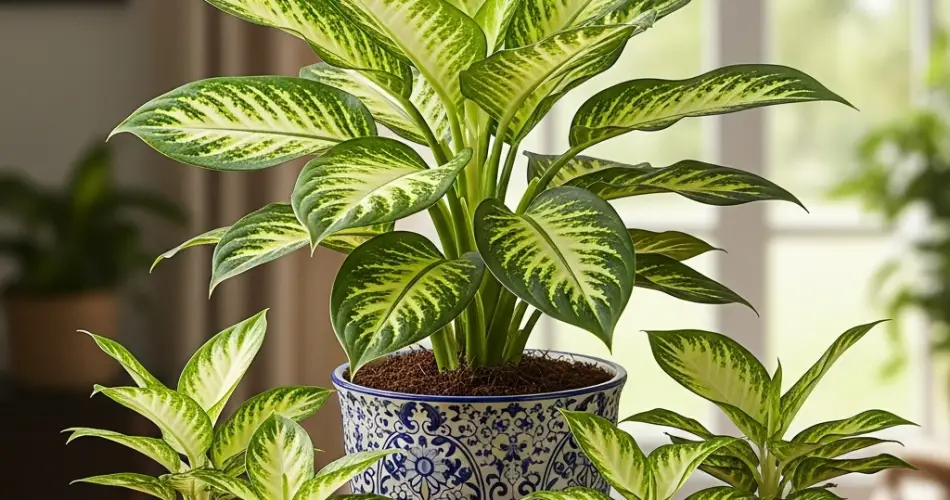
Dieffenbachia, also known as dumb cane, is a popular indoor plant known for its bold, variegated foliage and ease of care. It makes a striking addition to any room, especially when grown in compact containers that fit nicely on desks, shelves, or tabletops. While Dieffenbachia can grow large under the right conditions, it adapts well to smaller pots with the proper attention.
If you’re working with limited space but still want to enjoy this lush tropical plant indoors, here’s how to keep your Dieffenbachia healthy and thriving in a compact pot.
1. Choosing the Right Compact Pot
For small spaces, select a pot that allows some root development but doesn’t overwhelm the plant. A container about 6 to 8 inches in diameter works well for young or medium-sized Dieffenbachia. Make sure the pot has good drainage holes to prevent water from sitting at the bottom, which could lead to root rot.
Terracotta or ceramic pots are great choices since they allow the soil to breathe. Self-watering pots are not ideal for Dieffenbachia, as they often retain more moisture than this plant prefers.
2. Use the Proper Soil Mix
Dieffenbachia thrives in well-draining, slightly acidic to neutral soil. A quality houseplant mix works fine, especially if it includes components like peat moss, perlite, or coconut coir. These ingredients help retain just enough moisture while allowing excess water to drain away.
Avoid heavy or compacted soils, such as those designed for outdoor use, which can suffocate the roots in a small pot.
3. Light: Bright but Indirect
Dieffenbachia enjoys bright, indirect light. A spot near an east- or north-facing window is perfect. In compact pots, your plant may be placed closer to indoor lights or windows, so take care to avoid direct sunlight, which can scorch the leaves.
If the plant’s leaves start to turn pale or leggy, it may not be receiving enough light. On the other hand, curling leaves or sunburn spots can indicate too much direct exposure. Adjust its location as needed to maintain vibrant foliage.
4. Watering: Consistency Is Key
In smaller containers, the soil tends to dry out more quickly. Dieffenbachia likes its soil to stay evenly moist but not soggy. Stick your finger about an inch into the soil—if it feels dry at that depth, it’s time to water.
Water thoroughly until it drains out the bottom, then allow the top layer to dry before the next watering. During cooler months, reduce the watering frequency as the plant’s growth slows.
Avoid letting the plant sit in a saucer filled with standing water, as this can lead to root problems, especially in compact pots.
5. Humidity and Temperature Tips
Dieffenbachia is a tropical plant and prefers moderate to high humidity. If your home is dry, especially during winter, consider misting the plant occasionally or placing it near a humidity tray (a shallow tray filled with water and pebbles).
Keep it in a room with temperatures between 65°F to 80°F (18°C to 27°C). Protect it from cold drafts or sudden temperature drops, as it is sensitive to chilly air.
6. Pruning and Maintenance
Regular maintenance helps keep your Dieffenbachia compact and attractive. In tight spaces, you’ll want to prevent it from becoming too leggy or top-heavy. Trim back overgrown stems with clean scissors to maintain shape and encourage bushier growth.
Remove yellowing or damaged leaves at the base to improve air circulation and appearance.
If the plant becomes too tall for its pot, you can propagate it from a healthy stem cutting and restart it in a fresh container.
7. Feeding for Foliage Health
Dieffenbachia benefits from regular feeding during the growing season. Use a balanced, water-soluble fertilizer every four to six weeks in spring and summer. Dilute it to half the recommended strength to avoid over-fertilizing, which can cause brown leaf edges or salt buildup.
Skip feeding during the dormant months of late fall and winter, as the plant isn’t actively growing.
8. Pest Prevention
In smaller pots, it’s easier to inspect your plant regularly for common pests like spider mites, mealybugs, or aphids. If you spot any, remove them with a damp cloth or treat with insecticidal soap.
Keeping the leaves clean and dust-free also improves their appearance and health. Simply wipe them down with a moist cloth every few weeks.
9. Repotting and Root Health
Dieffenbachia can live comfortably in the same compact pot for a year or two, but once roots start to peek through the drainage holes or the plant seems to dry out too fast, it’s time to repot. Move up just one pot size to maintain the plant’s manageable dimensions.
When repotting, take the opportunity to trim off any rotting or overly long roots and refresh the soil to support new growth.
Final Thoughts
Caring for Dieffenbachia in compact pots is a great way to enjoy its bold beauty without needing a lot of space. With the right light, soil, water routine, and occasional pruning, this adaptable houseplant can flourish in even the smallest apartment corners. Its vibrant leaves make a stylish, low-maintenance indoor statement that’s easy to manage—perfect for plant lovers of any experience level.


