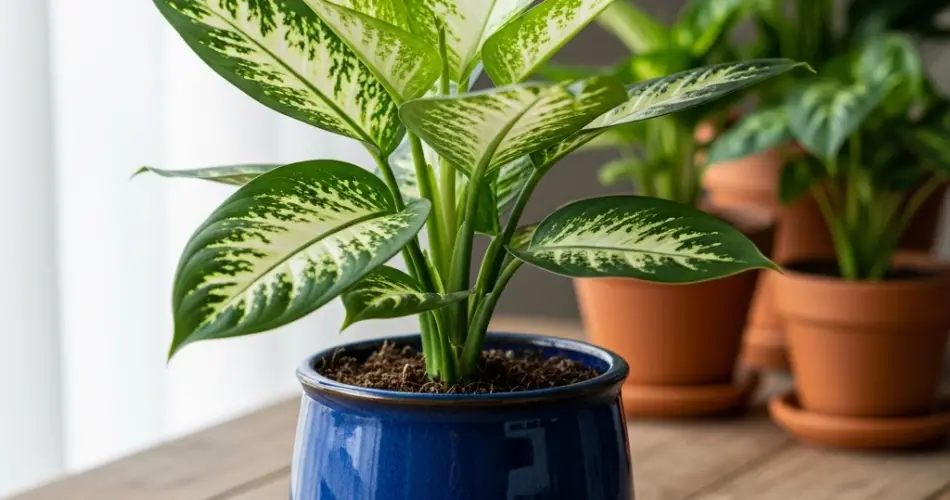
Dieffenbachia, often called Dumb Cane, is a popular indoor plant celebrated for its large, patterned leaves and easy-going nature. With a little attention to potting and watering, this tropical beauty can thrive in containers and bring vibrant greenery to any indoor space. Understanding what this plant needs will help you avoid common pitfalls and ensure healthy, robust growth.
Here’s a complete guide to the potting and watering secrets that keep Dieffenbachia lush and thriving in containers.
Choosing the Right Pot
Selecting the proper container is one of the most important steps when growing Dieffenbachia. Since this plant doesn’t tolerate waterlogged soil, drainage is key.
What to look for in a pot:
-
Drainage holes: Essential to prevent root rot
-
Material: Terracotta allows better air movement, but plastic retains moisture longer—choose based on your watering habits
-
Size: Choose a pot that is 1–2 inches larger in diameter than the root ball. Oversized pots may retain too much water, while undersized ones can restrict root growth
Dieffenbachia likes to be slightly root-bound, so there’s no need to upsize frequently. Repot only when roots begin to outgrow the container or start circling the bottom.
Ideal Potting Mix
Dieffenbachia thrives in a light, airy potting mix that retains some moisture but drains well. Avoid dense soils that hold excess water, as this can cause root issues.
Recommended mix:
-
2 parts peat moss or coco coir
-
1 part perlite or coarse sand
-
1 part good-quality indoor plant potting soil
You can also use a commercial potting mix labeled for houseplants or aroid plants, but it should feel loose and fluffy, not compact or soggy.
Potting Process
Potting Dieffenbachia correctly helps reduce transplant shock and supports long-term growth.
Step-by-step potting guide:
-
Fill the new pot one-third of the way with your prepared mix.
-
Gently remove the Dieffenbachia from its current pot, supporting the root ball to prevent damage.
-
Loosen the roots slightly, especially if they’re tightly coiled.
-
Place the plant in the center of the pot and fill around it with soil, pressing lightly to eliminate air pockets.
-
Water thoroughly until it drains out the bottom. Wait for the top inch of soil to dry before the next watering.
Avoid planting too deep; the base of the stem should sit just above the soil line.
Watering Tips for Lush Growth
Dieffenbachia appreciates consistent watering, but it’s sensitive to overwatering. Watering at the right time and in the right amount is essential.
General watering rules:
-
Water only when the top 1–2 inches of soil are dry
-
Use room-temperature water to avoid shocking the roots
-
Water deeply until water drains from the bottom—then discard excess from the saucer
In spring and summer, watering needs increase as the plant enters its active growing phase. In fall and winter, reduce frequency to match slower growth and cooler indoor temperatures.
Signs of Overwatering or Underwatering
Keeping an eye on your plant’s foliage will give clues about whether your watering routine is working.
Overwatering signs:
-
Yellowing lower leaves
-
Wilting despite moist soil
-
Mushy stems or foul-smelling roots
Underwatering signs:
-
Dry, crisp leaf edges
-
Drooping leaves that perk up after watering
-
Soil pulling away from the pot’s sides
If overwatering occurs, allow the soil to dry out more thoroughly before the next watering. In cases of root rot, you may need to repot entirely with fresh soil.
Humidity and Environment
Being a tropical plant, Dieffenbachia loves humidity. If your indoor air is dry, especially in winter, consider increasing humidity around the plant.
Ways to increase humidity:
-
Place the pot on a pebble tray filled with water (without the pot sitting in the water)
-
Use a room humidifier nearby
-
Group it with other plants to create a micro-humid environment
Dieffenbachia also prefers steady temperatures between 18–26°C (65–80°F). Avoid placing it near cold drafts, heating vents, or areas with frequent temperature swings.
Bonus Tips for Healthy Growth
-
Rotate the plant weekly to encourage even growth toward the light
-
Fertilize monthly during the growing season with a balanced, water-soluble fertilizer at half strength
-
Wipe leaves gently with a damp cloth to remove dust and keep them looking vibrant
-
Prune leggy stems to encourage bushier growth and remove any yellowing or damaged leaves
Also, be mindful that Dieffenbachia contains calcium oxalate crystals and can be toxic if ingested. Keep it out of reach of pets and children, and wash your hands after handling the plant or trimming it.
Conclusion
Potting and watering Dieffenbachia correctly is the secret to keeping this striking plant in top shape. With a breathable soil mix, a well-draining pot, and a consistent watering schedule, your Dieffenbachia will reward you with bold, healthy foliage and an impressive presence indoors. Just a few small adjustments to its care routine can make a big difference in how lush and beautiful your plant becomes over time.


