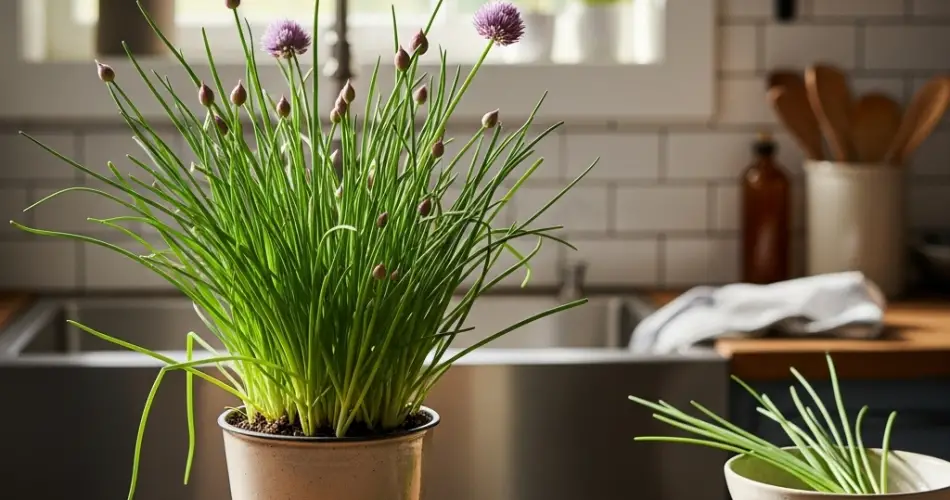
Fresh herbs are a simple way to transform everyday meals into something vibrant and flavorful. While parsley and basil often take the spotlight, chives deserve equal recognition. With their mild onion taste and delicate green stalks, they’re a versatile addition to everything from scrambled eggs to creamy dips. Even better, chives are one of the easiest herbs to grow indoors.
Imagine reaching for your knife to prepare dinner and, right beside it, having a pot of lush, green chives ready for snipping. By keeping chives close at hand—on a windowsill, countertop, or even right next to your kitchen knife block—you’ll always have a burst of freshness available without the need for a grocery store run.
Why Chives Are Ideal for Indoor Growing
Chives are particularly well-suited for small kitchen gardens because they adapt easily to containers, require little maintenance, and regrow quickly after harvesting. Their slender leaves take up minimal space, yet they provide continuous harvests year-round with proper care.
Unlike some herbs that may struggle indoors, chives are resilient and tolerate a range of indoor conditions. They’re also perennial, meaning the same plant can thrive for years when grown in the right environment. Their pretty purple blossoms in late spring or summer add a decorative element as well as an edible garnish.
Choosing the Perfect Pot
The container you choose for your chives should be practical and functional. A pot that is about 6–8 inches deep and wide is sufficient to support healthy root development. Since chives have shallow roots, width matters more than depth.
Ensure the pot has proper drainage holes, as soggy soil can quickly lead to root rot. Terracotta and ceramic pots are excellent choices because they allow excess moisture to evaporate, but lightweight plastic containers work too if portability is important.
Placing the pot near your knife block is both convenient and visually appealing. It makes cooking more interactive, as you can quickly snip herbs right into your dishes while preparing them.
Soil and Planting Needs
Chives thrive in loose, fertile soil with good drainage. A high-quality potting mix enriched with compost or organic matter is ideal. Avoid using heavy garden soil indoors, as it compacts easily and may contain pests or diseases.
For planting, you can start from seed, but growing from divisions or small nursery plants is faster and more reliable. If planting seeds, sow them thinly and cover lightly with soil, keeping the pot consistently moist until germination occurs.
Sunlight and Temperature Requirements
Light is one of the most important factors for growing strong, flavorful chives indoors. Place the pot in a sunny spot that receives at least 6 hours of direct sunlight per day. South-facing windows are usually best for providing the needed brightness.
If your kitchen doesn’t get enough natural light, supplement with a small grow light. Position it about 6–12 inches above the plant and keep it on for 12–14 hours daily. Without adequate light, chives may become pale and spindly.
Chives prefer moderate indoor temperatures between 60–75°F (15–24°C). They can tolerate cooler conditions but will slow down in growth if kept in colder spaces for long periods.
Watering and Feeding
Consistency is key when watering chives. The soil should remain slightly moist but never waterlogged. Water when the top inch of soil feels dry, and always let excess water drain away. Overwatering is one of the most common mistakes and can lead to yellowing leaves or weak plants.
Every 4–6 weeks, feed your chives with a diluted liquid fertilizer. Organic options such as fish emulsion or compost tea are gentle and effective. Avoid over-fertilizing, as too many nutrients can make the leaves less flavorful.
Harvesting Chives by Your Knife Block
The joy of keeping chives near your kitchen tools is the convenience of harvesting. Once the plants are at least 6 inches tall, you can start cutting. Use scissors or a small knife to snip leaves from the base, leaving about 2 inches above the soil to encourage regrowth.
Regular trimming keeps the plant healthy and stimulates new growth. If flowers appear, you can enjoy them as a garnish or pinch them off to redirect energy back into the leaves.
Because chives grow quickly, you’ll find yourself replenishing your supply within days of harvesting.
Common Issues and Simple Fixes
Though generally low-maintenance, chives may encounter small issues indoors:
-
Yellowing leaves usually signal overwatering. Adjust your watering schedule.
-
Spindly growth often means insufficient light. Move the pot to a sunnier location or use a grow light.
-
Pests such as aphids may appear occasionally. A gentle spray of water or a light application of neem oil is usually enough to solve the problem.
By paying attention to these small details, you’ll keep your indoor chives thriving.
Cooking with Fresh Chives
Chives add a subtle onion flavor without overpowering dishes. They’re perfect for sprinkling over baked potatoes, folding into omelets, or mixing into dips and dressings. They also pair beautifully with creamy sauces and cheeses, balancing richness with freshness.
For long-term storage, chives can be frozen. Chop them finely, spread them on a tray to freeze individually, then store in an airtight container. Unlike dried herbs, frozen chives retain much of their flavor and texture.
Final Thoughts
Growing chives indoors is one of the easiest and most rewarding ways to elevate your cooking. With just a small pot, some soil, and access to light, you can enjoy this flavorful herb year-round. Keeping them right by your kitchen knife block ensures they’re always within reach when inspiration strikes.
If you’ve been wanting to start a small herb garden indoors, chives are the perfect beginner-friendly choice. They’re compact, resilient, and endlessly versatile—a true kitchen essential.


