Fresh herbs can completely transform the taste of homemade meals, and chives are one of the easiest to grow in pots right in your kitchen. With their delicate onion-like flavor, they add a subtle yet distinctive taste to eggs, salads, soups, and countless other dishes. What makes chives particularly appealing is their adaptability—they thrive indoors, don’t require much space, and regenerate quickly after harvesting. For anyone who enjoys cooking and wants a steady supply of herbs, growing chives in pots is a simple and rewarding project.
Why Grow Chives at Home?
Chives belong to the allium family, alongside onions, garlic, and leeks. Unlike their relatives, however, chives are smaller, faster-growing, and much more manageable for indoor cultivation. They don’t take up much room, making them ideal for small apartments, kitchens with limited counter space, or homes without outdoor gardens.
Chives are also perennial, which means once you establish a pot, it can keep producing for years with proper care. Regular snipping not only provides you with a constant supply of fresh herbs but also keeps the plant growing vigorously.
Choosing the Right Pot and Soil
Growing chives indoors begins with selecting the right container. Since their roots are shallow, they don’t require deep pots. A 6-inch-deep container with good drainage holes is sufficient. Wide pots are useful if you want to grow several clumps of chives together, creating a fuller appearance.
For soil, choose a light, well-draining potting mix. A blend rich in organic matter works best, as chives appreciate a steady supply of nutrients. If you want to give your plants a head start, mix in a bit of compost before planting. This will ensure they remain healthy and productive.
Planting Methods
You can grow chives either from seed or by dividing an existing clump. Seeds are inexpensive and germinate within two to three weeks. Simply sprinkle them on the soil surface, cover lightly with soil, and keep the pot moist until the seedlings emerge.
If you have access to mature chives, dividing them is an even faster method. Separate a small clump from the main plant and transplant it into your pot. This way, you’ll have a harvest-ready plant much sooner.
Light and Placement
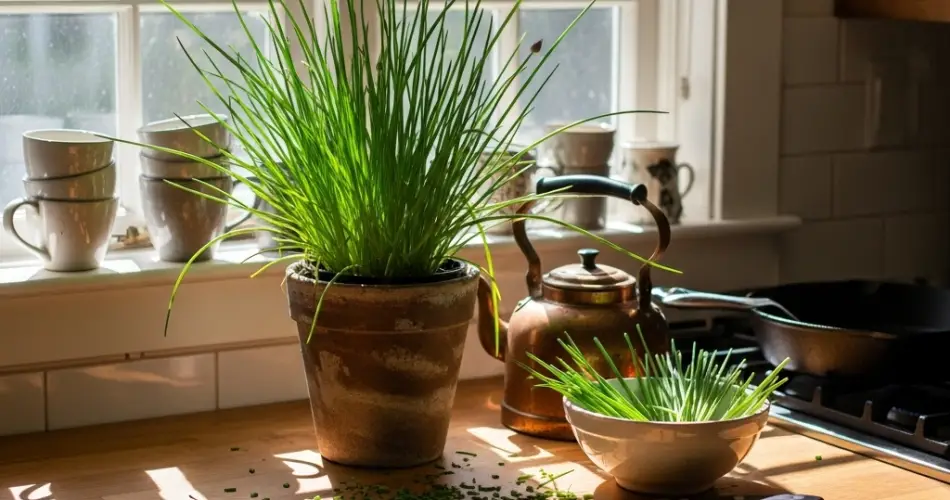
Chives need sunlight to thrive. Place your pot in a sunny window where it can get at least 6 hours of direct light per day. South-facing windows are usually the best choice. If natural light in your kitchen is limited, you can supplement with a small grow light. Compact LED grow lights work well and fit neatly in small spaces, making them ideal for urban kitchens.
Watering and Care
Chives enjoy evenly moist soil, but overwatering can lead to root problems. Check the top inch of soil regularly; if it feels dry, it’s time to water. Be sure the container drains properly so water doesn’t sit at the bottom.
Because indoor environments can be dry, especially with heating or air conditioning, occasional misting will help keep the foliage fresh and healthy.
Harvesting for Everyday Cooking
Once the leaves reach about 6 inches tall, they’re ready to harvest. Use clean scissors to cut them close to the base, but always leave at least 2 inches of growth. This allows the plant to regenerate quickly. The more you cut, the more it grows, so don’t hesitate to harvest regularly.
Chives also produce attractive purple flowers, which are edible and can be used as garnish. However, if you want the plant to focus on producing leaves, snip off flower stalks as soon as they appear.
Cooking with Fresh Chives
The versatility of chives makes them a must-have herb in any kitchen. Their mild onion flavor complements a wide variety of dishes:
-
Eggs and Breakfasts: Sprinkle over scrambled eggs, omelets, or frittatas.
-
Salads: Add freshly cut chives for a burst of flavor and color.
-
Soups and Stews: Use as a finishing touch just before serving.
-
Baked Potatoes: Classic topping when mixed with sour cream or butter.
-
Herb Butters and Spreads: Blend with softened butter or cream cheese for a quick flavored spread.
Since chives are best used fresh, growing them at home ensures you always have a ready supply within arm’s reach.
Keeping Plants Healthy Long-Term
To keep your potted chives productive:
-
Fertilize lightly once a month with a diluted liquid fertilizer. Too much fertilizer can weaken the flavor.
-
Divide dense clumps every year or two to refresh growth and prevent overcrowding.
-
Rotate pots if using artificial light to encourage even growth.
Final Thoughts
Growing chives in pots is an easy, low-maintenance way to bring freshness into your kitchen. They don’t require a lot of space, grow quickly, and reward you with a continuous supply of flavorful leaves for everyday cooking. Whether you’re sprinkling them over eggs, mixing them into sauces, or garnishing soups, homegrown chives will add a touch of freshness to your meals and a little greenery to your home.
With just a pot, some good soil, and a sunny spot, you can enjoy this versatile herb year-round—proof that even the smallest kitchen can support a thriving indoor garden.