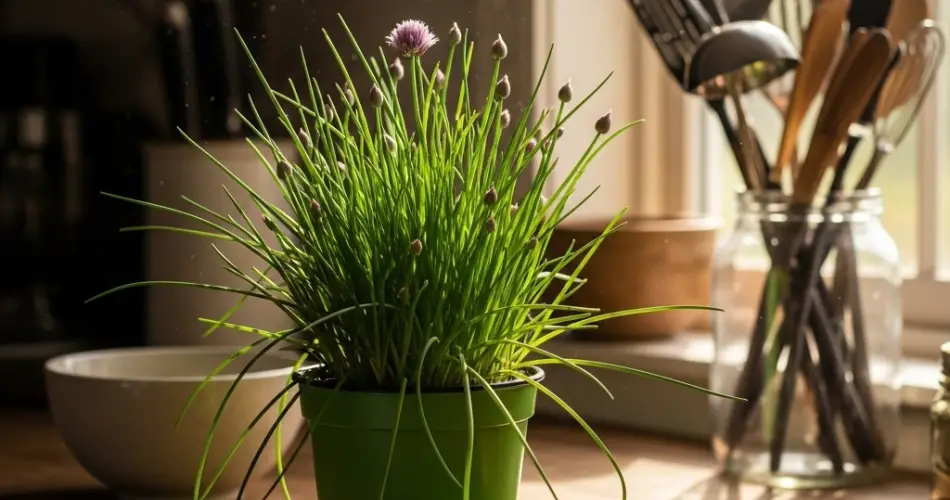
Growing your own herbs at home is one of the simplest ways to add freshness and flavor to meals, and chives are among the easiest to cultivate. Their mild onion taste and bright green leaves make them a versatile addition to countless dishes. Even better, chives thrive indoors with very little care, meaning you can grow them right in your kitchen without needing a garden or balcony.
Whether you’re an experienced home gardener or a beginner with limited space, chives are a low-maintenance herb that delivers maximum rewards. With the right pot, soil, light, and watering schedule, you can have a steady supply of fresh chives ready for cooking any time.
Why Chives Are Perfect for Indoor Growing
Chives are an ideal herb for the kitchen because they’re compact, hardy, and endlessly useful. Unlike some herbs that struggle indoors, chives adapt well to containers and can grow year-round if given the proper conditions.
They regenerate quickly after harvesting, so once you establish a pot, you’ll enjoy continuous growth without needing to replant frequently. Their thin, grass-like leaves are quick to snip and add instant freshness to eggs, salads, soups, and potato dishes. Chive flowers, which bloom in shades of purple, are edible as well and bring both flavor and beauty to the table.
For busy home cooks, the appeal lies in the convenience—just reach over to your windowsill or kitchen counter, trim a handful of stalks, and instantly elevate your dish.
Choosing the Right Container
Chives grow well in small spaces, but container choice is important. A pot that is at least 6 inches deep and wide gives the roots room to spread. Chives have shallow root systems, so a broader pot works better than a tall narrow one.
Make sure the container has drainage holes to prevent waterlogging. Terracotta or ceramic pots are great options, as they allow air circulation and help the soil dry evenly. Place a saucer underneath to catch excess water, but always empty it to avoid root rot.
If you’re growing multiple herbs in one container, chives pair nicely with parsley, basil, or oregano, as they all enjoy similar conditions.
Best Soil for Chives
Chives prefer loose, nutrient-rich soil that drains well. A high-quality potting mix works well, especially one with added compost or organic matter. Avoid using heavy garden soil indoors, as it retains too much water and may harbor pests.
Adding a little perlite or sand to the potting mix can improve drainage, ensuring the roots remain healthy.
Light and Temperature Needs
For chives to grow strong and flavorful, they require plenty of light. A sunny windowsill that receives 6 hours or more of direct sunlight is ideal. South-facing windows usually provide the best exposure.
If your kitchen lacks natural light, consider using a grow light to supplement. Place the light 6–12 inches above the plant and leave it on for 12–14 hours daily to mimic natural sunlight. Without sufficient light, chives may grow thin and weak.
Chives thrive in moderate indoor temperatures, between 60–75°F (15–24°C). They can tolerate cooler conditions but may slow down growth in colder kitchens.
Watering and Feeding
Chives like soil that stays consistently moist but never soggy. Check the soil regularly and water when the top inch feels dry. Always allow excess water to drain, as overwatering is the most common cause of problems.
Feed chives lightly every 4–6 weeks with a balanced liquid fertilizer. Organic options like compost tea or diluted fish emulsion work well. Avoid heavy feeding, which can make the leaves less flavorful.
Harvesting Chives Indoors
One of the best things about growing chives is how easy they are to harvest. Once the plant reaches about 6 inches tall, you can begin cutting the leaves. Use scissors to snip them at the base, leaving about 2 inches of growth above the soil.
Harvesting encourages fresh regrowth, so don’t be afraid to cut regularly. In fact, trimming often keeps the plant healthier and more productive.
The blossoms, when they appear, are also edible. Sprinkle them over salads or infuse them in vinegar for a delicate onion-flavored dressing.
Troubleshooting Common Issues
Although chives are hardy, you may encounter small issues:
-
Yellowing leaves often indicate overwatering. Let the soil dry slightly between waterings.
-
Slow growth can mean your plant isn’t receiving enough light. Move it to a brighter spot or add supplemental lighting.
-
Pests like aphids may occasionally appear. A gentle spray of water or neem oil is usually enough to keep them under control.
Regular care and observation will keep your kitchen chives thriving.
Cooking with Fresh Chives
Fresh chives are a chef’s secret weapon. They pair beautifully with eggs, potatoes, and dairy-based dishes such as cream cheese, butter, or sour cream. A sprinkle of finely chopped chives adds both flavor and a pop of color to soups, salads, and pasta.
Chives are best used fresh, but if you have more than you can use, they can be frozen. Chop them finely, spread them on a tray to freeze individually, then transfer to an airtight container. This way, you’ll have pre-cut chives ready to toss into recipes anytime.
Final Thoughts
Growing chives indoors is a simple and satisfying way to bring fresh flavor into your kitchen. They require minimal care, adapt to small spaces, and reward you with continuous harvests year-round. With just a sunny spot, good soil, and occasional watering, you’ll always have this versatile herb at your fingertips.
If you’ve been thinking about starting an indoor herb garden, chives are the perfect first choice—easy, reliable, and endlessly useful for home cooking.


