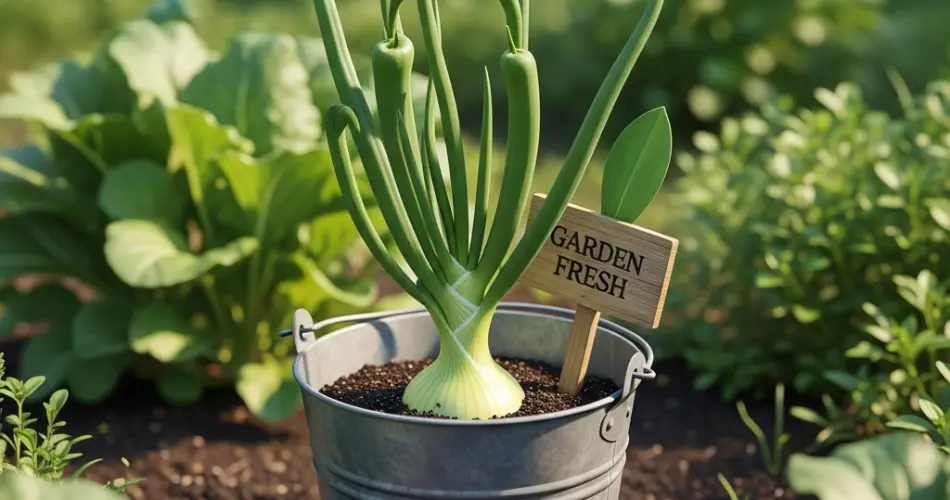
Onions are one of the most versatile and widely used vegetables in kitchens around the world. They add flavor to countless dishes, can be stored for long periods, and are relatively easy to grow. Even if you don’t have a large garden or backyard, you can still cultivate a plentiful onion harvest using buckets or containers. This method is perfect for those living in apartments, small homes, or urban settings where outdoor space is limited.
With the right setup and care, onions grown in buckets can be just as productive as those in garden beds. Here’s a beginner-friendly guide to growing onions successfully in containers.
Why Grow Onions in Buckets?
Growing onions in buckets offers several advantages:
-
Space-saving: Buckets can fit easily on balconies, patios, or rooftops.
-
Mobility: You can move the containers to optimize sunlight exposure.
-
Pest control: Containers reduce the risk of soil-borne pests and diseases.
-
Soil management: You have complete control over the soil quality and fertility.
This makes bucket gardening a practical solution for anyone with limited space but a passion for fresh produce.
Choosing the Right Bucket
The first step in successful onion container gardening is selecting the right bucket.
-
Size: A bucket at least 10–12 inches deep works well, as onions develop underground bulbs that need space. The wider the bucket, the more onions you can grow at once.
-
Drainage: Drill several holes in the bottom to ensure proper drainage. Onions do not tolerate waterlogged soil.
-
Material: Plastic buckets are lightweight and retain moisture, while clay pots provide better airflow but may dry out faster. Either works as long as you monitor soil moisture.
Preparing the Soil
Onions thrive in loose, nutrient-rich soil that allows bulbs to expand easily. Garden soil is often too compact for containers, so a tailored mix is best.
-
Base mix: Use high-quality potting soil as your foundation.
-
Amendments: Add compost or well-rotted manure to boost nutrients.
-
Texture: Mix in sand or perlite to improve drainage and aeration.
Aim for a soil pH between 6.0 and 7.0, which is optimal for onion growth.
Choosing Onion Types
There are three main ways to start onions in buckets:
-
Onion seeds – Require more time and patience but give you the widest variety options.
-
Onion sets – Small, immature bulbs that are easy to plant and grow quickly.
-
Transplants – Young onion plants that offer a head start and reduce germination uncertainty.
For beginners, onion sets or transplants are the simplest and most reliable choices.
Planting Onions in Buckets
Once you have your soil and onion sets ready, follow these planting steps:
-
Fill the bucket with prepared soil, leaving about two inches at the top.
-
Plant onion sets about 1–2 inches deep with the pointed end facing upward.
-
Spacing: Place sets 3–4 inches apart to give bulbs room to develop. In a standard 5-gallon bucket, you can plant around 6–8 onions comfortably.
-
Water well after planting to help roots settle.
Sunlight and Watering
Onions are sun-loving plants and need plenty of light to thrive.
-
Light: Place buckets where they will receive at least 6–8 hours of direct sunlight each day. Without enough light, bulbs may remain small and underdeveloped.
-
Watering: Keep soil evenly moist but not soggy. Check frequently, as containers dry out faster than garden beds. Water when the top inch of soil feels dry.
Fertilizing for Healthy Growth
Onions are moderate feeders, and container gardening requires more attentive fertilization since nutrients can wash out with frequent watering.
-
Early growth: Use a nitrogen-rich fertilizer to encourage strong leaf growth, which supports larger bulb development later.
-
Bulb formation: Switch to a balanced or phosphorus-rich fertilizer as bulbs begin to swell.
-
Schedule: Fertilize every 2–3 weeks during the growing season for best results.
Common Problems and Solutions
While onions are generally easy to grow, a few issues can arise:
-
Pests: Onion maggots and thrips may appear. Cover containers with mesh or use organic insect sprays to deter them.
-
Disease: Overwatering can lead to root rot or fungal issues. Ensure proper drainage and avoid soggy conditions.
-
Bulb size: Small bulbs often result from overcrowding or insufficient sunlight. Make sure plants are well-spaced and receive full sun.
Harvesting Onions
Onions are ready to harvest when the tops begin to yellow and fall over naturally.
-
Bulb onions: Gently loosen the soil and pull them out. Allow them to cure in a dry, shaded place for 1–2 weeks before storage.
-
Green onions: If you prefer scallions, you can harvest them earlier while the bulbs are still small and the greens tender.
Harvesting regularly encourages continued growth if you’re cutting for green onions.
Storing Your Harvest
After curing, store onions in a cool, dry, and well-ventilated place. Mesh bags, baskets, or crates work well. Properly stored onions can last for several months, allowing you to enjoy your container harvest long after the growing season ends.
Final Thoughts
Growing onions in buckets is a rewarding and practical way to enjoy fresh produce at home, even without a garden. With the right container, soil preparation, and care, you can harvest flavorful onions that enhance your meals while gaining the satisfaction of growing them yourself. For beginners, this method offers a simple and space-efficient entry point into container gardening—proof that fresh, homegrown onions can thrive right on your balcony or patio.


