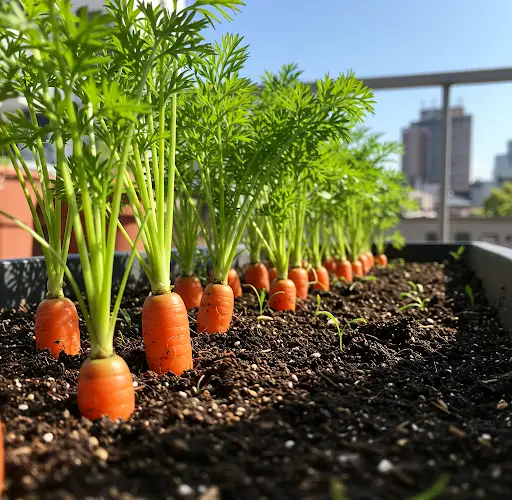
Growing Carrots on the Terrace for High Yields: Surprisingly Easy!
Carrots are one of the most rewarding vegetables to grow, and contrary to popular belief, you don’t need a large garden to cultivate them. Growing carrots on a terrace is surprisingly easy, and with the right techniques, you can achieve a high-yield harvest even in limited space. Whether you have a small balcony, rooftop, or patio, this guide will help you grow sweet, crunchy carrots at home.
1. Why Grow Carrots on the Terrace?
Carrots are not only delicious and packed with vitamins, but they are also low-maintenance and adaptable to small spaces. Here are a few reasons why terrace gardening is ideal for growing carrots:
✅ Space-Saving – Carrots grow vertically in deep containers, making them perfect for small spaces. ✅ Highly Nutritious – Carrots are rich in vitamin A, fiber, and antioxidants. ✅ Fast-Growing – Many varieties mature in 60–80 days, allowing for multiple harvests per year. ✅ Cold-Tolerant – Carrots can thrive in cool weather and even become sweeter after a light frost. ✅ Pest-Resistant – Growing in containers reduces the risk of soil-borne pests and diseases.
2. Choosing the Right Variety of Carrots
When growing carrots in containers or small spaces, selecting the right variety is crucial. Here are some excellent choices:
🥕 Nantes Carrots – Sweet, cylindrical, and grow well in containers (about 6 inches long). 🥕 Chantenay Carrots – Short and thick, ideal for shallower pots (4–5 inches long). 🥕 Baby Carrots – Perfect for small spaces, as they grow only 3–4 inches long. 🥕 Imperator Carrots – Long and tapered, best for deep pots (12 inches or more). 🥕 Parisian Carrots – Round and small, great for shallow containers.
3. Preparing for Terrace Carrot Gardening
Step 1: Selecting the Right Container
Since carrots are root vegetables, they need deep soil for proper development.
🪴 Depth Requirement: Use a container that is at least 12 inches deep. 🪴 Material: Plastic, ceramic, fabric grow bags, or wooden planters work well. 🪴 Drainage: Ensure the container has drainage holes to prevent waterlogging.
Step 2: Choosing the Best Soil
- Carrots prefer loose, well-draining, and sandy soil.
- Avoid heavy clay soil, as it can lead to stunted or forked carrots.
- Soil Mix: Use a mix of potting soil, compost, and sand for a light texture.
- pH Level: Maintain a slightly acidic to neutral pH (6.0–7.0).
Step 3: Sowing the Seeds
- Carrot seeds are small and delicate, so handle them carefully.
- Sow seeds ¼ inch deep, spacing them 1 inch apart.
- Cover lightly with soil and mist with water to avoid displacing them.
4. Caring for Carrot Plants
Watering
💧 Carrots need consistent moisture for even growth. 💧 Water deeply 2–3 times per week, ensuring soil stays damp but not soggy. 💧 Avoid overwatering, as it can cause rot and poor root development.
Thinning the Seedlings
🌱 Once the seedlings are 2 inches tall, thin them out to 2–3 inches apart. 🌱 This prevents overcrowding and allows each carrot to grow to its full size.
Sunlight Requirements
☀️ Carrots need 6–8 hours of direct sunlight per day. ☀️ In hot climates, provide some afternoon shade to prevent wilting.
Fertilizing
🌿 Use a low-nitrogen fertilizer (such as 5-10-10) every 3–4 weeks. 🌿 Avoid excess nitrogen, as it promotes leafy growth instead of root development. 🌿 Organic options include compost tea or diluted seaweed extract.
5. Common Carrot Growing Problems and Solutions
🚨 Forked or Deformed Carrots? – This happens due to compact soil or overcrowding. Use loose soil and thin seedlings properly. 🚨 Carrots Not Growing? – Could be due to lack of sunlight or nutrients. Ensure proper sun exposure and feed regularly. 🚨 Pest Issues? – Aphids and carrot flies can be a problem. Use row covers or neem oil as a natural repellent. 🚨 Bitter or Woody Texture? – Harvest on time and avoid water stress for sweet, tender carrots.
6. Harvesting Carrots for the Best Flavor
Carrots are ready for harvest in about 60–80 days, depending on the variety.
🔪 How to Harvest:
- Gently pull up a test carrot to check size.
- If the root is at least ½ inch in diameter, it’s ready to harvest.
- Loosen the soil around the carrot before pulling to prevent breaking.
🧊 Storage Tips:
- Fresh carrots can be stored in the refrigerator for 2–3 weeks.
- For long-term storage, blanch and freeze or store in damp sand in a cool place.
7. Why You Should Try Growing Carrots on Your Terrace
Growing carrots on a terrace is a fun, rewarding, and cost-effective way to enjoy fresh vegetables. With minimal space and effort, you can grow a high-yield harvest right at home.
Key Takeaways:
✅ Choose the right carrot variety for container gardening. ✅ Use deep, loose soil to encourage proper root development. ✅ Water consistently and provide 6+ hours of sunlight. ✅ Thin seedlings early to avoid overcrowding. ✅ Harvest on time for the sweetest, most tender carrots.
Once you try growing your own carrots, you’ll never want to buy store-bought ones again! 🥕🌿


