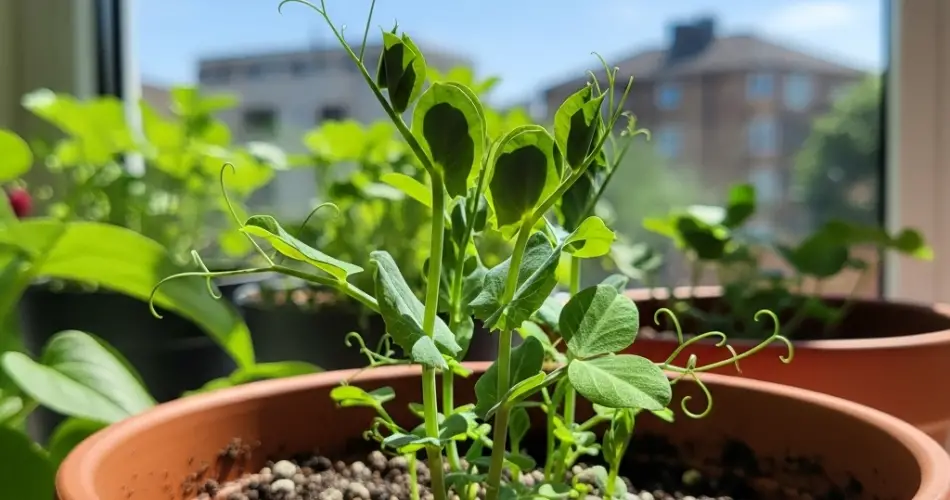
Growing your own peas doesn’t require a backyard or large garden space. With a few containers and a sunny spot, you can cultivate sweet, crisp peas right at home—whether on a balcony, rooftop, or small patio. Peas are cool-season crops, meaning they thrive in the milder temperatures of spring and autumn, making them perfect for early or late-season planting. This guide walks you through the process of growing peas in containers, from choosing the right variety to harvesting your own pods.
Choosing the Right Pea Variety
When growing peas in containers, compact and bushy varieties are the best choice. Look for dwarf or semi-dwarf types such as:
-
‘Little Marvel’ – a popular dwarf pea producing sweet, tender pods.
-
‘Tom Thumb’ – an extra-compact pea perfect for small pots.
-
Sugar snap peas or snow peas – both are great in containers and can be eaten whole.
Pole or climbing varieties can still work in containers if you have vertical space for a trellis, but bush types are generally more manageable for small-scale urban setups.
Picking the Right Container
Peas don’t have deep roots, but they need room to spread. Here’s what to consider when selecting a pot:
-
Depth: At least 8–12 inches.
-
Width: The wider, the better to allow multiple plants.
-
Drainage: Ensure the container has several holes to avoid waterlogging.
You can use clay pots, fabric grow bags, or recycled plastic containers—just make sure they are clean and safe for food crops. Window boxes and hanging baskets can also work if they are wide and stable enough.
Preparing the Soil
Peas prefer well-drained, loamy soil with a neutral to slightly alkaline pH. For a healthy start:
-
Use a quality potting mix (not garden soil).
-
Mix in compost to boost organic matter and nutrients.
-
Add a small amount of wood ash or dolomite lime if your soil mix is too acidic.
Avoid nitrogen-heavy fertilizers, as peas are legumes and fix their own nitrogen. Too much nitrogen leads to lush leaves but fewer pods.
Sowing the Seeds
Peas grow best when sown directly into the container rather than transplanted. Follow these steps:
-
Sow seeds 1 inch deep and 2 inches apart.
-
If planting in rows, space them 4–6 inches apart.
-
Water gently but thoroughly after sowing.
-
Keep the soil consistently moist during germination.
Seeds usually sprout within 7–14 days depending on temperature. Make sure your container is in a spot that gets at least 5–6 hours of sunlight per day.
Supporting Your Plants
Even compact pea plants benefit from a little support to keep them upright and tidy. Use:
-
Small bamboo stakes
-
Twigs
-
Mini trellises
-
Chicken wire attached to wooden dowels
Install support early so the young plants can latch on as they grow. This improves airflow, reduces fungal issues, and makes harvesting easier.
Watering and Care
Peas don’t like wet feet, but they do need consistent moisture, especially when flowering and producing pods.
-
Water when the top inch of soil feels dry.
-
Avoid soaking the foliage to reduce mildew risk.
-
Mulch with dried leaves or straw to retain moisture and keep roots cool.
Peas are relatively low-maintenance, but keep an eye out for aphids and powdery mildew. Use neem oil or insecticidal soap if pests become a problem.
Harvesting Your Peas
Peas mature within 60–70 days of sowing, depending on the variety and weather. Harvest regularly to encourage continued production.
-
Shelling peas: Pick when pods are plump and filled out.
-
Snap peas: Harvest when pods are fully grown but still tender.
-
Snow peas: Pick early, while pods are still flat and sweet.
Use two hands when harvesting—one to hold the stem and the other to pluck the pod—to avoid damaging the vine.
Success Tips for Container-Grown Peas
-
Succession plant: Sow a new batch every 2–3 weeks during the season for a continuous harvest.
-
Companion plants: Consider growing with spinach, lettuce, or radishes that share similar cool-season preferences.
-
Rotate your crops: If reusing soil, alternate with non-legumes to prevent soil-borne disease buildup.
-
End-of-season care: When your peas are done, cut the plants at soil level and leave the roots to decompose, enriching the soil with nitrogen for your next crop.
Final Thoughts
Growing peas in containers is a rewarding and space-efficient way to enjoy fresh, sweet pods even without traditional garden space. Whether you’re an urban dweller, balcony gardener, or just looking to add variety to your home harvest, peas are a perfect beginner-friendly crop. With the right variety, good soil, and simple support, you can transform a small space into a lush green source of homegrown flavor.


