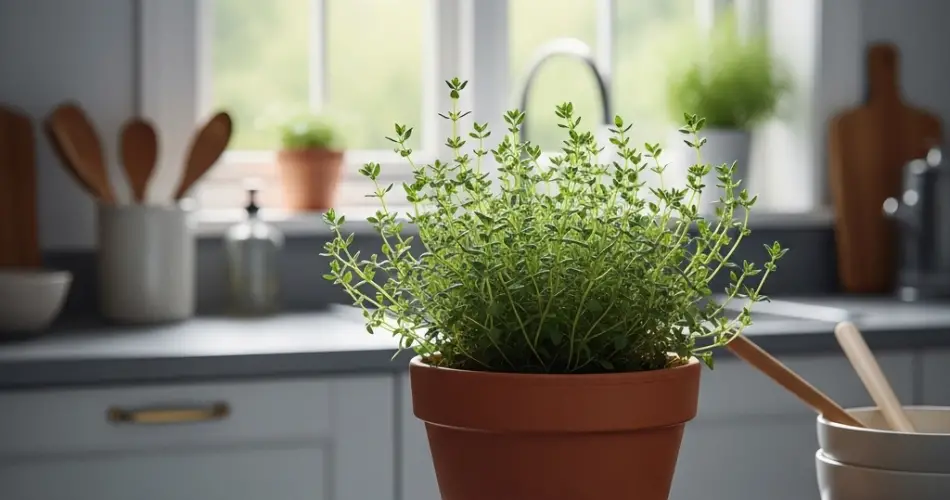
Thyme (Thymus vulgaris) is a compact, aromatic herb that’s a must-have in every kitchen. Known for its earthy, savory flavor, thyme enhances soups, stews, roasts, and vegetable dishes. While often grown outdoors, thyme also thrives indoors with proper care, making it easy to enjoy fresh sprigs right from your kitchen counter—no matter the season.
Whether you’re a seasoned cook or a gardening beginner, growing thyme inside your kitchen is both practical and rewarding. With the right setup, you can keep a healthy thyme plant producing fragrant leaves all year long.
Why Grow Thyme Indoors?
Indoor herb gardening offers convenience, beauty, and year-round access to fresh ingredients. Thyme is particularly well-suited to indoor growing thanks to its small size, drought tolerance, and minimal maintenance needs.
Growing thyme indoors allows you to protect it from pests, harsh weather, and overgrowth, while placing it in your kitchen means you’ll always have it close at hand when cooking.
Choosing the Right Thyme Variety
Several thyme varieties are available, but not all are best for kitchen use. For indoor growing, choose culinary varieties that are compact and flavorful:
-
Common Thyme (Thymus vulgaris): The most widely used for cooking; strong flavor and fragrance.
-
Lemon Thyme: Adds a citrus note to dishes; excellent for fish, poultry, and teas.
-
English Thyme: Mild, sweet, and great for everyday recipes.
All these types grow well indoors if given enough light and proper care.
Choosing a Container
Thyme doesn’t require a large pot, but good drainage is essential. Choose a container that is 6–8 inches wide with drainage holes at the bottom. Clay or terracotta pots are ideal, as they allow the soil to dry more evenly and reduce the risk of root rot.
Place a saucer under the pot to protect your kitchen surfaces from excess moisture. If you’re growing multiple herbs, thyme pairs well with other Mediterranean herbs like rosemary, sage, or oregano in a shared container—just ensure each plant has enough space.
Best Soil for Thyme
Thyme thrives in light, well-draining soil. Use a quality potting mix designed for herbs or vegetables, and amend it with sand or perlite to improve drainage. The soil should be slightly alkaline to neutral, with a pH between 6.0 and 8.0.
Avoid heavy or moisture-retentive soils, as thyme prefers slightly dry conditions and is sensitive to overly wet roots.
Planting Thyme Indoors
You can grow thyme from seed, but it’s often easier and faster to start with a small transplant or a stem cutting.
From seed:
-
Fill your container with moist potting mix.
-
Sow seeds lightly on the surface and cover with a very thin layer of soil.
-
Keep the soil consistently moist until germination, which may take 14–21 days.
From cuttings:
-
Take a 4–6 inch stem from an established plant.
-
Strip the lower leaves and place the cutting in water or directly into moist potting soil.
-
Roots will develop in 1–2 weeks, after which the cutting can be transplanted into a pot.
Once planted, place your thyme in a sunny indoor location.
Light and Temperature
Thyme requires at least 6 hours of direct sunlight each day. A south-facing window is ideal. If your kitchen lacks sufficient natural light, use a small LED grow light to supplement.
Keep indoor temperatures between 60–75°F (15–24°C) for best results. Thyme is hardy and can tolerate occasional temperature drops but should be protected from cold drafts and extreme heat.
Watering and Feeding
Thyme prefers slightly dry soil. Water when the top inch of soil feels dry to the touch. Be careful not to overwater, especially in cooler months when growth slows.
Fertilize thyme lightly once every 4–6 weeks with a diluted, balanced liquid fertilizer or an organic herb blend. Overfeeding can reduce the herb’s aroma and flavor, so keep feeding to a minimum.
Pruning and Harvesting
Frequent harvesting promotes bushier growth and healthier plants. Once your thyme is established and about 6 inches tall, begin snipping sprigs from the top, cutting just above a leaf pair or stem joint.
Trim no more than one-third of the plant at a time to avoid stressing it. Regular harvesting also delays flowering, which can cause leaves to become bitter.
If your thyme does flower, pinch off the blooms to refocus energy on leaf production.
Common Problems and Pests
Indoor thyme is generally low-maintenance and pest-resistant. However, it can occasionally attract spider mites or aphids. If pests appear, rinse the plant gently with water or apply a mild insecticidal soap.
Yellowing leaves or weak stems may indicate overwatering or insufficient light. Adjust watering and lighting conditions to revive the plant.
Rejuvenating Thyme
As thyme matures, it may become woody and less productive. You can rejuvenate it by cutting back stems in early spring or by propagating new plants from healthy cuttings.
Replanting thyme in fresh soil every year or two helps maintain its vigor and flavor.
Final Thoughts
Growing fresh thyme inside your kitchen is a simple and rewarding way to add a gourmet touch to your cooking. This hardy, flavorful herb thrives with minimal care, and its delicate green sprigs bring both beauty and function to your indoor space. With a sunny windowsill, a bit of water, and occasional pruning, thyme will continue to provide aromatic leaves all year long.


