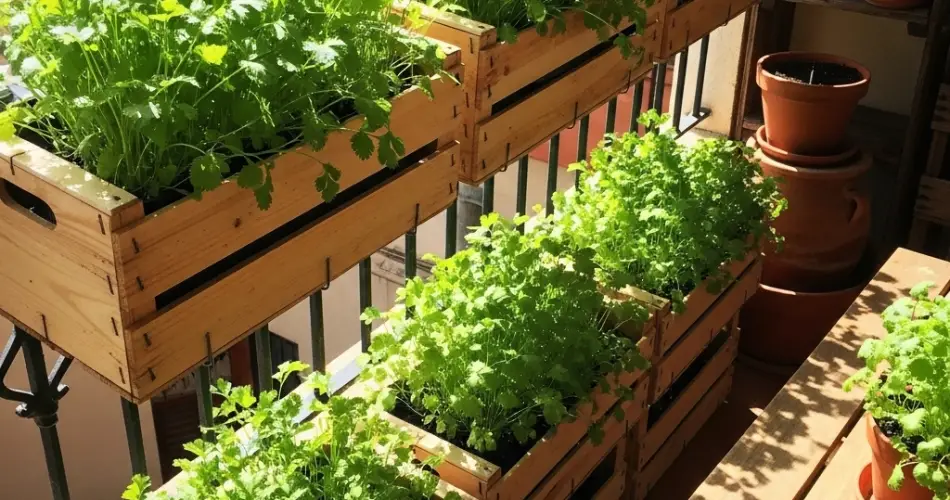
Cilantro, also known as coriander in some regions, is a flavorful herb that adds a burst of freshness to countless dishes—from salsas and curries to soups and salads. Its bright green leaves and citrusy flavor make it a kitchen staple, and the best part is you don’t need a large garden to grow it. With just a wooden crate, some potting soil, and a sunny outdoor spot, you can have a thriving cilantro garden right outside your door.
Growing cilantro in crates is a smart and space-efficient way to enjoy fresh herbs anytime. This method is perfect for balconies, patios, or even small backyard corners, offering you easy access to homegrown flavor with minimal effort.
Why Grow Cilantro in Crates?
Wooden crates make excellent containers for herbs like cilantro. Their shallow depth suits cilantro’s short root system, and they provide good airflow and drainage, both of which help prevent overwatering and root rot. Crates are also lightweight and portable, making it easy to reposition your herb garden based on sunlight availability or weather conditions.
Beyond function, crate gardens add a rustic charm to any outdoor space. Their natural look pairs beautifully with greenery, and they can be stacked, hung, or placed on stands to suit your setup.
Best Cilantro Varieties for Container Gardening
There are several types of cilantro that perform well in containers:
-
Santo: A slow-bolting variety ideal for warmer climates.
-
Calypso: Known for its bushy growth and resistance to early flowering.
-
Leisure: A common variety with strong flavor and quick growth.
-
Confetti: A delicate, finely cut leaf variety with ornamental appeal.
When growing cilantro in crates, choosing a slow-bolting variety helps extend the harvest period, especially in warm or sunny locations.
Materials You’ll Need
To grow cilantro in crates, you’ll need:
-
A wooden crate (untreated and with drainage holes)
-
Landscape fabric or coconut coir liner
-
Gravel or pebbles (optional, for added drainage)
-
Well-draining potting soil
-
Organic compost
-
Cilantro seeds or seedlings
-
Watering can or spray bottle
-
Hand trowel
Preparing the Crate
Start by lining the inside of the wooden crate with landscape fabric or coconut coir to hold the soil in while still allowing water to drain. Ensure there are drainage holes at the bottom of the crate. If not, drill a few to avoid soggy roots.
Add a layer of gravel or pebbles at the bottom to improve drainage (optional), then fill the crate with a mixture of potting soil and compost. Cilantro grows best in rich, loose soil with good drainage and a pH between 6.2 and 6.8.
Sowing and Spacing
Cilantro grows well from seed and prefers to be directly sown where it will grow. Scatter the seeds evenly over the soil surface, spacing them about 2.5 cm apart, and cover lightly with a thin layer of soil—about 1 cm deep. Water gently to avoid displacing the seeds.
For a continuous supply, sow seeds every 2 to 3 weeks. This staggered planting ensures a longer harvest window, as cilantro tends to bolt quickly once temperatures rise.
If planting seedlings, space them 10–15 cm apart. Be gentle with the roots, as cilantro doesn’t like to be transplanted once established.
Light and Water Requirements
Cilantro thrives in cool weather and prefers partial sun in warmer climates or full sun in cooler regions. Ideally, the crate should receive 4 to 6 hours of sunlight daily.
Keep the soil consistently moist but not soggy. Water when the top 2–3 cm of soil feels dry. Overwatering can lead to root rot, while letting the soil dry out completely may cause the plant to bolt early.
Feeding and Maintenance
Cilantro doesn’t require heavy feeding. Adding compost to the soil at the start of the season usually provides sufficient nutrients. If desired, you can feed the plants with a diluted liquid fertilizer every 3 to 4 weeks.
As the plants grow, thin them out if they become overcrowded. This improves airflow and encourages healthy leaf development.
To delay bolting, harvest regularly and keep the soil cool. In hot weather, provide partial shade or place the crate in a location with afternoon cover.
Harvesting Cilantro
Cilantro can be harvested when the plants reach about 10–15 cm in height. Use scissors to snip the outer leaves, allowing the inner parts to continue growing.
Regular harvesting promotes bushier growth and prevents early flowering. If the plant does start to flower, the leaves may become bitter. However, the flowers can be left to produce coriander seeds, which are also edible and commonly used in spice blends.
Pests and Problems
Cilantro is generally pest-resistant but can occasionally suffer from aphids, whiteflies, or fungal issues. Rinse pests off with water or apply a mild neem oil spray. Ensure good air circulation and avoid overhead watering to prevent mildew.
Conclusion
Growing flavorful cilantro in wooden crates is a simple and rewarding way to enjoy this versatile herb at home. With a bit of preparation and care, you’ll have a fresh supply of vibrant cilantro right outside your door—ready to be harvested and added to your favorite meals. Whether you’re gardening on a patio, balcony, or small backyard, crate gardening makes it easy to grow your own herbs in style.


