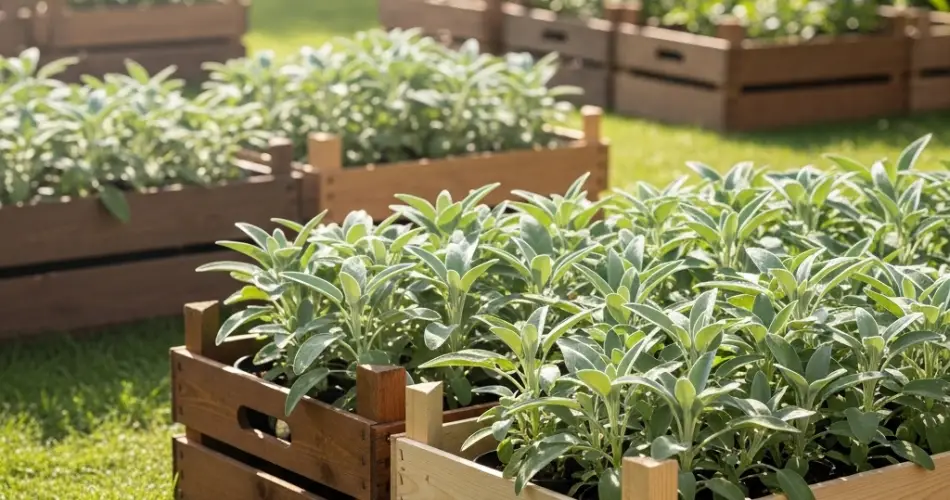
Sage is a beloved herb in the kitchen and garden, known for its bold, earthy aroma and silvery-green leaves. Commonly used in savory dishes, herbal teas, and natural remedies, sage is also prized for its attractive foliage and ability to thrive in tough conditions. If you’re short on garden space or want to create a neat, manageable herb garden, growing sage in wooden crates is a smart and simple solution.
Crate gardening allows you to control soil, moisture, and placement—all factors that support a healthy, thriving sage plant. Whether you’re a beginner or a seasoned gardener, you can easily grow this hardy herb in crates right in your backyard.
Why Choose Crates for Growing Sage?
Sage is a low-maintenance, sun-loving perennial that adapts well to container gardening. Using crates has several advantages:
-
Portability: Crates can be moved to follow the sun or protect the plant from heavy rain or frost.
-
Space efficiency: Perfect for patios, balconies, and small yards where garden beds are limited.
-
Soil control: You can create the ideal well-draining soil mix sage prefers.
-
Root management: Crates prevent overcrowding and spreading, keeping the plant compact and manageable.
Crate gardening also adds a decorative element to your outdoor space, giving it a rustic, organized look.
Choosing the Right Crate
Start with a recycled wooden crate that is sturdy and untreated. It should be deep enough—at least 10–12 inches—to support sage’s root system. Crates that held produce or wine often work well, as long as they’re clean and in good condition.
Prepare the crate for planting:
-
Drill drainage holes in the bottom to prevent waterlogging.
-
Line the crate with breathable fabric like burlap or landscape cloth. This keeps the soil in place while allowing excess water to escape.
-
Fill the crate with soil that is light and well-draining. Sage prefers slightly sandy or gritty soil. A good mix would be potting soil blended with compost and a handful of coarse sand or perlite.
Best Varieties of Sage to Grow
There are many types of sage, each offering unique flavors and appearances. Some good options for crate gardening include:
-
Common Garden Sage (Salvia officinalis): Best for culinary use, with a strong flavor and classic appearance.
-
Purple Sage: Decorative and edible, with stunning purple-hued leaves.
-
Tricolor Sage: Offers beautiful variegated leaves in green, cream, and pink.
-
Golden Sage: Adds bright color to your crate garden with golden-green foliage.
You can grow one variety per crate or line up several crates for a colorful and flavorful herb display.
Planting Sage in Crates
Sage can be grown from seeds, but for faster results, it’s better to use cuttings or transplants from a nursery.
To plant:
-
Dig a small hole in your prepared crate and place the transplant at the same depth it was in the nursery pot.
-
Gently firm the soil around the base and water lightly.
-
Space multiple plants about 12 inches apart to ensure good air circulation.
Once planted, give the sage a few days to establish before exposing it to direct midday sun if it came from a shaded environment.
Light, Water, and Feeding
Sage thrives in full sun, needing at least 6 to 8 hours of direct sunlight daily. Place your crate in the sunniest spot in your backyard for best growth and flavor.
Sage prefers slightly dry conditions. Water only when the top inch of soil feels dry. Avoid overwatering—soggy soil is one of the few things that can harm this otherwise tough herb.
Sage doesn’t need heavy feeding. Add compost at planting time or apply a diluted organic fertilizer once or twice during the growing season. Too much fertilizer can cause leggy growth and reduce the plant’s aromatic qualities.
Pruning and Harvesting Sage
Regular pruning keeps sage bushy and healthy. Once the plant is about 6–8 inches tall, you can begin harvesting leaves.
To harvest:
-
Snip young, tender leaves in the morning when oils are strongest.
-
Cut just above a leaf pair to encourage branching.
-
Avoid removing more than one-third of the plant at a time.
Prune back woody stems in early spring to promote new growth and shape the plant.
Managing Pests and Disease
Sage is generally pest-resistant, but it may occasionally attract aphids or spider mites. These can be treated with a gentle spray of water or a natural insecticidal soap.
Avoid fungal problems by watering at the base of the plant and ensuring your crate allows for good airflow and drainage.
Overwintering Sage in Crates
Sage is a perennial and can survive mild winters. In colder climates, move crates to a sheltered area, such as a porch or greenhouse, or insulate them with mulch. If frost is expected, consider covering the plant or bringing the crate indoors to a sunny windowsill.
Trim back the plant in late fall, and resume normal care in spring as new shoots appear.
Final Thought: Growing earthy sage in backyard crates is not only practical but also rewarding. With minimal effort, you can enjoy the fragrance, beauty, and flavor of fresh sage all year round—right from a charming wooden crate that fits perfectly into your outdoor space.


