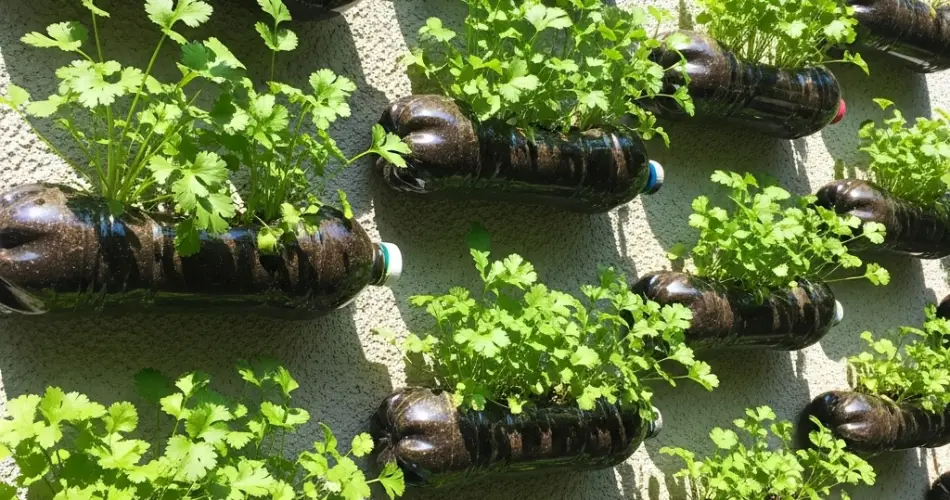
If you have limited space but love fresh herbs, growing cilantro vertically using recycled plastic bottles is a clever, eco-friendly solution. This DIY garden project saves space, reduces waste, and provides a steady supply of flavorful cilantro leaves for your kitchen. Whether you live in an apartment or have a small backyard, a vertical herb garden made from plastic bottles can fit easily on a balcony, patio, or wall.
Why Choose Cilantro for Vertical Gardening?
Cilantro, also known as coriander, is a fast-growing herb that thrives in containers and does not require deep soil. Its shallow roots make it ideal for vertical bottle gardening. In just a few weeks, you can start harvesting fragrant leaves to enhance your dishes, from salads and soups to salsas and stir-fries.
Materials Needed
To get started, gather the following:
-
Empty 1.5- to 2-liter plastic bottles
-
Sharp scissors or a utility knife
-
A nail or small drill (for drainage holes)
-
Gardening soil or potting mix
-
Cilantro seeds
-
Twine, wire, or zip ties
-
A sturdy wall, fence, or wooden frame
-
Optional: A funnel or small scoop for adding soil
Step 1: Prepare the Plastic Bottles
Begin by cleaning your bottles thoroughly. Remove any labels and rinse them to eliminate residue. Using scissors or a utility knife, cut an opening in the side of each bottle large enough to hold soil and allow the plant to grow—about one-third of the bottle’s side should be removed.
Next, poke or drill a few small holes in the bottom of each bottle for drainage. Without these holes, excess water may collect and cause root rot.
Step 2: Set Up the Wall Garden
There are a few ways to attach your bottles to a vertical surface:
-
Hanging Method: Use twine or wire to suspend the bottles in rows from a wooden frame, balcony rail, or fence.
-
Mounted Method: Use screws or strong adhesive hooks to attach the bottles directly to a wooden board or wall.
-
Crate or Pallet Method: Reuse a wooden pallet or crate as a vertical garden frame and fix the bottles securely to it.
Make sure each bottle is level and tilted slightly upward to prevent water from spilling out. If stacking bottles vertically, stagger them so that excess water from the top row can drip into the row below, reducing waste and watering needs.
Step 3: Add Soil and Seeds
Fill each bottle about three-quarters full with potting mix. Cilantro prefers well-draining soil rich in organic matter. If the mix is too heavy or compacted, blend in a little compost or sand to improve aeration.
Sprinkle a few cilantro seeds in each bottle and lightly cover them with a thin layer of soil. Cilantro seeds germinate best when spaced about 1 to 2 inches apart.
Step 4: Water and Wait
Gently water the soil using a watering can with a narrow spout or a spray bottle to avoid washing out the seeds. Keep the soil consistently moist but not soggy.
Cilantro seeds typically sprout in 7 to 10 days. During this period, ensure the bottles receive bright but indirect sunlight. Once the seedlings emerge, they can tolerate more direct morning sun, ideally around 4 to 6 hours daily.
Step 5: Maintain Your Wall Garden
As the plants grow, thin out the weaker seedlings to give the strongest ones space to thrive. Continue watering when the top inch of soil feels dry. Cilantro doesn’t like dry conditions but also hates being overwatered, so balance is key.
You can feed the plants every couple of weeks with a diluted organic liquid fertilizer to encourage lush growth. Pinch back the tips to prevent bolting (when the plant starts flowering too early), especially in hot weather.
Step 6: Harvesting Cilantro
In about 3 to 4 weeks, your cilantro should be ready to harvest. Use scissors to snip the outer leaves, starting from the bottom. Leave the center leaves intact so the plant can keep producing. Regular harvesting helps keep the plant bushy and delays flowering.
If the plant does bolt and produce flowers, let it go to seed. The seeds—known as coriander—can be collected, dried, and used as a spice or saved for the next planting cycle.
Final Tips
-
Choose a location sheltered from strong wind and heavy rain.
-
Rotate the bottles every few days if light is uneven across the wall.
-
If pests like aphids appear, rinse them off with water or use neem oil.
Growing cilantro on a wall using recycled plastic bottles is a sustainable and space-saving way to cultivate fresh herbs at home. This project not only reduces plastic waste but also turns your vertical space into a thriving green corner. Whether you’re an urban gardener or just want a fun DIY challenge, this setup is a simple and rewarding way to enjoy cilantro year-round.


