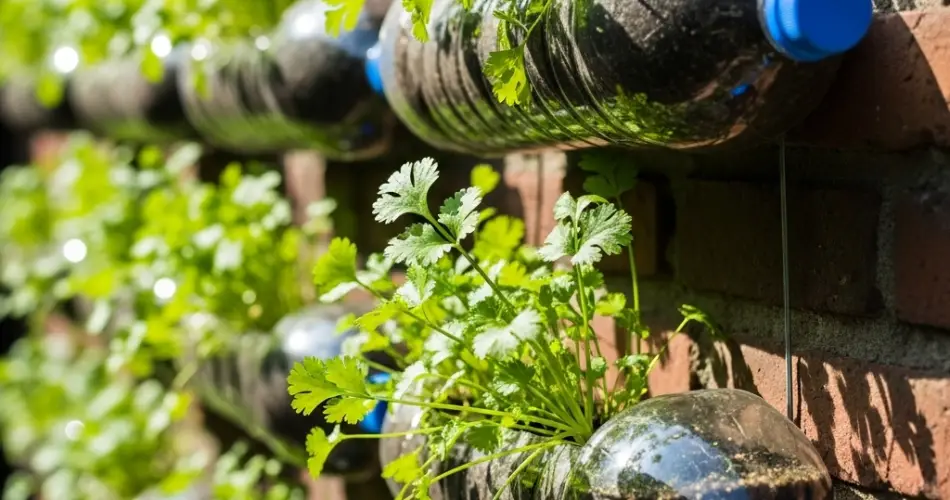
Cilantro, also known as coriander in many parts of the world, is a fast-growing herb loved for its fresh, citrusy flavor. It’s widely used in Latin American, Middle Eastern, Indian, and Southeast Asian cuisine, making it a staple in many kitchens. But if you’re short on space, growing cilantro might seem like a challenge. The good news is that a vertical wall garden can be the perfect solution—especially when designed using recycled materials like plastic bottles.
A cilantro wall garden offers a practical way to grow fresh herbs without taking up valuable floor or garden space. By going vertical, you can turn fences, balconies, or sunny indoor walls into lush, edible displays. Here’s how to grow healthy, flavorful cilantro in a space-saving vertical setup.
Why Grow Cilantro in a Vertical Wall Garden?
Cilantro grows quickly and does well in shallow containers, making it an excellent candidate for vertical gardening. This method offers several benefits:
-
Space efficiency – Utilize vertical surfaces instead of horizontal space.
-
Accessibility – Easier to harvest and maintain at eye level.
-
Better airflow – Reduces the risk of fungal issues.
-
Reusability – Incorporates recycled containers, reducing waste.
Cilantro is best enjoyed fresh, and having it growing right on your wall means it’s always within reach when cooking.
What You’ll Need
To create your cilantro wall garden, gather the following:
-
Several clean 1.5- or 2-liter plastic bottles
-
A sharp utility knife or scissors
-
A drill or heated nail for making holes
-
Strong twine, wire, or zip ties
-
Hooks, screws, or a frame for mounting
-
Quality potting mix
-
Cilantro seeds or young seedlings
-
Optional: pebbles or charcoal for drainage
Choose a sunny wall or railing that receives at least 4–6 hours of light daily. Cilantro prefers cool weather, so indirect morning sun is ideal if you’re in a hot climate.
Preparing Your Bottle Planters
-
Cut a window – Lay each bottle on its side and cut out a rectangular section on one side, large enough to plant and water through.
-
Make drainage holes – Drill or poke several small holes in the bottom of each bottle to prevent water from collecting at the roots.
-
Add mounting holes – Create two holes near the top and two near the bottom of each bottle for threading twine or attaching with zip ties.
-
Add drainage material – Place a layer of small stones or charcoal at the bottom of each bottle to improve water flow.
-
Fill with soil – Use a well-draining potting mix rich in organic matter. Avoid compacted or heavy soil, as cilantro roots prefer loose, airy conditions.
Planting Cilantro
Cilantro is best grown from seed, as it doesn’t transplant well due to its delicate taproot. To plant:
-
Sow 2–3 seeds about ¼ inch deep in each bottle.
-
Lightly cover with soil and mist gently with water.
-
Thin the seedlings once they reach 2 inches tall, keeping the healthiest plant.
-
For continuous harvest, sow new seeds every 2–3 weeks.
The ideal temperature for cilantro is between 50°F and 75°F (10°C to 24°C). In warmer climates, place the wall garden in partial shade to prevent bolting.
Assembling the Wall Garden
There are a few ways to assemble your vertical garden:
-
Hanging system – Thread twine or wire through the bottle holes and suspend vertically.
-
Wall-mounted grid – Attach bottles to a wooden pallet or metal frame using zip ties.
-
Fence or railing installation – Line the bottles along a balcony or garden fence.
Ensure each bottle is securely fastened and spaced to allow light and airflow for every plant.
Watering and Feeding
Cilantro needs consistently moist soil but doesn’t like being waterlogged.
-
Water when the top inch of soil feels dry.
-
Use a watering can with a narrow spout to avoid overwatering.
-
Water early in the day to allow leaves to dry and prevent mildew.
Fertilize lightly every 3–4 weeks using an organic liquid fertilizer or compost tea. Avoid high-nitrogen fertilizers, as they can cause excessive leaf growth with weak flavor.
Harvesting Cilantro
You can start harvesting cilantro leaves when the plant is about 4–6 inches tall.
-
Snip outer leaves first, allowing the inner ones to keep growing.
-
Harvest early in the morning for peak flavor.
-
To extend the growing period, pinch off flower stalks to prevent early bolting.
If cilantro bolts and produces seeds, you can collect coriander seeds for culinary use or replant them.
Common Issues and Tips
-
Bolting: Hot weather triggers flowering. Grow cilantro in cooler seasons or provide shade during the afternoon heat.
-
Yellowing leaves: May indicate overwatering or poor drainage—adjust your watering schedule.
-
Aphids or whiteflies: Spray with a solution of water and mild soap or use neem oil.
Since cilantro is relatively pest-resistant, issues are rare when grown in the right conditions.
Final Thoughts
A cilantro wall garden is a creative and practical way to grow fresh herbs in small or unconventional spaces. With a few plastic bottles and some basic materials, you can transform a sunny wall or fence into a productive herb garden. Not only is this method sustainable and space-saving, but it also puts fresh, flavorful cilantro right at your fingertips—perfect for elevating your favorite recipes all year long.


