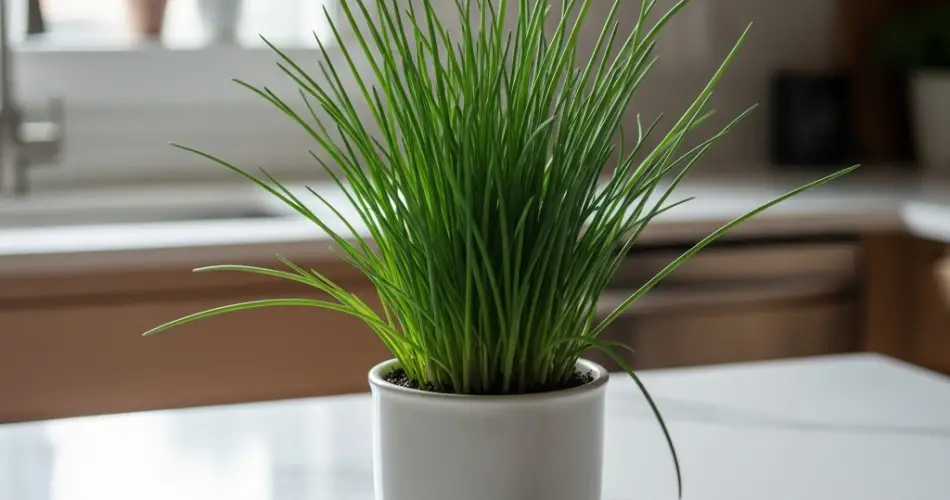
Chives (Allium schoenoprasum) are one of the easiest and most rewarding herbs to grow indoors. With their delicate, grass-like leaves and mild onion flavor, chives are perfect for sprinkling over baked potatoes, soups, eggs, dips, and countless other dishes. Best of all, you can grow them year-round on your kitchen windowsill with minimal effort.
If you’re looking to keep a steady supply of fresh herbs right at your fingertips, chives are a great place to start. Compact, hardy, and quick to regrow after harvesting, they’re ideal for both beginner and experienced indoor gardeners.
Why Grow Chives Indoors?
Chives are well suited for container gardening. They require little space, grow quickly, and bounce back fast after trimming. Growing them indoors means you’ll always have a fresh garnish on hand—no last-minute grocery runs needed.
In addition to their culinary use, chives have attractive tubular green leaves and purple blossoms, adding visual appeal to your indoor space. They also help repel pests and purify the air, making them a beautiful and functional addition to your kitchen.
Choosing the Right Variety
There are a few chive varieties to choose from:
-
Common Chives (Allium schoenoprasum): The classic option, featuring slender green stems and a mild onion flavor.
-
Garlic Chives (Allium tuberosum): These have flatter leaves and a subtle garlic taste, perfect for Asian-inspired dishes.
Both types grow well indoors, so choose based on your flavor preference or grow both for variety.
Selecting a Container
Chives grow well in small pots, but they appreciate some room for their root systems to spread. A container that is at least 6 inches deep and wide will work well. Make sure it has drainage holes to prevent water from pooling at the bottom.
Terracotta pots are a good option, as they allow excess moisture to evaporate, reducing the risk of root rot. Place a saucer underneath to catch any drips and protect your kitchen counter.
Soil Requirements
Chives prefer well-draining, nutrient-rich soil. Use a high-quality potting mix designed for herbs or vegetables. You can also mix in a little compost or worm castings for added fertility.
For even better results, consider combining:
-
2 parts potting mix
-
1 part compost
-
1 part perlite or coarse sand (to improve drainage)
Aim for a neutral soil pH, between 6.0 and 7.0.
Starting Chives Indoors
You can grow chives from seed, from divisions of an outdoor plant, or from starter plants purchased at a garden center.
From seed:
-
Fill the pot with moist soil.
-
Scatter seeds lightly across the surface.
-
Cover with a thin layer of soil (about 1/4 inch deep).
-
Mist or water gently to settle the soil.
Place the container in a warm, sunny spot. Seeds typically germinate in 10–14 days.
From divisions:
If you have a mature clump of chives in the garden, you can dig up a portion and transplant it into a pot for indoor growing. Water well after transplanting.
Light and Temperature
Chives need at least 4 to 6 hours of direct sunlight daily to thrive indoors. A sunny south- or west-facing window is ideal. If natural light is limited, use a full-spectrum grow light to supplement. Position the light 6–12 inches above the plant and keep it on for 12–14 hours per day.
Chives prefer moderate temperatures between 60–75°F (15–24°C). Avoid placing them near cold drafts or heating vents, which can dry them out.
Watering and Fertilizing
Chives like consistently moist soil but don’t tolerate soggy conditions. Water when the top half-inch of soil feels dry. Be sure to let excess water drain away to avoid root rot.
Fertilize every 4 to 6 weeks with a diluted liquid fertilizer or fish emulsion. Avoid overfeeding, as too much fertilizer can lead to overly soft leaves with weaker flavor.
Harvesting Chives
Once the chives reach 6 inches tall, you can begin harvesting. Use clean scissors to snip the leaves about an inch above the soil line. Regular harvesting encourages new growth and keeps the plant looking tidy.
Always leave at least an inch of growth so the plant can continue regenerating. Chives regrow quickly and can be harvested every few weeks.
The pretty purple flowers are also edible and make a lovely garnish. Snip them off before they go to seed if you want the plant to focus on producing leaves.
Troubleshooting Common Issues
-
Leggy or weak growth: Usually due to insufficient light. Move the plant to a sunnier location or add a grow light.
-
Yellowing leaves: Can indicate overwatering, nutrient deficiency, or aging leaves. Trim and adjust care as needed.
-
Pests: Chives are fairly pest-resistant, but keep an eye out for aphids or fungus gnats. If they appear, rinse the plant or use a gentle insecticidal soap.
Final Thoughts
Growing chives indoors is an easy and satisfying way to keep your cooking fresh and flavorful. With just a sunny window, a little water, and occasional trimming, you’ll have a lush pot of chives ready whenever you need a quick garnish or a punch of mild onion flavor. Add a pot or two to your kitchen, and enjoy homegrown herbs every day of the year.


