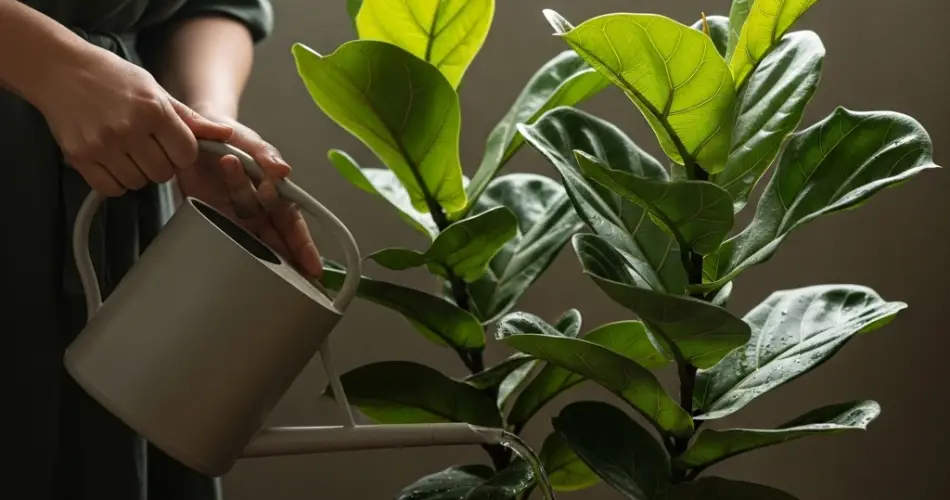
Fiddle leaf figs (Ficus lyrata) are prized for their large, glossy leaves and dramatic vertical growth, making them a favorite feature in modern indoor spaces. But as beautiful as they are, these plants are notorious for being finicky — especially when it comes to watering. Overwatering, underwatering, and inconsistent moisture are among the top reasons fiddle leaf figs drop leaves or fail to thrive.
To keep your fiddle leaf fig healthy and help it develop those iconic big, bold leaves, it’s essential to master a proper watering routine. Here’s everything you need to know about how and when to water your fiddle leaf fig for optimal growth.
Understanding Your Fiddle Leaf Fig’s Watering Needs
Fiddle leaf figs are native to the tropical rainforests of West Africa, where they grow under filtered sunlight in consistently moist (but not soggy) soil. In a home environment, replicating that balance is the key to success.
These plants like their soil to dry out slightly between waterings but not become completely dry or compacted. They do best with consistent moisture and good drainage. Inconsistent watering — letting the soil dry out completely, then overwatering to compensate — can shock the roots and cause leaf drop or stunted growth.
How Often Should You Water a Fiddle Leaf Fig?
There is no universal schedule, as watering frequency depends on several factors such as room temperature, humidity, pot size, light exposure, and soil composition. However, a general guideline is to water your fiddle leaf fig every 7 to 10 days during the growing season (spring and summer) and less frequently in fall and winter when growth slows down.
The best approach is to check the soil before each watering. Insert your finger about 2 inches deep into the soil. If it feels dry at that depth, it’s time to water. If it’s still moist, wait a few more days and check again. A moisture meter can also be helpful for more accurate readings.
Proper Watering Technique
Watering your fiddle leaf fig correctly is just as important as knowing when to water. The goal is to moisten the entire root zone without leaving the plant sitting in water.
Follow these steps for effective watering:
-
Water deeply and thoroughly: Pour water evenly around the base of the plant until it starts to drain out the bottom. This ensures that the entire root ball is hydrated.
-
Use room-temperature water: Cold water can shock the roots, while warm water may encourage fungal growth.
-
Allow excess water to drain: Never let the pot sit in a saucer filled with standing water. Always empty the saucer after watering.
-
Avoid shallow watering: Sprinkling just the top layer of soil can lead to weak roots and uneven moisture distribution.
For plants in large pots, you can water in stages. Start with a small amount, wait a few minutes, then add more to allow the soil to absorb it more evenly.
Choosing the Right Pot and Soil
Good drainage is critical for fiddle leaf figs. Use a pot with drainage holes, and make sure it’s appropriately sized — not too large, which can hold excess moisture, and not too small, which can restrict root growth.
The soil should be a well-aerated, fast-draining mix. A blend of indoor potting soil with added perlite, bark, or cactus mix helps retain some moisture while allowing excess water to flow out easily.
Avoid heavy soils or moisture-retaining mixes that stay wet for too long, as these can suffocate roots and lead to rot.
Signs of Overwatering and Underwatering
Knowing what to look for can help you adjust your watering routine before damage becomes serious.
Signs of overwatering:
-
Yellowing lower leaves
-
Brown spots or edges surrounded by yellow halos
-
Moldy soil or a musty smell
-
Drooping leaves despite wet soil
Signs of underwatering:
-
Crispy brown leaf edges
-
Curling leaves
-
Leaf drop starting from the bottom
-
Soil pulling away from the edges of the pot
If you suspect overwatering, hold off on watering and let the soil dry out. In severe cases, repot the plant using fresh, dry soil. If the plant is underwatered, give it a deep soak and adjust your routine moving forward.
Seasonal Adjustments
During spring and summer, fiddle leaf figs grow actively and require more water to support new leaves. In the cooler months, their growth slows, and the soil stays moist longer — so reduce your watering frequency to match the plant’s needs.
Always keep an eye on the plant’s environment. If the indoor air is very dry (common with heating systems), consider using a humidifier or pebble tray to maintain humidity levels around 40–60%, which will also affect how quickly soil dries out.
Final Thoughts
The secret to bold, beautiful fiddle leaf fig leaves lies in consistency. Water your plant thoroughly only when the soil is dry about two inches down, ensure proper drainage, and adjust for seasonal changes. With the right watering habits, your fiddle leaf fig will reward you with lush growth and impressive foliage that becomes the centerpiece of your indoor garden.


