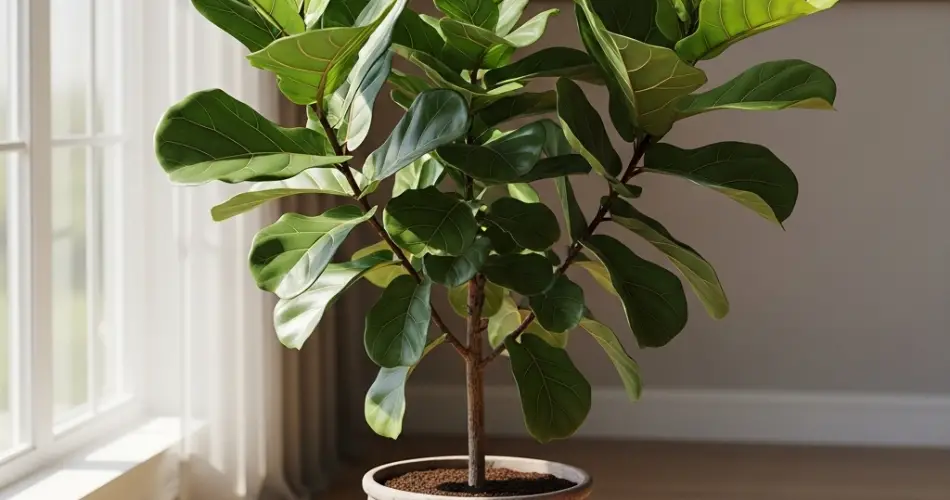
Fiddle leaf figs (Ficus lyrata) are a favorite among indoor plant enthusiasts for their dramatic, glossy leaves and ability to enhance any living space. While visually striking, these tropical plants require careful attention to moisture management to thrive indoors. Both overwatering and underwatering can compromise leaf health and overall growth, making it essential to understand the plant’s hydration needs, seasonal adjustments, and soil requirements. This guide provides practical advice for managing moisture effectively, ensuring a healthy and vibrant indoor fiddle leaf fig.
Understanding Fiddle Leaf Fig Water Requirements
Fiddle leaf figs originate from tropical climates, where consistent moisture is present but excess water drains quickly. Their large leaves facilitate significant transpiration, meaning they can lose water faster than some other houseplants. Overwatering is a common issue that causes root rot, yellowing leaves, and leaf drop, while underwatering leads to curling, brown edges, or drooping foliage. Achieving the right balance between sufficient soil moisture and proper drainage is critical for healthy indoor growth.
Selecting the Right Container and Soil
Proper moisture management starts with container and soil selection. Choose a pot with drainage holes to allow excess water to escape, preventing roots from sitting in water. Terracotta or unglazed ceramic pots are ideal because they absorb excess moisture, helping maintain a healthy root environment.
The soil should be well-draining yet capable of retaining some moisture for the roots. A mix of quality potting soil combined with perlite, sand, or orchid bark creates an ideal growing medium. This combination allows water to reach the roots evenly while preventing stagnation, which can lead to root rot and other moisture-related problems.
Watering Techniques for Indoor Fiddle Leaf Figs
Watering your fiddle leaf fig requires attention to detail and consistency:
-
Check Soil Moisture: Insert your finger about 1–2 inches into the soil. Only water if the soil feels dry at this depth.
-
Water Thoroughly: Pour water evenly around the base until it drains from the bottom. This ensures all roots receive moisture.
-
Avoid Wet Leaves: Focus on the soil rather than the foliage, as excess water on leaves can promote fungal growth.
-
Use Room-Temperature Water: Water that is too cold can shock roots, while room-temperature water promotes healthy absorption.
Seasonal Adjustments in Moisture
Indoor fiddle leaf figs’ water needs vary with seasonal changes:
-
Spring and Summer: These are the active growth months, requiring more frequent watering—generally every 7–10 days. Increased warmth and sunlight accelerate growth and water uptake.
-
Fall and Winter: Growth slows in cooler months, reducing water needs. Water approximately every 2–3 weeks, allowing soil to dry slightly between sessions. Overwatering in winter is a leading cause of root problems.
Environmental conditions such as indoor heating, air conditioning, and sunlight levels also impact moisture requirements. Adjust watering based on these factors rather than adhering strictly to a calendar schedule.
Recognizing Hydration Signs
Monitoring your plant for visual cues helps maintain optimal moisture. Signs of underwatering include drooping or curling leaves, brown tips, and slowed growth. Overwatering symptoms include yellowing leaves, soft or mushy foliage, and a foul smell from the soil. Regular observation ensures that your watering practices are meeting the plant’s needs.
Additional Tips for Moisture Management
-
Humidity: Fiddle leaf figs thrive in moderate to high humidity. Using a humidity tray or occasional misting can support leaf turgor, especially during dry indoor conditions.
-
Sunlight: Bright, indirect light supports healthy water uptake and prevents leaf stress. Avoid prolonged exposure to direct sunlight, which can scorch leaves and increase evaporation.
-
Fertilization: During the growing season, use a diluted, balanced fertilizer to promote healthy root development and foliage.
-
Repotting: Repotting every 2–3 years refreshes soil and allows roots to grow freely, improving moisture absorption and overall plant health.
Benefits of Proper Moisture Management
Correct moisture management ensures that fiddle leaf figs maintain their glossy, firm leaves and strong growth. Proper hydration enhances their resistance to pests and disease, supports flowering potential, and promotes a long-lasting indoor presence. By understanding seasonal water needs, using well-draining soil, and monitoring environmental conditions, you can provide consistent care that keeps your fiddle leaf fig thriving.
With careful attention to moisture and seasonal adjustments, indoor fiddle leaf figs can flourish, providing dramatic visual appeal and healthy foliage year-round. Effective moisture management is the foundation of successful indoor cultivation, ensuring your plant remains vibrant, resilient, and a centerpiece of any room.


