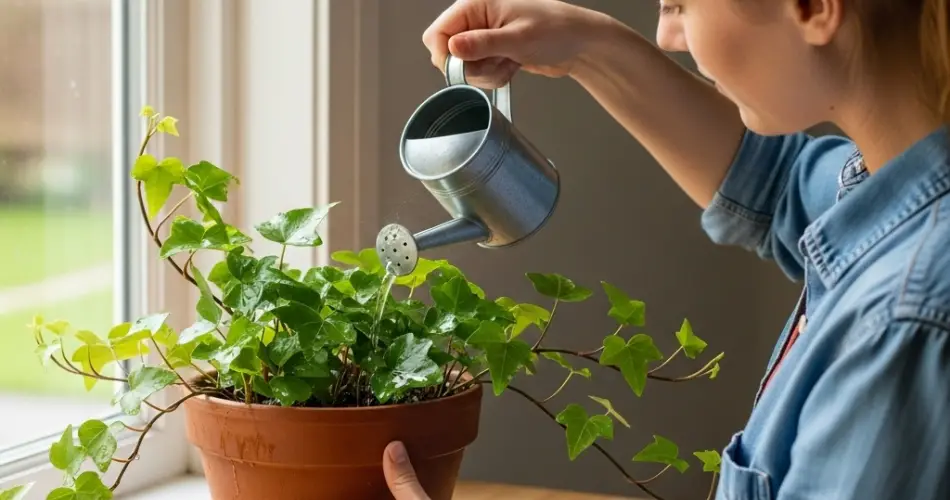
English ivy (Hedera helix) is a resilient and attractive trailing plant that adds elegance to shelves, hanging baskets, and indoor walls. Known for its glossy leaves and rapid growth, this plant is relatively easy to care for—especially when it comes to watering. However, improper watering is one of the most common causes of poor health in English ivy. Both underwatering and overwatering can lead to stress, leaf loss, and root problems. This detailed guide will help you strike the right balance so your ivy thrives without drowning.
Understanding English Ivy’s Water Needs
English ivy prefers a consistent moisture level—not too dry, not too wet. Native to temperate climates, it’s used to moderate conditions and well-draining soil. While it can survive brief dry spells, it doesn’t tolerate soggy roots for long. Learning to read the plant’s signals and understand its environment is key to mastering its watering schedule.
1. Let the Soil Dry Slightly Between Waterings
A good rule of thumb is to water English ivy when the top inch of soil feels dry to the touch. Stick your finger into the soil—if it’s still moist, wait a day or two. Overly damp soil can lead to root rot, while bone-dry soil will eventually cause the plant to wilt and lose leaves. Aim for lightly moist soil that dries out a bit between watering sessions.
2. Watch for Drooping Leaves
If your ivy’s leaves begin to droop, it’s signaling a water issue. Drooping can result from both underwatering and overwatering, so always check the soil moisture before reacting. If the soil is dry, water gently and thoroughly. If the soil feels soggy, hold off and improve drainage if necessary.
3. Understand Seasonal Adjustments
English ivy’s water needs change with the seasons. During active growth in spring and summer, it may require more frequent watering. In fall and winter, when growth slows, reduce watering. Overwatering during the dormant season is a common mistake that can lead to fungal problems and root damage.
4. Use Well-Draining Soil
Proper drainage is essential for ivy health. Use a potting mix that allows water to flow freely, such as a blend designed for houseplants. You can add perlite or sand to improve drainage. Always plant ivy in containers with drainage holes to prevent excess water from accumulating at the bottom.
5. Avoid Letting Ivy Sit in Standing Water
Never let your English ivy sit in a saucer filled with water. After watering, empty any excess water from the tray to keep the roots from becoming waterlogged. Root rot is difficult to recover from, so prevention is key.
6. Be Careful With Humidity and Mist
While ivy enjoys moderate humidity, misting the leaves regularly can lead to fungal issues, especially in low-light or poorly ventilated areas. Instead of misting, raise humidity by grouping plants together or placing a water-filled tray with pebbles nearby. Let the plant absorb moisture through the soil, not the leaves.
7. Water Thoroughly but Gently
When it’s time to water, do so slowly and evenly until you see water draining from the bottom of the pot. This ensures that moisture reaches the root zone without flooding it. Avoid quick surface watering, which encourages shallow root growth and leaves deeper roots dry.
8. Use Room-Temperature Water
Cold water can shock the roots and warm water can promote disease. Use room-temperature water for best results. Tap water is generally fine, but if your water is heavily chlorinated or softened, consider using filtered or distilled water occasionally to avoid mineral buildup in the soil.
9. Recognize Overwatering Symptoms
Signs of overwatering include yellowing leaves, mushy stems, mold on the soil surface, and a sour or musty smell. If you see these signs, stop watering, let the soil dry out, and improve drainage. You may need to repot the plant in fresh, dry soil if root rot has begun.
10. Use a Moisture Meter If You’re Unsure
If you’re still struggling to judge moisture levels by touch, a moisture meter can help. These inexpensive tools provide a reading that indicates whether the soil is dry, moist, or wet. It’s a useful guide until you become more confident with your watering routine.
Conclusion
Watering English ivy isn’t complicated, but it does require consistency and attention to detail. Keep the soil lightly moist, avoid soggy conditions, and adjust watering frequency with the seasons. With proper watering habits and good drainage, your English ivy will flourish indoors—providing lush, cascading greenery without the worry of drowning its roots.


