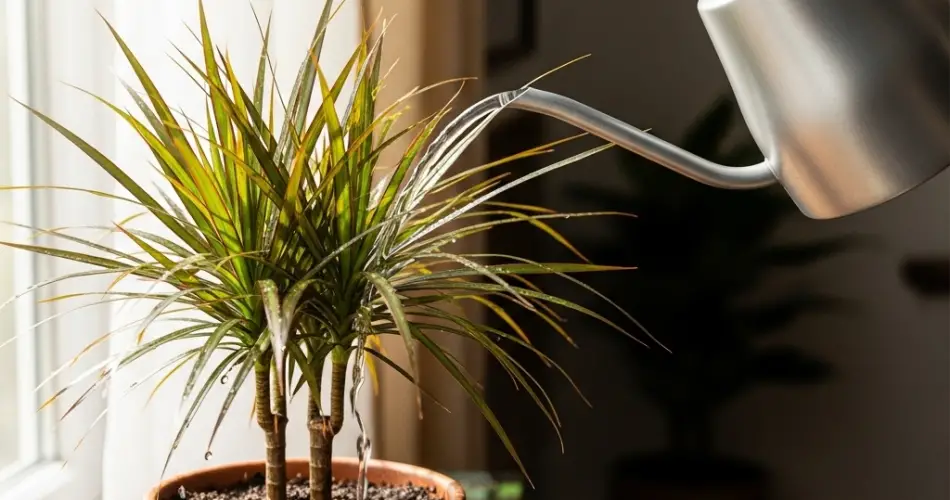
Dracaena is a popular and low-maintenance houseplant, loved for its sword-shaped leaves and upright growth habit. It’s a resilient plant that can adapt to a variety of home environments, but it still has specific needs when it comes to watering. The amount of light your Dracaena receives and the time of year both play a crucial role in determining how often it should be watered.
If you’ve ever struggled with drooping leaves, brown tips, or root rot, it’s likely due to watering issues. Understanding how light exposure and seasonal changes affect your plant’s moisture needs can help you develop a customized watering schedule that keeps your Dracaena thriving year-round.
Light Levels and Their Impact on Watering
Dracaena is moderately drought-tolerant, but watering too much—or too little—based on the light it receives can cause problems. The brighter the environment, the more quickly the soil will dry out, while lower light slows evaporation.
Bright, Indirect Light:
In bright, indirect light (such as near a sunny window filtered by a curtain), Dracaena tends to grow more actively and use more water. During active growth periods, you may need to water about once every 7 to 10 days. However, always check the soil before watering—only water when the top 1–2 inches feel dry.
Low Light Conditions:
In rooms with limited natural light or where the plant is placed several feet from a window, Dracaena’s growth slows significantly. As a result, the soil stays moist for longer, and watering once every 2 to 3 weeks may be sufficient. Overwatering is more likely in low light, so be extra cautious.
Artificial Lighting:
If your Dracaena is growing under grow lights or in office environments with artificial light, it typically needs less frequent watering than a plant in natural light, but more than one in a dark corner. Use soil moisture as your guide rather than following a rigid schedule.
Seasonal Changes and Watering Adjustments
Dracaena doesn’t need the same amount of water throughout the year. As the seasons change, so should your watering habits.
Spring and Summer (Active Growth Season):
Warmer temperatures and increased daylight hours trigger active growth in Dracaena. During this time, the plant uses more water to support new leaves and root development. In bright light, you might need to water once a week or so. Be consistent, but avoid letting the soil stay soggy—Dracaena hates wet feet.
Always let the top inch or two of soil dry before watering again, and consider increasing humidity if the air is particularly dry during this season.
Autumn and Winter (Dormant or Slow Growth Season):
When days get shorter and indoor temperatures drop, Dracaena enters a slower growth phase. This means it requires less water. Watering too frequently during winter can lead to root rot or yellowing leaves.
In cooler months, reduce watering to every 2–4 weeks depending on the light level. Monitor the soil carefully, and never water if the top layer is still moist. Keep the plant away from cold drafts and reduce fertilizing during this time.
Signs You’re Watering Incorrectly
Regardless of season or light exposure, your Dracaena will tell you if its watering needs aren’t being met. Learn to recognize the signs of both overwatering and underwatering:
Overwatering Symptoms:
-
Yellowing lower leaves
-
Mushy stems or roots
-
Mold or fungus on soil surface
-
Persistent wet soil or root rot smell
Underwatering Symptoms:
-
Dry, brown leaf tips
-
Drooping or wilting leaves
-
Soil pulling away from pot edges
-
Crispy, brittle foliage
If you’re unsure whether to water, it’s better to wait another day. Dracaena tolerates slight dryness far better than excessive moisture.
Best Practices for Watering Dracaena
-
Use room-temperature water. Cold water can shock the roots, especially in winter.
-
Water evenly around the base. Make sure water reaches all parts of the root system.
-
Use well-draining soil. Dracaena doesn’t tolerate compact or waterlogged soil. A mix with peat, perlite, or coarse sand works well.
-
Ensure proper drainage. Always use a pot with drainage holes and never let your plant sit in standing water.
-
Clean the leaves. Occasionally wipe down the leaves with a damp cloth to keep them dust-free and help the plant absorb light more efficiently.
Final Thoughts
Creating a watering schedule for your Dracaena isn’t about sticking to a rigid timetable—it’s about observing your plant and adjusting to its environment. The key factors to consider are light levels and seasonal changes. Bright conditions and warm weather mean more frequent watering, while lower light and winter months call for a lighter hand.
With a little attention and a flexible approach, you’ll have a healthy, vibrant Dracaena that adds a touch of tropical elegance to your indoor space year-round.


