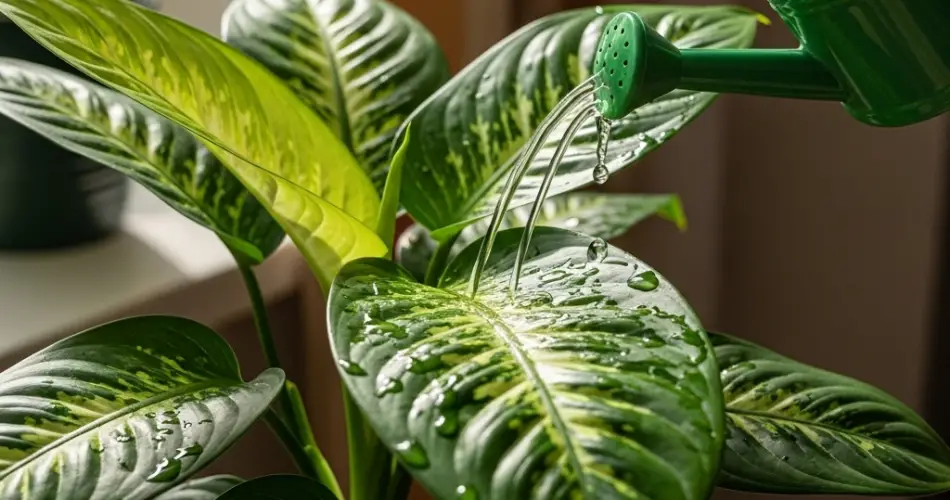
Dieffenbachia, commonly known as dumb cane, is a popular houseplant admired for its bold, patterned foliage and fast growth. While it’s relatively low-maintenance, improper watering can quickly turn a healthy plant into a struggling one. From yellowing leaves to root rot, many common Dieffenbachia issues stem from watering mistakes. If you want your plant to thrive, understanding how and when to water it is essential.
Here’s a guide to the most frequent watering mistakes that damage Dieffenbachia and how to avoid them.
1. Overwatering: The Most Harmful Mistake
Overwatering is one of the most common causes of Dieffenbachia decline. This tropical plant enjoys moist soil, but not soggy conditions. Constantly saturated soil suffocates the roots, leading to root rot—a serious and often fatal condition.
Signs of Overwatering:
-
Yellowing lower leaves
-
Wilting despite wet soil
-
Mushy stems or roots
-
Foul-smelling soil
To prevent overwatering, always check the soil before adding more water. Stick your finger about an inch into the soil—if it feels damp, wait a few more days. Ensure the pot has proper drainage and never allow the plant to sit in a water-filled saucer.
2. Underwatering: Deceptively Damaging
On the other end of the spectrum, underwatering is another major issue. Dieffenbachia likes consistent moisture. Repeatedly letting the soil dry out completely stresses the plant and can lead to crispy leaf edges, stunted growth, or leaf drop.
Symptoms of Underwatering:
-
Drooping or curling leaves
-
Brown, crispy edges or tips
-
Slow or halted growth
-
Soil pulling away from the pot’s edges
If your plant dries out too often, adjust your watering schedule. Water when the top inch of soil feels dry, and be more attentive during warmer seasons or in dry indoor environments.
3. Watering on a Rigid Schedule
One size does not fit all when it comes to watering houseplants. Sticking to a fixed schedule—like watering every Monday—can be risky. Plant water needs vary depending on the season, light exposure, pot size, and room temperature.
Better Approach:
Monitor soil moisture regularly instead of sticking to a calendar. During the growing season (spring and summer), you may need to water more often, while in winter, watering should be reduced.
4. Using Cold Water
Cold water can shock Dieffenbachia’s tropical roots, potentially causing leaf drop or growth slowdown. These plants prefer water that’s close to room temperature.
Solution:
Let tap water sit out for a few hours to reach room temperature before using it. This also allows chlorine to dissipate, which can be beneficial for sensitive plants.
5. Poor Drainage and Wrong Soil Type
Even with perfect watering technique, poor drainage can ruin your efforts. A pot without drainage holes or soil that retains too much moisture will cause problems over time.
What to Do:
Use a light, well-draining potting mix—something with peat, perlite, or coco coir is ideal. Avoid dense, heavy soils that hold water for too long. Make sure your pot has adequate drainage holes, and never use a decorative pot without first checking how excess water will escape.
6. Letting Water Sit on Leaves or Crown
Dieffenbachia’s large leaves and central crown are prone to rot if water sits on them for too long. Pouring water directly into the crown or splashing the leaves can invite fungal issues.
Best Practice:
Water the soil directly at the base of the plant. Avoid overhead watering, especially in cool or humid environments where evaporation is slower.
7. Not Adjusting for Seasonal Changes
As with most tropical houseplants, Dieffenbachia’s watering needs shift with the seasons. In winter, growth slows and the plant uses less water. Continuing to water at summer levels can easily lead to overwatering and root problems.
Adjust Accordingly:
In cooler months, reduce watering frequency and monitor the soil more closely. Let the top layer of soil dry more thoroughly before the next watering during the dormant season.
Final Thoughts
Watering mistakes are among the most common reasons Dieffenbachia plants struggle. While it’s tempting to treat watering as a routine task, paying attention to your plant’s specific needs will lead to healthier, more vibrant growth.
Avoid overwatering and underwatering, use the right temperature water, and ensure good drainage and soil conditions. Adjust your approach as seasons change and your plant matures. With mindful care, Dieffenbachia can grow vigorously, rewarding you with its lush, dramatic foliage and long-lasting beauty indoors.


