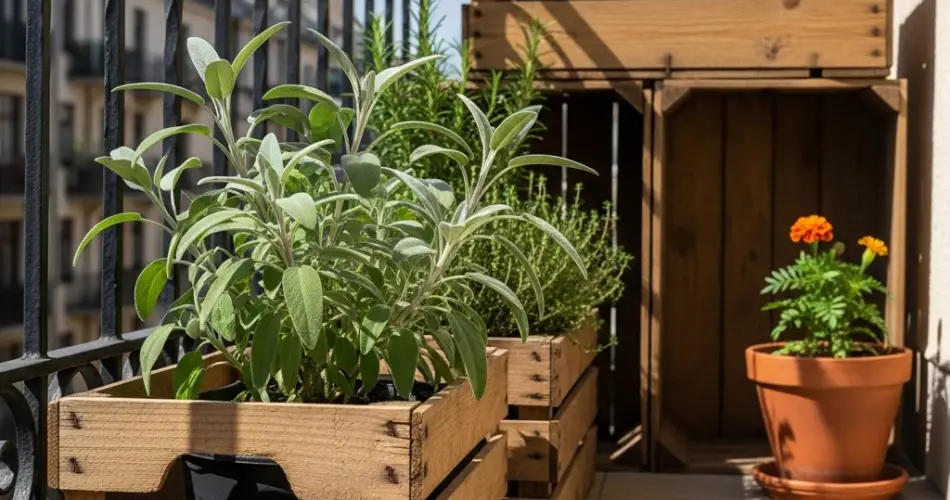
Sage is a hardy, aromatic herb prized for its earthy flavor and medicinal qualities. Known for its resilience and versatility, it is a favorite among gardeners who want a plant that thrives with minimal fuss. If you live in an apartment or have limited space, growing sage in balcony crates is a practical and attractive solution. This method allows you to enjoy fresh leaves for cooking, tea, or natural remedies without needing a large garden.
Why Sage is Perfect for Balcony Crates
Sage is well-suited to crate gardening because it does not require deep soil and can adapt to various conditions. Its woody stems and evergreen leaves make it an attractive plant year-round, while its compact growth habit means it won’t overwhelm a small balcony space. Crates also make it easy to move plants to catch the best sunlight or protect them from harsh weather.
Additionally, sage prefers slightly dry conditions, so the contained environment of a crate helps prevent overwatering — a common problem in ground gardens.
Choosing the Right Crate
When selecting a crate for your sage, focus on durability, drainage, and size.
-
Material – Wooden crates, such as those made from cedar or pine, provide a rustic look and hold up well outdoors. Food-safe plastic crates are lightweight and weather-resistant.
-
Depth – Sage roots do well in containers that are at least 20–25 cm deep.
-
Drainage – Drill several holes in the bottom if they are not already present. Good drainage is essential to keep roots healthy.
-
Lining – Line the crate with landscape fabric or burlap to hold the soil in place while allowing water to escape freely.
Place the crate in a stable spot on your balcony, ideally raised slightly to promote airflow underneath.
Preparing the Soil
Sage thrives in sandy, well-draining soil. A good blend for crate planting includes:
-
2 parts high-quality potting mix
-
1 part coarse sand or perlite for drainage
-
1 part compost for nutrients
Avoid heavy garden soil, which retains too much water and can lead to root rot. The goal is a light, crumbly texture that allows moisture to drain quickly.
Planting Sage in Crates
You can grow sage from seeds, cuttings, or nursery seedlings.
-
From seeds – Sow directly into the crate in early spring. Cover lightly with soil and keep moist until germination, which can take 2–3 weeks.
-
From cuttings – Take a 10 cm cutting from a healthy plant, remove the lower leaves, and place it in moist soil until roots form.
-
From seedlings – Transplant into the crate, leaving 30–40 cm between plants to allow for air circulation.
Once planted, water gently to settle the soil.
Light and Water Requirements
Sage thrives in full sun, ideally receiving 6–8 hours of direct light each day. Place your crate in a sunny location on the balcony, such as along the railing or near a south-facing wall.
Water sparingly — sage prefers soil that is slightly dry between waterings. Stick your finger about 2 cm into the soil; if it feels dry, water deeply, allowing excess to drain away. Overwatering is one of the few things that can harm sage, so it’s better to err on the side of less.
Feeding and Maintenance
Sage is not a heavy feeder, so a light application of compost or balanced organic fertilizer in spring and mid-summer is sufficient. Too much fertilizer can reduce its flavor and aroma.
Prune lightly during the growing season to encourage bushy growth and prevent the plant from becoming woody. Remove any dead or damaged leaves promptly. Every 2–3 years, replace older plants with new seedlings or cuttings to keep your supply fresh and productive.
Harvesting Sage
You can start harvesting sage once the plant is established and has several sets of leaves. Snip off individual leaves or cut entire sprigs as needed. For the best flavor, harvest in the morning after the dew has dried but before the midday heat.
Fresh sage can be used immediately, dried for later use, or frozen to preserve its flavor. To dry, tie sprigs together and hang them upside down in a warm, airy place away from direct sunlight.
Protecting Sage Year-Round
Sage is hardy, but if your area experiences frost, bring the crate indoors or cover the plant during cold snaps. In mild climates, it will remain evergreen and can be harvested year-round. In hotter climates, provide some afternoon shade to protect it from extreme heat.
The Joy of Balcony Sage
Growing sage in balcony crates not only saves space but also adds beauty and fragrance to your outdoor area. With its silver-green leaves and low-maintenance care, sage fits perfectly into a rustic balcony garden alongside other herbs like rosemary, thyme, and oregano.
By choosing a sturdy crate, preparing well-draining soil, and providing the right amount of sun and water, you can enjoy fresh, aromatic sage all year long — right outside your door. Whether you’re seasoning roasted vegetables, brewing herbal tea, or simply appreciating the scent on a warm breeze, balcony-grown sage is a delightful addition to any small-space garden.


