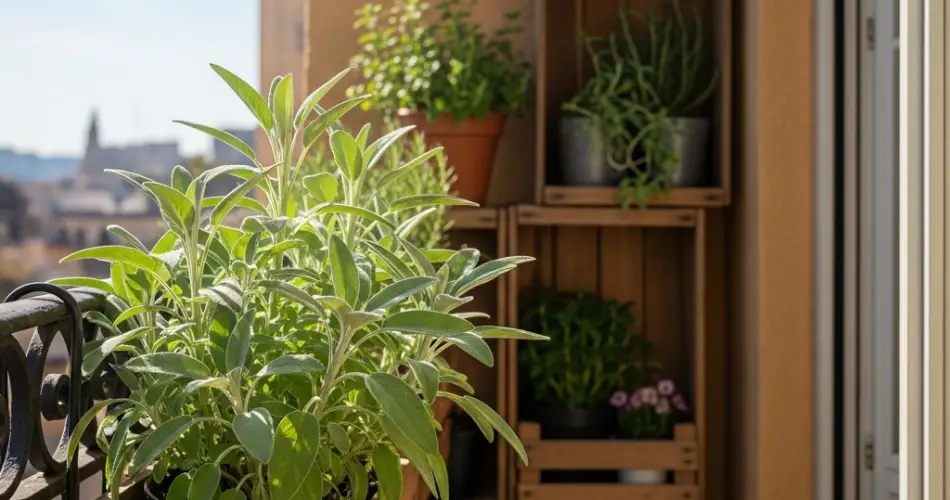
Sage is a hardy, aromatic herb prized for its savory flavor, silvery foliage, and versatility in the kitchen. Whether you enjoy adding it to roast meats, savory breads, or herbal teas, fresh sage has a depth of taste that dried versions simply can’t match. Fortunately, you don’t need a backyard to grow it. With a few recycled wooden crates and a sunny balcony, you can cultivate your own rustic sage garden that is both beautiful and practical.
Why Choose Sage for Balcony Gardening?
Sage is an ideal choice for small-space gardeners because it is low-maintenance, drought-tolerant, and long-lived. Once established, it provides fresh leaves nearly year-round in mild climates. Its attractive, velvety leaves and soft gray-green color make it as ornamental as it is useful.
Growing sage in crates allows you to bring a touch of countryside charm to your urban home. Crates are easy to move, customize, and arrange, and they provide enough depth for sage’s root system to thrive.
Selecting and Preparing Your Crates
1. Choose sturdy, untreated wood
Recycled fruit crates, wine boxes, or shipping containers can work well. Avoid crates treated with chemicals, which could harm the plant and leach into the soil. A crate depth of at least 10–12 inches is best for sage’s roots.
2. Line the interior
To keep soil from spilling out while allowing drainage, line the inside with landscape fabric, burlap, or breathable plastic sheeting. Secure it with a staple gun or tacks along the inside edges.
3. Ensure proper drainage
If your crate has a solid base, drill several small holes to allow excess water to escape. Sage does not tolerate waterlogged soil and prefers a dry, well-drained environment.
4. Fill with the right soil mix
Use a light, well-draining potting mix. Adding sand or perlite will help improve drainage. Sage thrives in slightly alkaline to neutral soil with moderate fertility—too much nitrogen will result in lush leaves but weaker flavor.
Planting Sage in Crates
Starting from seeds or seedlings
While sage can be grown from seed, it germinates slowly and unevenly. Many balcony gardeners prefer to start with young nursery plants for quicker results. If growing from seed, sow them 1/8 inch deep, keep the soil moist until germination, and be patient—it can take up to three weeks.
Spacing and arrangement
If you’re planting more than one sage plant in a crate, space them about 12 inches apart to allow for airflow and growth. Sage can grow into a small bush, so avoid overcrowding.
Sunlight requirements
Sage loves full sun and will need at least 6 hours of direct sunlight daily. Place your crate in the sunniest part of your balcony, rotating occasionally to ensure even growth.
Caring for Your Sage Crate Garden
Watering
Water sparingly—allow the top inch of soil to dry out between waterings. Overwatering is the most common cause of sage problems, leading to root rot.
Feeding
Sage is not a heavy feeder. Fertilize lightly in spring with a balanced, slow-release fertilizer or compost. Avoid over-fertilizing, as this can reduce flavor intensity.
Pruning
Regular harvesting encourages bushier growth. Snip stems just above a pair of leaves, avoiding cutting into old woody growth. In early spring, prune back about one-third of the plant to stimulate fresh growth.
Harvesting and Using Sage
You can start harvesting once the plant is well-established, typically a few months after planting. The best flavor comes from fresh leaves picked in the morning after the dew has dried.
Sage leaves can be used fresh, dried for long-term storage, or frozen. Simply rinse and pat dry before storing. For drying, hang small bunches in a warm, airy place out of direct sunlight.
Overwintering and Longevity
In mild climates, sage can survive year-round outdoors. In colder regions, move your crate to a sheltered area or indoors before the first frost. Place it near a sunny window and reduce watering during the winter months.
Sage plants can remain productive for several years, but their vigor may decline after about five years. At that point, consider starting new plants from cuttings or seeds.
Styling Your Rustic Balcony Sage Garden
A crate garden can be more than functional—it can be a decorative feature on your balcony. Here are a few ideas:
-
Rustic charm: Leave the crate in its natural wood state for a farmhouse look.
-
Personal touch: Paint or stencil the crate with herb names or decorative designs.
-
Companion planting: Add low-growing herbs like thyme or oregano alongside sage for a mixed herb crate.
Final Thoughts
A rustic sage garden in recycled crates is an easy and rewarding way to bring fresh herbs into your cooking and greenery into your home. This method combines sustainability—by reusing materials—with the joy of homegrown flavor. With just a sunny balcony, some basic supplies, and minimal maintenance, you can enjoy fragrant, flavorful sage at your fingertips year-round.
Whether you’re an experienced gardener or just starting out, crate gardening offers a charming, space-saving solution that proves you don’t need a large garden to grow something beautiful and useful.


