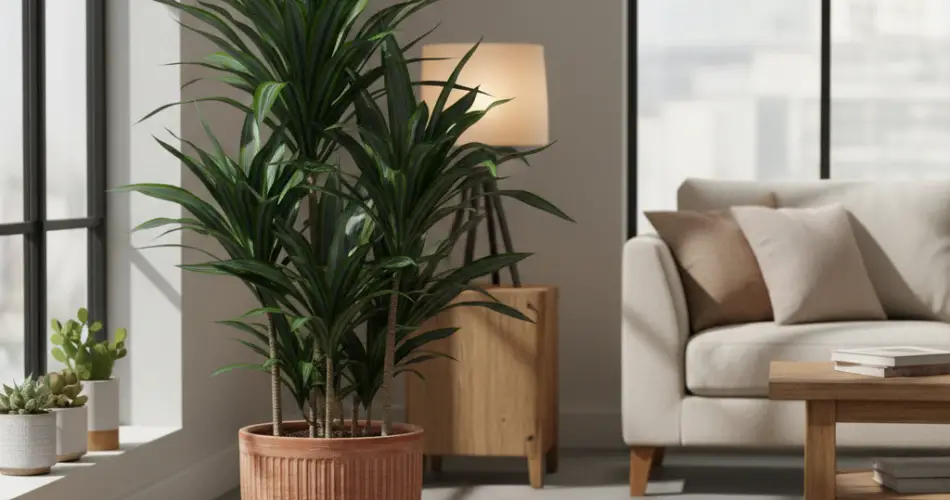
Dracaena plants are among the most popular indoor houseplants, known for their elegant, sword-shaped leaves, upright growth, and low-maintenance nature. With dozens of varieties, including Dracaena marginata, Dracaena fragrans, and Dracaena reflexa, these plants can brighten any space with their tropical charm. Despite being adaptable, one of the most important factors for keeping them healthy is light. Understanding whether dracaenas prefer bright or low light can help you maintain their vibrant leaves and ensure steady growth.
Natural Habitat and Adaptability
Dracaenas are native to tropical Africa and Asia, growing as understory plants beneath taller trees. In their natural environment, they receive filtered sunlight, not direct sun. This background explains their tolerance for lower light conditions and their sensitivity to harsh, direct sunlight. Their adaptability makes dracaenas ideal for indoor environments, but lighting still plays a major role in their health and appearance.
Bright Light: Pros and Considerations
Dracaenas thrive in bright, indirect light, which promotes robust growth, strong stems, and vivid leaf coloration. Bright, filtered light allows plants to maintain their characteristic patterns, such as the red margins of Dracaena marginata or the striped foliage of Dracaena fragrans.
Benefits of bright light include:
-
Faster and more vigorous growth.
-
Stronger stems and upright structure.
-
Vibrant leaf colors and patterns.
Important: Avoid placing dracaenas in direct sunlight, especially through south- or west-facing windows. Intense, direct rays can scorch leaves, causing brown tips and patches, and may fade the foliage over time. Sheer curtains or positioning the plant a few feet away from the window helps filter the light safely.
Low Light: Survival vs. Thriving
One of the most appealing qualities of dracaenas is their ability to tolerate low-light conditions. They can survive in dim corners or rooms with limited sunlight, making them excellent for offices and indoor spaces without full sun exposure.
In low-light conditions, you may notice:
-
Slower growth with fewer new leaves.
-
Smaller, darker leaves, and duller coloration.
-
Leaf drop or sparse appearance if light is too weak.
While dracaenas can endure low light, they will not reach their full potential. Leaf patterns may fade, and the plant may become leggy as it stretches toward the nearest light source. For best results, low-light plants should be rotated occasionally toward brighter areas or supplemented with artificial lighting.
Artificial Light for Dracaenas
Dracaenas respond well to artificial lighting, which makes them suitable for windowless spaces or offices. Fluorescent or LED grow lights can provide the intensity needed for healthy growth and can sometimes encourage more consistent foliage coloration.
Tips for artificial lighting:
-
Use full-spectrum lights to mimic natural sunlight.
-
Position the light about 12–18 inches above the plant.
-
Provide 10–12 hours of light daily.
Artificial lighting allows dracaenas to flourish indoors even when natural light is insufficient, particularly during the shorter daylight months of winter.
Seasonal Light Adjustments
Lighting changes with the seasons, so dracaenas may need occasional repositioning.
-
Spring and Summer: Protect from intense afternoon sun in south- or west-facing windows.
-
Autumn and Winter: Move closer to bright windows or use supplemental lighting to compensate for shorter daylight hours.
Rotating the plant periodically ensures even growth and prevents leaning toward the light source.
Signs of Incorrect Light
Your dracaena will signal if its lighting conditions are not ideal:
-
Too little light: Slow growth, dull or darkened leaves, leggy stems.
-
Too much direct light: Scorched leaves, brown tips, and faded coloration.
-
Ideal light: Upright, compact growth, vivid leaf colors, and steady production of new foliage.
By observing these signs, you can adjust placement quickly to maintain optimal plant health.
Practical Placement Tips
-
Place dracaenas near east- or north-facing windows for gentle light exposure.
-
Use sheer curtains to diffuse bright sunlight from south- or west-facing windows.
-
Rotate the plant every few weeks to promote even growth.
-
Supplement with artificial light in darker rooms for best results.
Final Thoughts
So, do dracaenas prefer bright or low light? The answer is both—but with important differences. Dracaenas can tolerate low light, making them ideal for dim indoor corners, but they thrive in bright, indirect light, which encourages faster growth, stronger stems, and vibrant leaf colors.
For the healthiest, most attractive plants, aim for bright, filtered light while avoiding harsh direct sun. With proper lighting, dracaenas can remain elegant, robust, and lush for years, bringing tropical beauty to any indoor space.


