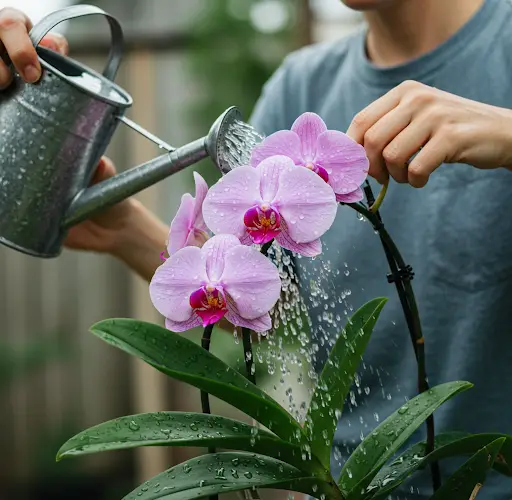
The Ultimate Guide to Proper Orchid Irrigation for Healthy Blooms
Watering is the most critical aspect of orchid care, directly affecting their ability to bloom and produce new buds. Proper irrigation ensures that orchids receive the right amount of water without being overwatered or exposed to stagnant moisture, which can cause diseases. Today, I will explain the most effective orchid watering methods and highlight common mistakes to avoid.
Common Mistakes in Orchid Watering
Before diving into the correct watering techniques, let’s look at some common mistakes that should be avoided.
1. Washing Orchids Directly Under a Faucet
Some people believe that orchids need frequent leaf washing to remove dust, but placing the plant directly under running water is a harmful method. Although this cleans the leaves, it also results in excessive water absorption and accumulation between the leaves. In home environments, this excess water does not evaporate quickly and can lead to fungal infections and rot. While outdoor orchids may dry more easily, indoor orchids will struggle, making this an incorrect irrigation technique.
2. Watering from Above
Another incorrect method is pouring water directly over the orchid from the top. This allows water to seep between the leaves and into the stem, leading to dangerous fungal diseases. The accumulation of moisture on the stem and leaves causes yellowing, and over time, the orchid may die due to fungal infections. If water does accumulate on the leaves or stem, use a cotton ball to dry it immediately.
To prevent such issues, I will now introduce the three best watering methods to keep your orchids healthy and thriving.
Determining When Your Orchid Needs Watering
Unlike many other plants, orchids should not be watered based on a fixed schedule. Instead, their roots provide clear indicators of when watering is needed.
- Green roots indicate that the orchid has sufficient moisture and does not need watering.
- Gray or white roots signal that the orchid is dry and needs water.
Orchids have two types of roots:
- Aerial roots (above the pot), which are always white or gray.
- Pot roots, which change color depending on their moisture level.
When determining whether to water, always check the pot roots, not the aerial roots.
The Three Best Watering Methods for Orchids
1. The Immersion Method (Dip Method)
One of the most effective ways to water orchids is by using the immersion technique. This method allows the plant to absorb water gradually, preventing overwatering.
Steps:
- Fill a container with clean water.
- Place the orchid pot in the water, ensuring the roots are submerged.
- Let the orchid sit in the water for a maximum of 10 minutes.
- Remove the orchid and let the excess water drain completely.
- Place the orchid on a plate and discard any accumulated water to prevent root rot.
Important Tips:
- Do not leave the orchid submerged for more than 10 minutes, as the sponge-like potting mix can retain too much water.
- This method allows the roots to turn green, indicating they have absorbed sufficient moisture.
2. Measured Watering (70ml Method)
This method is ideal for those who prefer a precise approach. Each orchid typically requires about 70ml (half a glass) of water per watering session.
Steps:
- Measure 70ml of water.
- Slowly pour it into the pot, allowing the roots to absorb moisture.
- Observe as the remaining water collects at the bottom of the pot.
- Ensure that the orchid absorbs this water by the end of the day.
By limiting water intake to this precise amount, the orchid receives adequate hydration without excess moisture accumulation.
3. Edge Watering Method
For those using plates under their orchid pots, the edge watering method is a simple yet effective alternative.
Steps:
- Pour water slowly around the edges of the pot, avoiding the base of the stem.
- Continue watering until moisture starts draining from the bottom of the pot.
- Allow the orchid to sit for a few minutes and drain any excess water.
This method prevents water from accumulating at the stem and keeps the orchid’s core dry, reducing the risk of fungal infections.
What to Avoid When Watering Orchids
- Never let orchids sit in standing water for days. Leaving them in water for too long leads to root rot and yellowing leaves.
- Avoid watering on a fixed schedule. Instead, check the roots and adjust watering based on their color.
- Do not pour water directly onto the leaves and stem. This can cause moisture-related diseases.
How Correct Watering Encourages Blooming
The frequency and method of watering directly affect an orchid’s ability to produce flowers. When orchids receive just the right amount of moisture, their roots remain healthy, leading to more flower branches and abundant blooming.
After watering, placing your orchid in a well-lit area, such as a windowsill that receives morning sunlight, helps stimulate new growth and budding. Exposure to natural light encourages orchids to bloom again and develop new buds.
Final Thoughts
By following these proper watering techniques, you can ensure that your orchids thrive, remain disease-free, and bloom abundantly. The key to success is understanding your orchid’s needs by observing its root color and choosing an irrigation method that prevents excess moisture buildup.
With the right care, your orchids will reward you with vibrant, long-lasting flowers. Implement these watering techniques, and enjoy the beauty of your flourishing orchids!


