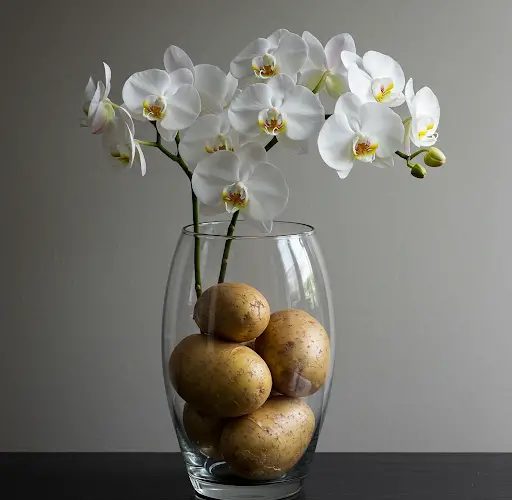
Today, I will share important tips about orchid care, focusing specifically on leaf care and how to encourage your orchid to bloom abundantly. Proper fertilization is crucial for ensuring that your orchid has vibrant, green leaves and strong, active roots. Using natural fertilizers at regular intervals is an effective way to support the root and leaf development of orchids while promoting the emergence of new flower branches.
One highly effective natural fertilizer for orchids can be made using potato peels. Potatoes contain essential nutrients such as potassium, calcium, and vitamins B and C. Additionally, the antioxidant properties in potato skins help keep orchid leaves firm, healthy, and resistant to fungal diseases.
To prepare this fertilizer, start by peeling the skins of two potatoes. Once peeled, place the potato skins in a blender. Add 400 ml of water and blend until the mixture becomes a puree. It is important to wash the potato skins thoroughly before use to ensure they are clean and free of dirt or chemicals.
Once the mixture is fully blended, strain it using a fine strainer to separate the liquid from the pulp. The liquid extract will be used as fertilizer, while the remaining pulp can be repurposed for a second fertilization recipe. The strained liquid is rich in nutrients and can be applied to orchids and other houseplants.
Pour the extracted liquid into a spray bottle, then dilute it by adding twice the amount of purified water. Shake the bottle gently to mix the solution thoroughly. It is important not to let this mixture sit for too long, as natural fertilizers can spoil and develop an unpleasant odor if left in warm temperatures for extended periods. To maintain freshness, use the mixture within a day or two.
Now that the fertilizer is ready, it’s time to apply it to the orchid leaves. This method strengthens the leaves and promotes healthy root development while also preventing common orchid pests such as mealybugs, thrips, and fungal infections. Spray both the top and underside of each leaf with the potato skin solution to ensure complete coverage.
When applying the spray, take care to prevent water from accumulating in the orchid’s stem or between its leaves, as excess moisture can cause stem rot and fungal diseases. To avoid this, place a napkin or tissue on the stem while spraying. This will help absorb any excess liquid and protect the plant from damage.
After spraying the leaves, allow the orchid to sit overnight so the beneficial nutrients can be absorbed. The following day, you may notice white spots appearing on the leaves. These spots are simply starch residues from the potato skins and are harmless.
To complete the care routine, gently wipe the leaves with a damp cloth or wet wipe to remove any remaining starch. Wiping the leaves regularly, ideally once every two weeks, is beneficial for maintaining plant health. This practice allows you to detect potential issues such as thrips damage or mealybugs early, ensuring that you can take prompt action to treat any infections before they spread.
By following this natural fertilization process, your orchid’s leaves will become healthier, shinier, and more resilient. The nutrients from the potato skins will not only strengthen the leaves but also encourage the growth of new foliage and flower branches, leading to a more vibrant and blooming orchid.


