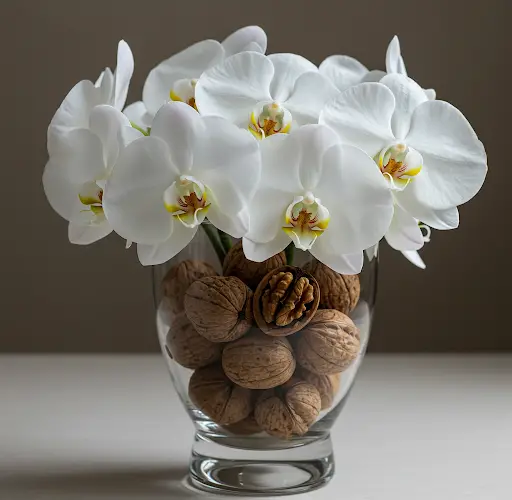
Essential Orchid Care: How to Use Walnut Water for Healthy Leaves and Blooming Flowers
Orchids are one of the most beautiful and elegant houseplants, but their care requires specific attention to ensure they remain healthy and bloom abundantly. One of the most important aspects of orchid care is maintaining strong and disease-free leaves, as healthy foliage plays a significant role in flower production. Today, I will introduce a natural and highly effective method for protecting your orchids from diseases and insects using walnuts.
The Benefits of Using Walnut Water for Orchids
Walnut shells contain pyroligneous acid, an organic compound known for its powerful antimicrobial and antibacterial properties. This natural remedy is particularly useful if your orchids suffer from leaf diseases or are infested with pests. Walnut water helps to strengthen orchid leaves, making them more resistant to fungal infections and harmful insects such as mealybugs and thrips.
How to Prepare Walnut Water for Orchid Care
Materials Needed:
- 4-6 shelled walnuts or rotten walnuts
- 1 liter of water
- A pot for boiling
- A strainer
- A spray bottle
- Cotton pads
- A clean glass or small container
Step 1: Boiling the Walnuts
Begin by placing 4-6 walnuts (with shells) into 1 liter of water. If you have rotten walnuts, you can use them as well. Put the pot on the stove and bring the water to a boil. Let the walnuts boil for about 5 minutes. After this, turn off the heat and allow the walnut water to cool completely.
Step 2: Filtering the Walnut Water
Once the water has cooled down, strain it to separate the walnut shells from the liquid. This walnut-infused water is rich in antioxidants and antiviral acids, making it highly beneficial for orchid leaves. You will notice a significant amount of extract in the water, which indicates that the nutrients from the walnuts have been released.
Step 3: Diluting the Walnut Water
To ensure safe application, dilute the filtered walnut water by adding another liter of tap water. This mixture can now be used as a foliar spray or soil treatment for your orchids.
How to Use Walnut Water on Orchids
There are two primary methods for using walnut water to improve the health of your orchids: foliar application and soil treatment.
Method 1: Foliar Spray for Orchid Leaves
Foliar fertilization is an excellent way to deliver nutrients directly to the leaves. However, it should not be done too frequently. This method is especially useful if your orchids are struggling with diseases or insect infestations.
- Pour the prepared walnut water into a spray bottle.
- Lightly mist the leaves of the orchid, making sure to cover both the top and underside of the leaves. This ensures that any hidden pests or fungal spores are treated.
- Be careful not to let water accumulate between the leaves, as stagnant moisture can lead to further fungal infections.
- If excess water collects, use a cotton pad or tissue to gently absorb the moisture.
- Place your orchid in a well-ventilated area for 5-10 minutes to allow the leaves to dry completely.
- You can apply this method once a month to maintain healthy, disease-free leaves.
Method 2: Soil Treatment with Walnut Water
Using walnut water as a soil treatment can help eliminate insects and diseases within the potting medium, promoting stronger roots and healthier growth.
- Take a clean glass and pour about 5 tablespoons of walnut water.
- Gently pour this water into the orchid pot, ensuring it reaches the roots.
- This treatment should only be applied once every three months to prevent overuse.
- Walnut water increases organic matter in the soil, helping potted plants grow faster, develop stronger roots, and encourage more flowers.
Additional Orchid Care Tips for Maximum Blooms
In addition to using walnut water, there are other essential care tips you should follow to help your orchids flourish and produce vibrant blooms.
1. Provide Adequate Light
Orchids require plenty of indirect sunlight to bloom abundantly. The best lighting conditions include:
- Morning sun or late afternoon sunlight, especially in the winter months.
- Placing orchids near a bright window but avoiding direct, harsh sunlight to prevent leaf burn.
- If natural light is insufficient, consider using artificial grow lights to supplement light exposure.
2. Maintain Proper Humidity and Air Circulation
- Orchids thrive in environments with moderate humidity (between 50-70%).
- Ensure good airflow around your plants to prevent fungal growth and keep them healthy.
3. Fertilization for Strong Roots and Leaves
Regular fertilization is key to encouraging healthy growth:
- Use a balanced orchid fertilizer every two weeks during the growing season.
- Reduce feeding during the dormant season to prevent over-fertilization.
- The application of walnut water as a supplement provides additional organic nutrients.
4. Monitor for Pests and Diseases
- Regularly inspect your orchid’s leaves and roots for signs of pests like mealybugs, spider mites, or thrips.
- If you notice any issues, applying walnut water can act as a natural deterrent.
How to Identify a Healthy Orchid
A healthy orchid exhibits several signs of vitality:
- Firm, green, and vibrant leaves.
- Strong root growth with green or silvery-white roots.
- Frequent flowering with multiple buds and blossoms.
If your orchid’s leaves are growing rapidly and appear lively, it is a good indication that your plant is thriving. As orchids mature over the years, they develop more leaves and flower spikes, leading to more abundant blooms.
Conclusion
Using walnut water as a natural remedy is an effective way to protect your orchids from diseases and pests while promoting healthy foliage and strong root systems. By following the steps outlined above, you can incorporate this simple yet powerful method into your orchid care routine. Additionally, ensuring proper lighting, humidity, fertilization, and regular monitoring will further enhance the beauty and longevity of your orchids.
With the right care, your orchids will continue to bloom year after year, rewarding you with their stunning and graceful flowers. I hope these tips help you maintain healthy and thriving orchids!


