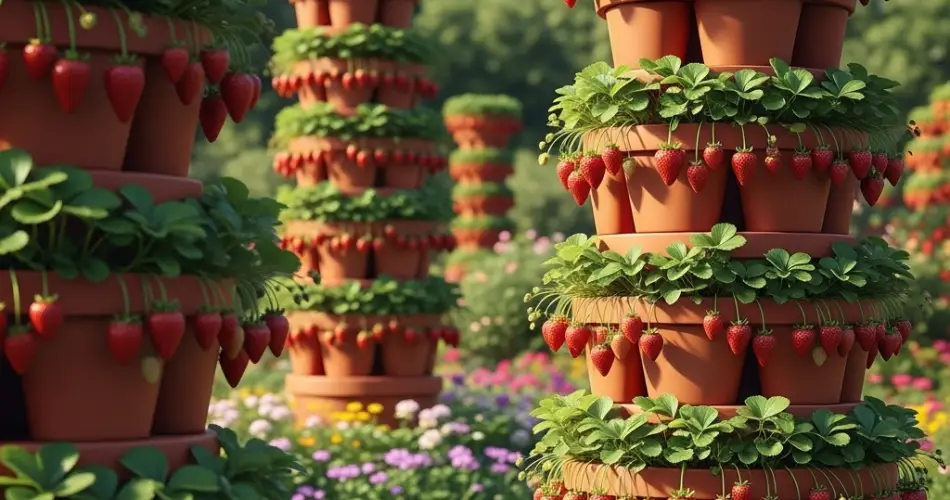
If you’re short on space but still want a bountiful harvest of fresh, juicy strawberries, a vertical strawberry tower is a great solution. With just a few garden pots and some basic tools, you can build a tiered strawberry tower that saves space, enhances airflow, and keeps berries off the ground—reducing rot and pest problems.
Strawberry towers are not only functional but also visually appealing, turning a small patio or sunny balcony into a productive and attractive mini garden. This method is perfect for gardeners who want to maximize vertical space while enjoying sweet homegrown fruit.
Why Build a Strawberry Tower?
Strawberries are ideal for container gardening. They have shallow roots, require minimal space, and produce well when grown vertically. A strawberry tower offers several advantages:
-
Space-saving: Great for balconies, patios, or small gardens.
-
Increased yield: Multiple levels allow more plants in the same footprint.
-
Cleaner fruit: Berries stay off the soil, reducing spoilage.
-
Pest control: Elevated planting discourages slugs and crawling insects.
-
Easy access: Easier harvesting and maintenance without bending or kneeling.
By stacking garden pots, you can create a strawberry tower that suits your space and harvest goals.
What You’ll Need
To build your own strawberry tower using garden pots, gather the following supplies:
-
3 to 5 plastic or terracotta garden pots (each one smaller than the last for stacking)
-
Quality potting soil
-
Compost or aged manure
-
Strawberry seedlings or runners (day-neutral or everbearing varieties work best)
-
A large central support rod or stake (optional for extra stability)
-
Watering can or hose
-
Mulch (optional)
Choose healthy plants like Albion, Seascape, or Tristar, which are productive and well-suited for container growing.
Step-by-Step Assembly
1. Select and Prepare the Pots
Choose sturdy pots of varying diameters, such as 12″, 10″, 8″, and 6″. Each pot will sit inside the next, forming a pyramid shape. Ensure all pots have proper drainage holes. If not, drill a few at the bottom of each.
2. Create a Stable Base
Place the largest pot on a level surface in a sunny location. This will serve as the foundation. Fill it two-thirds full with your soil mix.
3. Insert the Next Pot
Center the next smaller pot over the soil in the base container. Push it down gently until it sits securely, then fill it two-thirds with soil as well. Repeat the process for the remaining pots, forming a stable tower.
4. Add Support (Optional)
For windy areas, consider placing a wooden or metal stake through the center of all pots for added stability. Secure the stake in the bottom pot before stacking the rest.
5. Fill with Soil
Once your tower is fully stacked, fill each level to just below the rim with a soil mix made of:
-
60% potting mix
-
30% compost
-
10% perlite or coco coir for drainage
Water thoroughly after filling to help the soil settle.
Planting the Strawberries
Plant 3 to 5 strawberry seedlings around the edge of each pot, depending on the pot size. Place them so their crowns (where the leaves meet the roots) sit just above the soil line. Avoid burying the crown, as it can rot.
Press the soil gently around each plant and water well after planting.
Care and Maintenance
-
Sunlight: Place the tower in a location that receives at least 6–8 hours of sunlight per day.
-
Watering: Keep the soil evenly moist, especially in the warmer months. Since water trickles down from the top, ensure lower levels also stay hydrated.
-
Feeding: Fertilize every 2–3 weeks with a balanced liquid fertilizer or compost tea to promote continuous fruiting.
-
Mulching: Apply straw or shredded leaves around the base of each plant to retain moisture and suppress weeds.
Pest and Disease Management
Strawberries in towers are less susceptible to soil-borne pests, but still monitor for:
-
Aphids
-
Spider mites
-
Fungal diseases like powdery mildew
Use organic sprays like neem oil as needed and remove any damaged or diseased leaves promptly.
Harvesting Strawberries
Strawberries are ready to harvest when they’re fully red, firm, and fragrant. Pick fruit regularly to encourage more production. Avoid letting ripe berries overstay on the plant, as this can attract pests.
Use harvested strawberries fresh, freeze them, or turn them into jams and desserts.
End-of-Season Care
At the end of the growing season:
-
Remove dead leaves and clean the tower structure.
-
Replenish soil with compost before replanting or overwinter the plants by moving the tower to a sheltered location.
-
Day-neutral and everbearing varieties may continue producing into early fall with proper care.
A Tower of Sweet Success
Building a strawberry tower from garden pots is a creative, low-cost way to enjoy fresh berries in compact spaces. It adds beauty to your home and offers a practical harvest with minimal effort. With good sunlight, regular watering, and care, your strawberry tower will reward you with sweet fruits all season long—no sprawling garden bed required.


