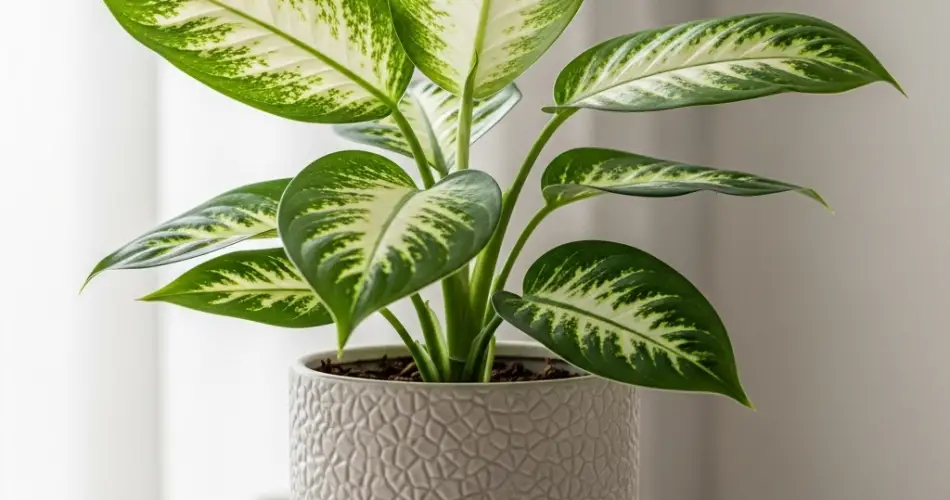
Dieffenbachia, commonly known as dumb cane, is a striking tropical plant celebrated for its large, variegated leaves and upright, sculptural form. With broad foliage marked by splashes of cream, lime, or yellow, it adds an instant touch of the exotic to any indoor space. When grown in containers, Dieffenbachia becomes not only a bold decorative piece but also a practical choice for anyone seeking low-maintenance greenery with big impact.
Perfect for corners, tabletops, or as a floor plant, Dieffenbachia adapts well to container life. Its tolerance for low to moderate light and manageable size make it an ideal houseplant for both beginners and seasoned indoor gardeners. Whether you’re starting fresh with a young plant or moving a mature one into a decorative pot, growing Dieffenbachia in containers can elevate your indoor plant collection with ease and style.
Why Dieffenbachia Shines in Containers
Dieffenbachia’s large, attention-grabbing leaves and upright growth habit make it a natural focal point. Its dramatic foliage creates instant contrast when paired with softer, trailing houseplants or minimalist décor. Container growing also allows more control over soil, moisture, and placement—critical factors in keeping the plant healthy.
Growing it in pots also makes it easy to:
-
Adjust lighting conditions by moving the plant
-
Control moisture with proper drainage
-
Keep the roots healthy with periodic repotting
-
Style the plant according to your interior theme
Dieffenbachia is typically grown indoors, as it’s sensitive to cold. Keeping it in containers means it can be easily relocated to the ideal spot for light and warmth.
Best Container Types for Dieffenbachia
Dieffenbachia grows best in medium to large pots that offer enough room for its roots without holding excess water. It doesn’t like soggy soil, so proper drainage is a must.
Choose containers that are:
-
Equipped with one or more drainage holes
-
5–8 inches wide for smaller plants; larger floor varieties may need 10–12 inch pots
-
Deep enough to support a sturdy root system and upright growth
-
Made from materials such as terracotta, ceramic, or plastic—just ensure any decorative pot includes drainage
For a modern, sustainable approach, you can repurpose containers like food-safe buckets or even large plastic bottles, provided they’re clean and allow water to drain.
Potting Mix for Healthy Roots
Dieffenbachia prefers a loose, rich, and well-aerated soil that retains moisture but drains efficiently. A heavy or compacted soil can cause root rot and reduce oxygen access.
Ideal soil blend:
-
2 parts all-purpose potting soil
-
1 part perlite or coarse sand for drainage
-
1 part coco coir or peat moss for moisture retention
Adding a handful of worm castings or compost provides a gentle nutrient boost, especially helpful for potted plants that rely on limited soil resources.
Potting and Repotting Steps
When planting or repotting Dieffenbachia:
-
Prepare the pot with a base layer of soil.
-
Gently remove the plant from its current container and loosen the root ball.
-
Inspect roots and trim any that are damaged or overgrown.
-
Place the plant in the new pot so the root ball is centered and about an inch below the rim.
-
Backfill with soil around the roots and press lightly to secure the plant.
-
Water thoroughly and let the excess drain completely.
Repot every 1–2 years, or sooner if the plant becomes root-bound or the soil degrades.
Positioning and Light
Dieffenbachia thrives in bright, indirect light, but it can also tolerate low-light conditions, making it ideal for indoor environments with filtered sunlight or artificial lighting.
Avoid direct sunlight, which can scorch its broad leaves. East- or north-facing windows work well, and the plant also does fine under fluorescent or LED grow lights.
Rotate the pot every few weeks to encourage even growth and prevent leaning toward the light source.
Watering and Feeding in Containers
Container-grown Dieffenbachia needs consistent moisture but should never sit in water. Overwatering is one of the most common problems for this plant.
Watering tips:
-
Water when the top inch of soil feels dry
-
Reduce frequency during cooler months
-
Always empty saucers after watering
Fertilize monthly during spring and summer using a balanced liquid houseplant fertilizer at half strength. Skip feeding in fall and winter when the plant’s growth naturally slows.
General Maintenance Tips
-
Wipe leaves regularly to remove dust and enhance their shine.
-
Prune yellowing or damaged leaves with clean scissors to encourage new growth.
-
Watch for pests such as spider mites or aphids—especially in dry indoor air. Neem oil or insecticidal soap can help control them.
-
Support tall stems with bamboo stakes if the plant becomes top-heavy.
Dieffenbachia can grow quite tall in containers—up to 3–5 feet indoors—so choose a spot where it can show off its full stature.
A Striking Addition to Any Indoor Garden
With its dramatic foliage, manageable care routine, and adaptability to different lighting conditions, Dieffenbachia is a standout choice for container gardening indoors. Whether placed in a living room, office, or shaded corner, this plant adds a vibrant, tropical flair with minimal effort.
By selecting the right container, using a well-draining soil mix, and maintaining consistent care, you’ll enjoy a thriving Dieffenbachia that brings bold beauty to your space for years to come.


