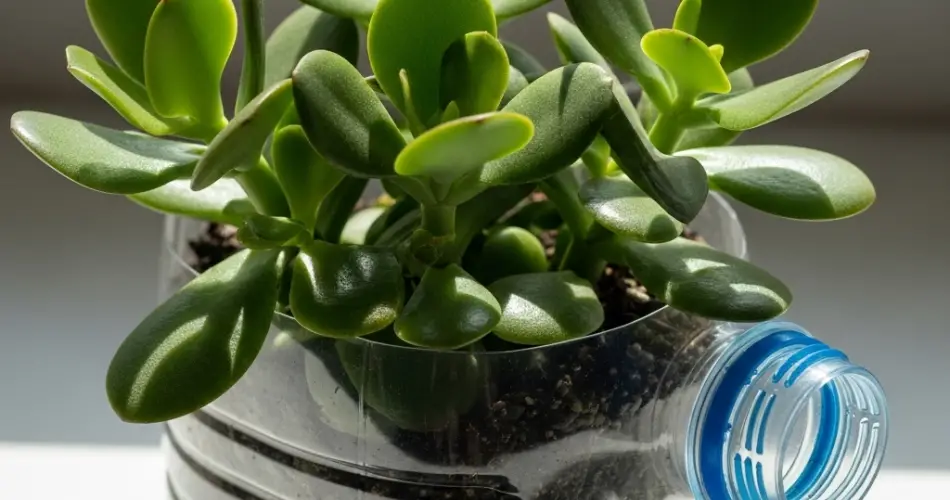
Jade plants (Crassula ovata), also known as money trees or lucky plants, are among the easiest and most rewarding succulents to grow at home. Their thick, fleshy leaves and resilient nature make them ideal for propagation, especially from cuttings. If you’re looking to expand your collection without spending a lot, a great way to do it is by using recycled plastic bottles as mini planters.
This DIY method is a simple, sustainable way to root and grow jade cuttings while reducing household plastic waste. It’s perfect for small spaces and beginner gardeners. With minimal supplies and a little care, you can create an eco-friendly propagation station and enjoy the beauty of jade plants without breaking the bank.
Why Use Plastic Bottles for Jade Propagation?
Plastic bottles are often discarded after a single use, but they can easily be repurposed into effective and attractive propagation containers. Here’s why they work well for jade cuttings:
-
Eco-friendly: Reusing bottles helps reduce plastic waste.
-
Cost-effective: No need to purchase special pots or propagation trays.
-
Transparent: Allows you to monitor root growth and soil moisture easily.
-
Compact: Fits nicely on windowsills, desks, or countertops.
-
Customizable: Easy to decorate or arrange in sets for a stylish display.
Since jade cuttings root easily and don’t require deep soil initially, plastic bottles offer the right size and shape for early growth.
What You’ll Need
To get started, gather the following:
-
A 500ml to 2-liter plastic bottle
-
A healthy jade plant cutting
-
A craft knife or scissors
-
Cactus or succulent potting mix
-
Small pebbles or gravel (optional)
-
Activated charcoal (optional, to prevent mold and odors)
-
A spoon or scoop
-
Water
-
Decorative materials (optional)
Step-by-Step Instructions
1. Cut the Bottle
Cut the plastic bottle about one-third from the top. Use the bottom section as your planting pot. If you prefer a self-watering setup, invert the top and place it into the bottom part like a funnel, leaving space below for water.
2. Add Drainage Holes
Using a hot needle, nail, or scissors, poke several holes in the base of the bottle to ensure proper drainage. Succulents like jade are sensitive to overwatering, so drainage is essential.
3. Prepare the Soil
Jade plants thrive in sandy, well-draining soil. Use a commercial cactus or succulent mix. If you don’t have one, mix regular potting soil with coarse sand and perlite. Fill the bottle about two-thirds with the soil mix.
Optionally, place a layer of small stones or gravel at the bottom for extra drainage. A sprinkle of activated charcoal helps control moisture and prevents root rot.
Selecting and Preparing the Cutting
Choose a firm, healthy branch from a mature jade plant. Follow these steps for best results:
-
Cut a 3–5 inch segment from the tip of a stem using clean, sharp scissors.
-
Remove any leaves from the bottom inch of the cutting.
-
Let the cutting sit in a dry, shaded area for 1–2 days so the end can callous over. This reduces the risk of rotting once planted.
Planting the Cutting
After the cutting has dried and formed a callous:
-
Make a small hole in the center of the soil.
-
Insert the jade cutting into the hole so that it stands upright.
-
Gently press the soil around the base to support the cutting.
-
Water lightly—just enough to moisten the soil.
Place the container in a warm, bright location with indirect sunlight. Avoid direct sun until the cutting is well-rooted, as it may stress the plant.
Caring for Your Jade in a Bottle
-
Light: Provide bright, indirect sunlight. Once rooted, jade plants enjoy some direct sun, especially in the morning.
-
Watering: Water sparingly. Wait until the soil is completely dry before watering again. Overwatering is the most common cause of jade cutting failure.
-
Humidity: Jade prefers low humidity and good airflow.
-
Fertilizer: Once the cutting starts growing new leaves, you can begin feeding it monthly with diluted succulent fertilizer during the growing season (spring and summer).
Roots typically develop within 2 to 4 weeks. You’ll know the cutting has rooted when you see signs of new leaf growth.
Transplanting Later On
As your jade cutting grows, it will eventually need more space. Here’s how to know when it’s time to transplant:
-
Roots are visible at the drainage holes or circling the bottom.
-
The cutting becomes top-heavy or unstable.
-
The soil dries out too quickly.
When ready, gently remove the plant and place it into a slightly larger container with fresh succulent mix.
Decorating Your Bottle Planter
You can add a personal touch to your DIY planter:
-
Wrap the bottle in twine, fabric, or burlap for a rustic look.
-
Paint the exterior with waterproof acrylics.
-
Add labels or small chalk tags to identify different cuttings.
-
Arrange multiple bottles in a tray or crate for a mini garden setup.
This turns your recycled container into a charming piece of home décor.
Final Thoughts
Growing jade cuttings in recycled plastic bottles is an easy, eco-friendly way to enjoy gardening on a small scale. This method not only saves money and reduces waste but also offers a satisfying experience watching your plant take root and grow. With proper care, your jade cutting will thrive and eventually mature into a full, lush succulent.
Whether you’re propagating for yourself or gifting little bottle-grown jades to friends, this sustainable approach is both practical and beautiful.


